

Cricetodon was a Miocene cricetodontine rodent known far more securely through its cheek teeth than through a complete body. Fossil workers compare tooth crowns from France, Spain and Anatolia to distinguish species and trace changes between faunas. The picture is detailed at the level of enamel ridges, yet much less certain when it comes to ears, fur or behaviour.
This ancient mammal catalogue profile follows several well-studied samples. They illuminate the genus without turning every isolated tooth into a different animal or assuming that all named species had the same appearance.
Quick facts
| Scientific name | Cricetodon Lartet, 1851 |
|---|---|
| Type species | C. sansaniensis from Sansan, France |
| Group | Rodentia, cricetodontine hamsters |
| Age | Early and middle Miocene in the discussed samples |
| Records | France, Spain and Anatolia |
| Main evidence | Isolated molars and jaw fragments |
| Key caution | Species boundaries require dental series and wear comparisons |
What can the fossils tell us?
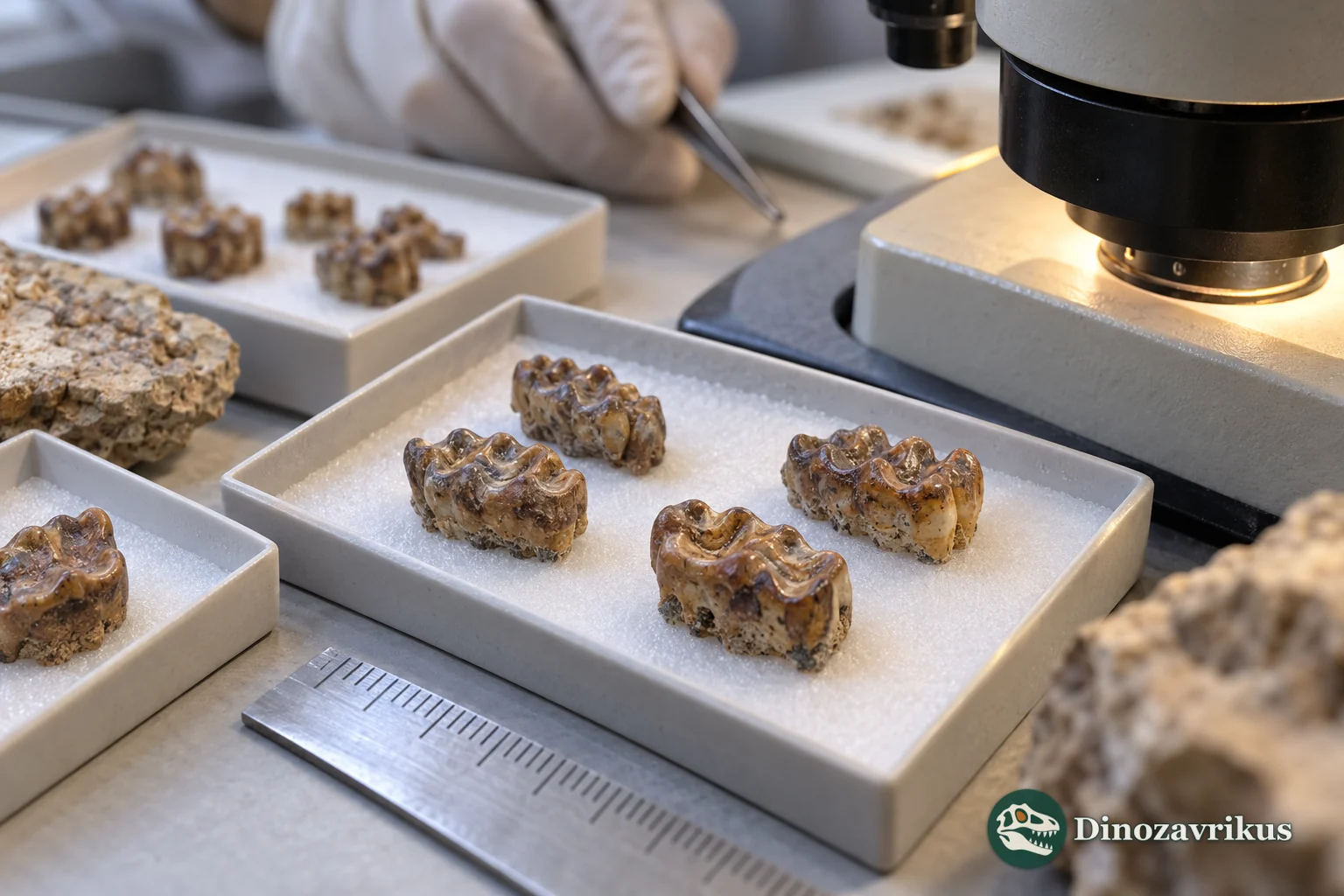
Upper and lower cheek teeth preserve cusp arrangement, enamel folds and connecting ridges. One worn crown may not safely identify a species without a comparative series.
At Vieux-Collonges, researchers recognised C. meini and C. aureus, but left a third form unnamed because a single specimen was inadequate.
Dental changes help compare Miocene assemblages in western Europe and Anatolia. They do not date an individual animal independently of the bed in which it was found.
The dentition establishes a rodent affinity, but it does not preserve coat colour, cheek pouches, hoarding behaviour or an exact menu.
How Sansan gave the genus a name
Édouard Lartet introduced Cricetodon in 1851, with C. sansaniensis as the type species associated with the Sansan locality in southwestern France. Later taxonomists removed several superficially similar hamsters from the broad historical grouping. An old label reading “Cricetodon” is therefore a starting point for revision, not proof that the fossil meets a modern narrower diagnosis.
Cheek teeth survive well as separate fossils because their enamel is durable. Researchers compare the size and outline of the molars, the arrangement of cusps, connecting crests and accessory folds. Tooth position and wear stage matter. A difference visible on one crown may reflect age or variation rather than a separate lineage.
What a French collection revealed
Pierre Mein and Matthijs Freudenthal revised the middle Miocene cricetids of Vieux-Collonges in 1971. They identified C. meini and named C. aureus. A third form was represented by a single specimen; they deliberately left it unnamed. The two named species were interpreted as separate local lineages. This is a sharper result than treating every tooth from the locality as one undifferentiated hamster, but it also shows restraint when material is scarce.
A later detailed treatment of C. albanensis from La Grive-Saint-Alban compared multiple upper and lower molar features with C. sansaniensis and other forms. The study included maxillary fragments as well as teeth. It did not provide a complete skeleton from which to measure tail length, limb proportions or a genus-wide body mass.
Why Anatolian fossils matter
At early Miocene localities in western and southern Anatolia, Nihal Çınar Durgut and Engin Ünay studied several Cricetodon species, including four new ones, and compared their dental characters cladistically. These fossils expand the geographical picture beyond western Europe. They do not turn the French and Turkish material into a single population: species identifications and the ages of particular beds must be checked separately.
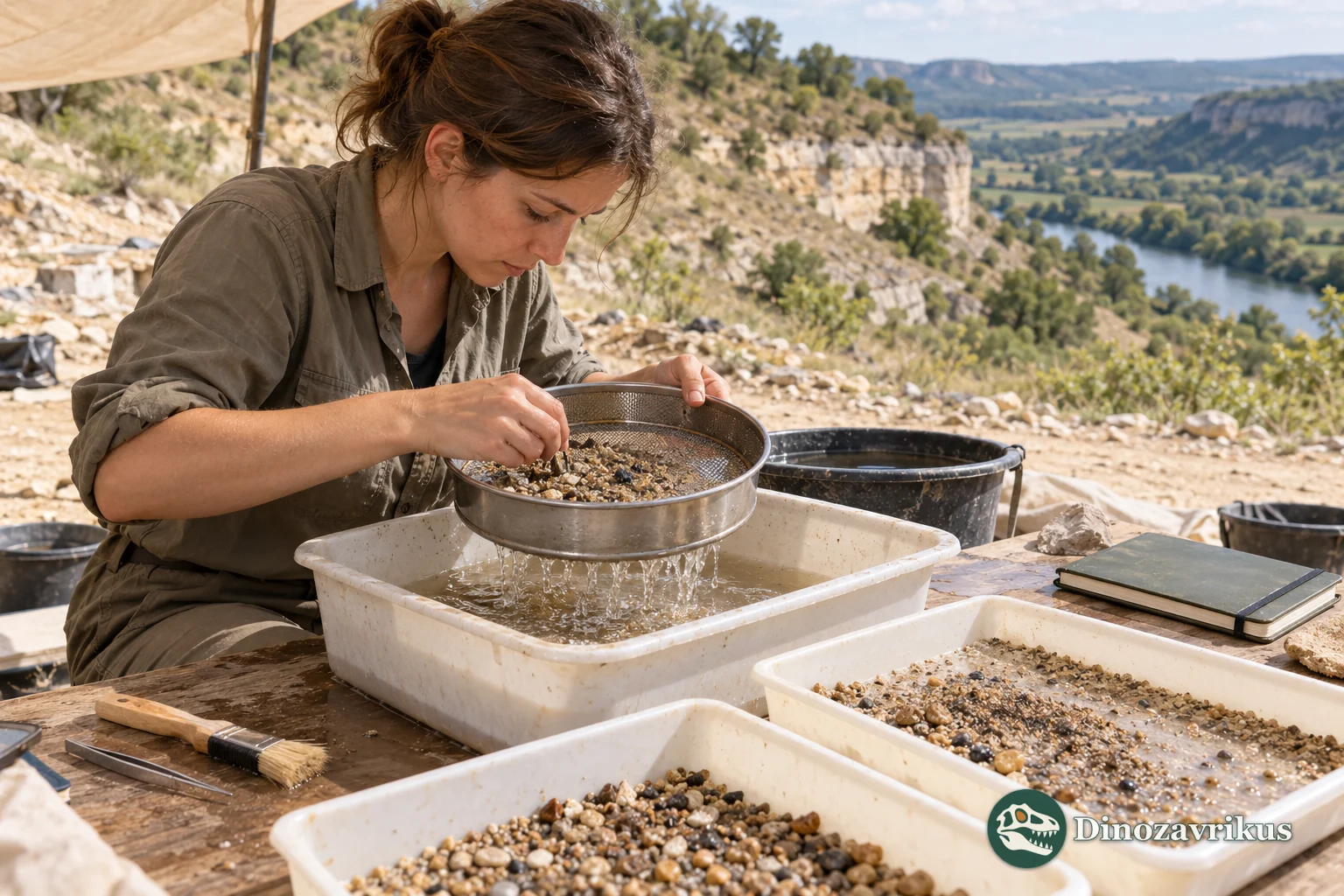
The changing dentitions are useful when comparing terrestrial layers of the Neogene. A fossil tooth is not its own clock, however. Geological position provides the age framework, while dental comparisons help relate one assemblage to another. The smaller Megacricetodon is a useful contrast; similarity of names should not erase diagnostic differences or past taxonomic revisions.
What remains beyond the teeth
Cheek teeth show how a rodent processed food, but broad crown form cannot reveal every plant eaten or seasonal changes in diet. Such claims would require specific wear, chemical or associated plant evidence. No tooth proves that Cricetodon stored food in cheek pouches, dug the same burrows as living hamsters or wore a particular coat colour.
The cover provides a restrained visual possibility rather than a portrait of a recovered animal. Its modest rodent outline is informed by kinship; the exact fur, ears and landscape are invented. The evidence guide above keeps the informative parts of the fossil record separate from those artistic choices.
Frequently asked questions
Was Cricetodon a living hamster?
No. It was an extinct Miocene cricetodontine rodent. Family resemblance does not establish living-hamster behaviour or soft anatomy.
Why are its species identified from teeth?
Molars commonly survive apart from skeletons and preserve comparable cusps, crests and enamel folds. Identification must also account for wear and variation.
Could more than one species occur at one locality?
Yes. The Vieux-Collonges revision distinguished C. meini and C. aureus while leaving a one-specimen form unnamed.
Do we know its exact diet?
No. Tooth shape documents a chewing apparatus, but it does not preserve a complete plant menu or seasonal proportions.