

When bones of an Oligocene bird from Rupelmonde in Belgium were described in the nineteenth century, they were assigned to the gannet genus. In 1931 Kálmán Lambrecht named the genus Cygnopterus and compared it with swans. A later comparison with a fossil relative of flamingos raised a different possibility.
Quick facts
| Age of type species | Oligocene |
|---|---|
| Locality | Rupelmonde, Belgium |
| Fossils | Wing, shoulder girdle and leg bones |
| Early identifications | Compared with gannets and swans |
| Affinities | Uncertain |
What can the fossils tell us?
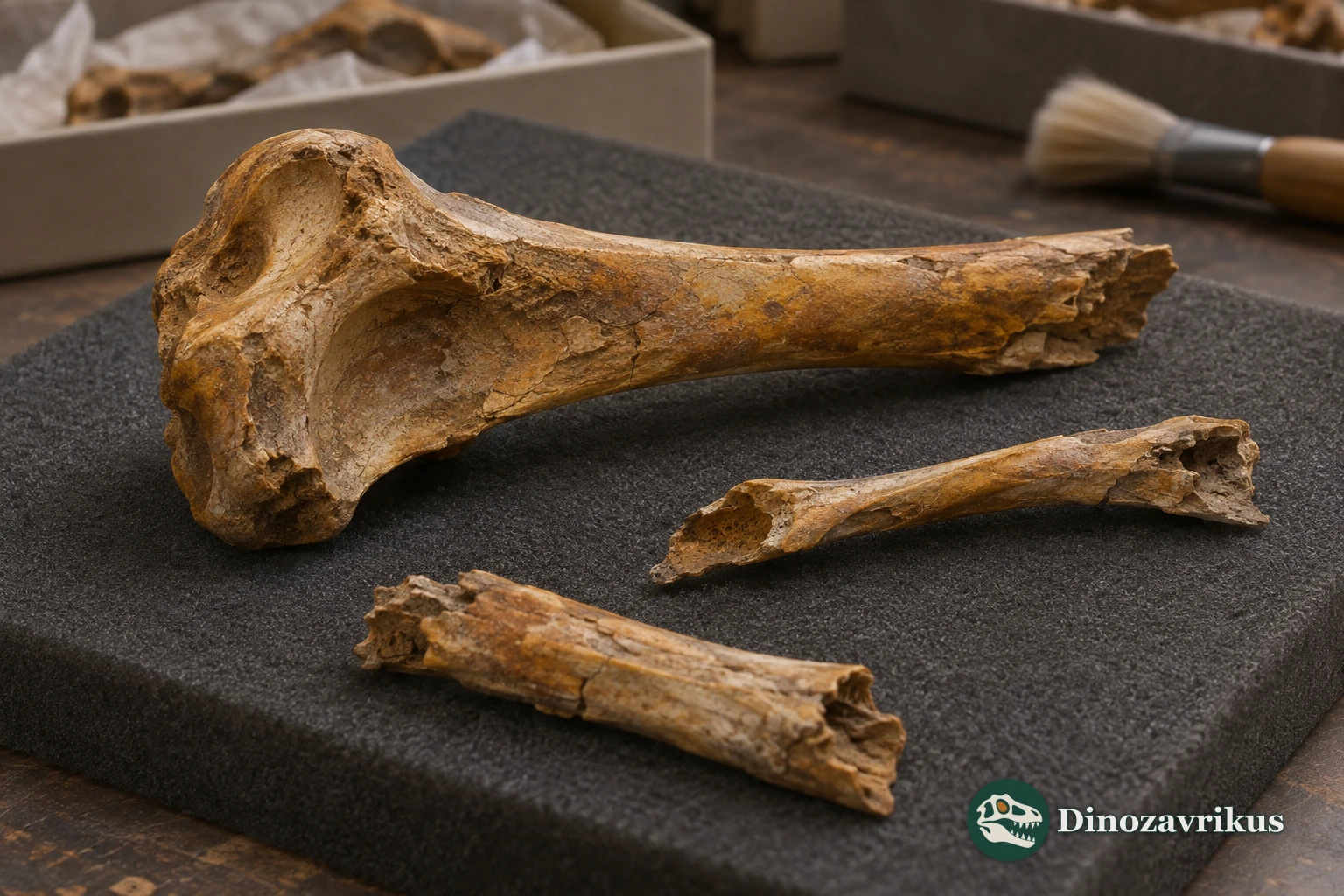
The series includes a humerus, part of a coracoid and leg bones. A skull and tarsometatarsus are unknown for the type species.
The shoulder end of the coracoid resembles that in a fossil relative of flamingos. Other characters are needed to establish the relationship.
Early Miocene bones were assigned to another species of Cygnopterus. Their waterfowl-like features apply to the Belgian bird only if the generic assignment holds.
The Rupelmonde bones
Pierre-Joseph van Beneden described the bird as Sula affinis in 1883. Lambrecht re-examined the bones and made it the type species of Cygnopterus. The Belgian material includes a left humerus, parts of a coracoid and ulna, a femur and part of a tibiotarsus.
The sample documents several parts of the skeleton. It contains no skull or tarsometatarsus, so the bill, exact neck length and gait remain unknown. The reference to swans in the genus name reflects Lambrecht’s interpretation.
Why compare it with flamingos?
Gerald Mayr and Richard Smith compared the shoulder end of the coracoid with that of an Oligocene bird from Hoogbutsel. That bird was assigned to the palaelodids, an extinct branch of the flamingo lineage. Another member of this group, Palaelodus, is known from a wider range of skeletal material.
The resemblance involves one part of the shoulder girdle. A well-preserved tarsometatarsus of the Belgian species, for example, could give an independent set of characters to test the comparison.
The French fossils
In 1984 Jacques Cheneval named C. alphonsi from Early Miocene deposits at Saint-Gérand-le-Puy. Some bones assigned to it resemble those of waterfowl. Its coracoid, however, has a well-developed opening for a nerve that living ducks, geese and swans lack. That feature does not support placing it among modern swans and geese.
Even if the French bones represent an early waterfowl, the evidence would apply to the Belgian species only if both belonged to the same genus. The available fossils do not securely indicate the diet or diving ability of the Belgian bird.
Frequently asked questions
Why was Cygnopterus first described as a gannet?
Van Beneden originally assigned the Belgian bones to the gannet genus. Lambrecht’s later comparison led to a different name and proposed relationship.
Which is the type species?
The type species is based on the Oligocene material from Rupelmonde first described in 1883.
Is the bill preserved?
No skull is known for the type species. Its bill and exact neck length therefore remain unknown.
Do the French bones establish that Cygnopterus was a swan?
No. The French and Belgian fossils may not belong to the same genus, and the French shoulder bone has a feature absent in living swans.