

Dakotaophis was a snake from Miocene North America. It was named from a trunk vertebra found in South Dakota. Researchers later identified the species at other sites using the shape of the joints that connected neighbouring vertebrae.
Quick facts
| Group | Snakes (Serpentes), colubrids (Colubridae) |
|---|---|
| Age | Early and middle Miocene |
| Region | North America, United States |
| Type species | Dakotaophis greeni |
| Scientific name | Dakotaophis |
| Diet | No direct evidence |
What can the fossils tell us?
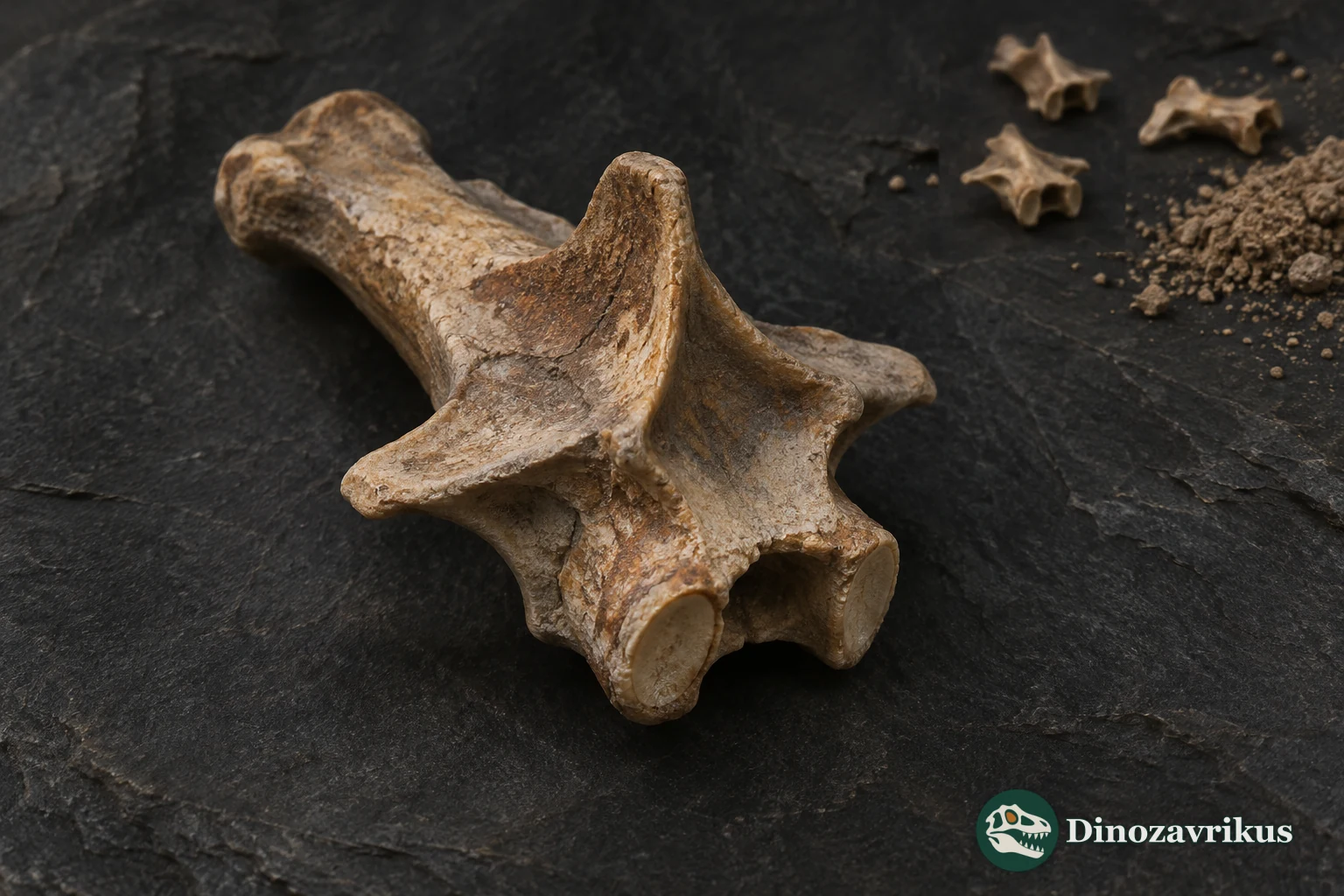
The type species was named from a trunk vertebra from Black Bear Quarry II in the Rosebud Formation.
Compared with the bones of the fossil snake Salvadora paleolineata, Dakotaophis has smaller, more oval articular surfaces that face less to the sides.
The known vertebrae help identify the snake. The shape of its jaws, its body length and its prey remain unknown.
From Black Bear Quarry to Texas
J. Alan Holman named Dakotaophis greeni in 1976 from material in the Rosebud Formation of southwestern South Dakota. Black Bear Quarry II belongs to the early Hemingfordian land mammal interval of the North American Miocene. The species was also reported from Nebraska and Texas. Texas faunal lists include it alongside Texasophis, another snake known from isolated vertebrae.
Distinguishing similar vertebrae
Researchers have compared the trunk vertebrae of Dakotaophis with those of Salvadora paleolineata. The facets where adjacent vertebrae made contact were smaller, more elongate and less laterally directed in Dakotaophis. These differences can be checked on isolated bones. A skull would provide an independent set of characters for assessing the relationships, but none has yet been identified.
How late does it occur?
Several middle Miocene Nebraska sites record the species, including Bn-118 and Bn-121. One of the younger Great Plains records comes from the Bijou Hills local fauna in South Dakota, assigned to the late Barstovian within the middle Miocene. The occurrence marks the younger end of the known regional record. The timing of extinction remains uncertain.
Frequently asked questions
Where was Dakotaophis first described?
The type material comes from the Rosebud Formation in South Dakota.
What bones are known?
The genus is identified from isolated trunk vertebrae. No securely attributed skull is known.
How is it distinguished from fossil Salvadora?
It has smaller, relatively longer vertebral joint surfaces that are less strongly directed towards the sides.
What did Dakotaophis eat?
The isolated vertebrae do not preserve teeth or food remains. There is no direct evidence for its diet.