

Dawndraco kanzai was named for the pteranodontid skeleton UALVP 24238 from Late Cretaceous Kansas. The fossil is real and comparatively complete; its status as a distinct genus is disputed. A 2017 redescription reassigned the same specimen to Pteranodon sternbergi, while the original author defended his separate-taxon interpretation.
Quick facts
| Original name | Dawndraco kanzai, Kellner, 2010 |
|---|---|
| Taxonomic status | Disputed; reassigned by some authors to Pteranodon sternbergi |
| Type specimen | UALVP 24238, partial associated skeleton |
| Locality | Near Utica, Kansas, United States |
| Rock unit | Lower Smoky Hill Chalk Member, Niobrara Formation |
| Age | Late Coniacian to early Santonian, Late Cretaceous |
| Preserved material | Skull, partial jaw, vertebrae, girdles and limb elements |
What can the fossils tell us?
UALVP 24238 includes substantial skull and postcranial material. The front of the snout and rear of the crest are damaged.
Kellner emphasized a long, nearly parallel-sided rostrum. The 2017 redescription saw this variation as insufficient to separate a new taxon.
Dawndraco kanzai and Pteranodon sternbergi are competing identifications of UALVP 24238, not two separate recovered animals.
Missing skull and wing portions complicate complete crest and wingspan reconstructions; colour and behaviour are unknown.
The skeleton from Niobrara
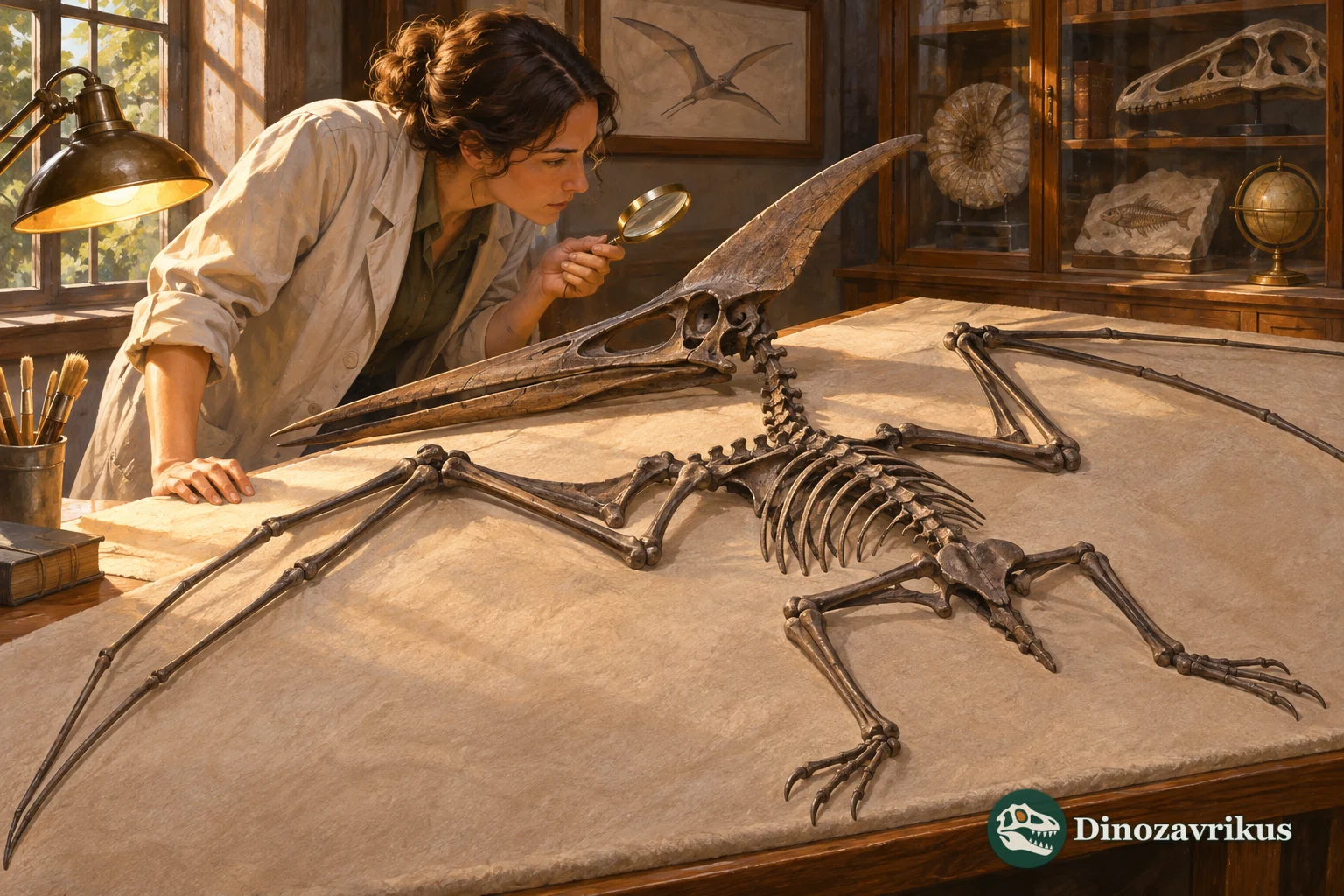
UALVP 24238 came from near Utica, Kansas, in the lower Smoky Hill Chalk Member of the Niobrara Formation. It preserves much of the skull and vertebral column, a partial lower jaw, sternum, shoulder girdle, and parts of the wings, pelvis and hind limbs. The rostral tip and rear of the skull crest are incomplete. The bones make it an unusually informative pteranodontid specimen, even though its name remains contested.
The original classification placed the specimen within Pteranodon sternbergi. In 2010 Alexander Kellner named Dawndraco kanzai for it, citing cranial proportions and other skeletal characters. The generic name combines a sky-goddess name with the Latin word for dragon; the species name refers to the Kanza people.
The anatomical dispute
Kellner described the front of the skull as long, with nearly parallel upper and lower margins, and contrasted it with material assigned to other pteranodontids. He also cited parts of the skull openings and caudal vertebrae. The preserved crest is incomplete, which makes comparisons of its entire outline difficult.
Elizabeth Martin-Silverstone and colleagues redescribed the specimen in 2017, identifying additional parts of the rostral tip. They argued that snout proportions and the other proposed differences are consistent with variation, including sexual dimorphism, within Pteranodon sternbergi. On their interpretation, Dawndraco is not a separate genus or species.
The reply and the broader group
Kellner published a response defending the distinctions between UALVP 24238 and the type of P. sternbergi. This disagreement concerns how to interpret variation between known specimens. It does not add a second fossil animal to the record. Pteranodon provides the broader anatomical and historical context for the debate.
A wingspan can be estimated from the incomplete skeleton by comparison, but two complete wings were not measured. Eopteranodon is another pteranodontian record and should not be used to fill missing bones of UALVP 24238.
A cautious life scene
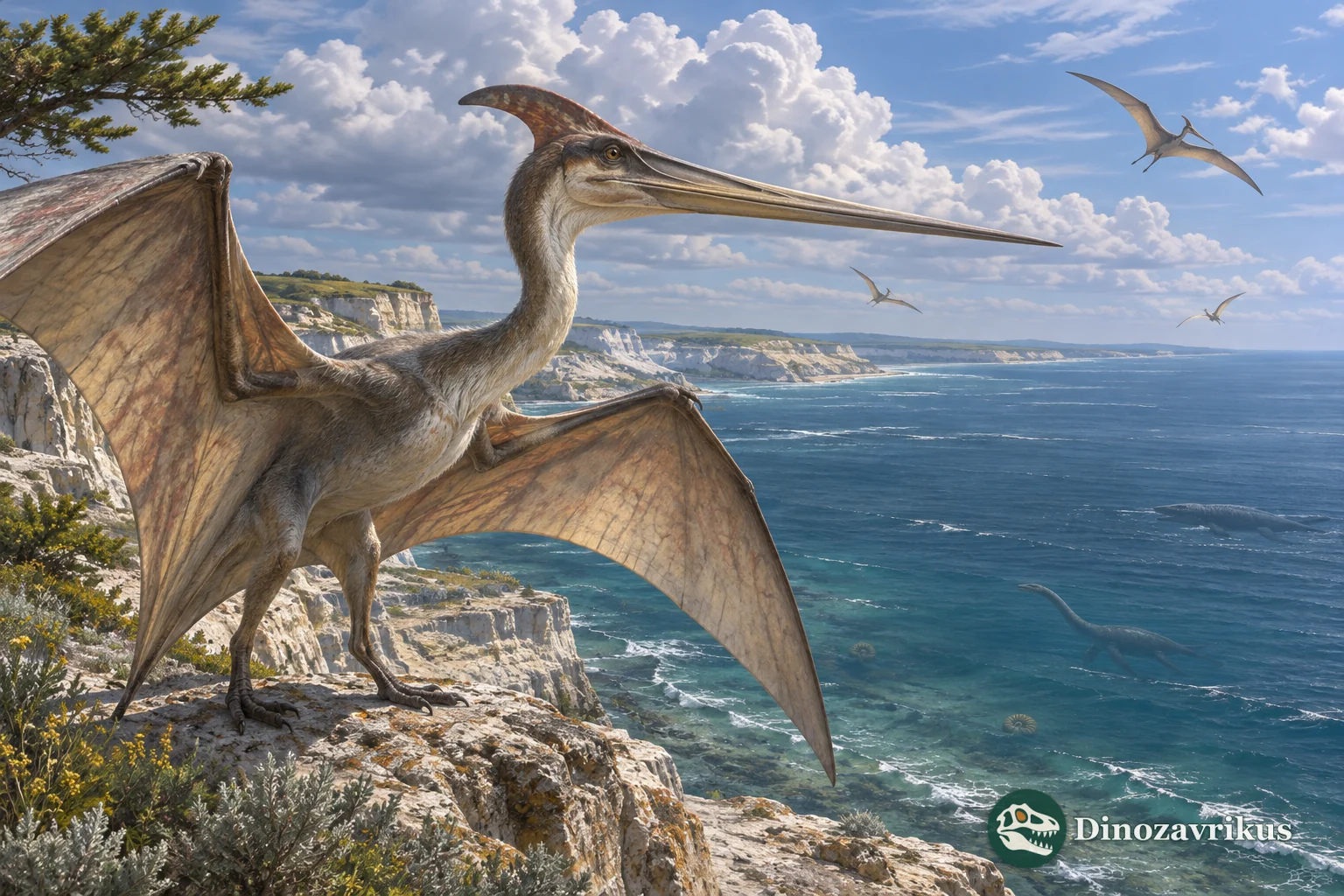
The Niobrara chalk formed in a marine setting in the Western Interior region. A pteranodontid over that sea is plausible artwork, yet no fossil records the individual’s colour, flight path or daily feeding behaviour. The crest and snout in art must be treated cautiously because their anatomy is central to the taxonomic dispute.
Frequently asked questions
Are Dawndraco and Pteranodon two different animals?
The names in this debate refer to the same fossil UALVP 24238. Researchers disagree on whether it merits a separate genus.
What survives of the skeleton?
Substantial skull, vertebral, girdle and limb material survives, although the snout tip and part of the crest are damaged.
Where was the fossil found?
It came from near Utica, Kansas, in the lower Smoky Hill Chalk Member of the Niobrara Formation.
Why did the classification change?
A 2017 redescription considered the proposed differences compatible with variation in Pteranodon sternbergi; Kellner later disputed that conclusion.