

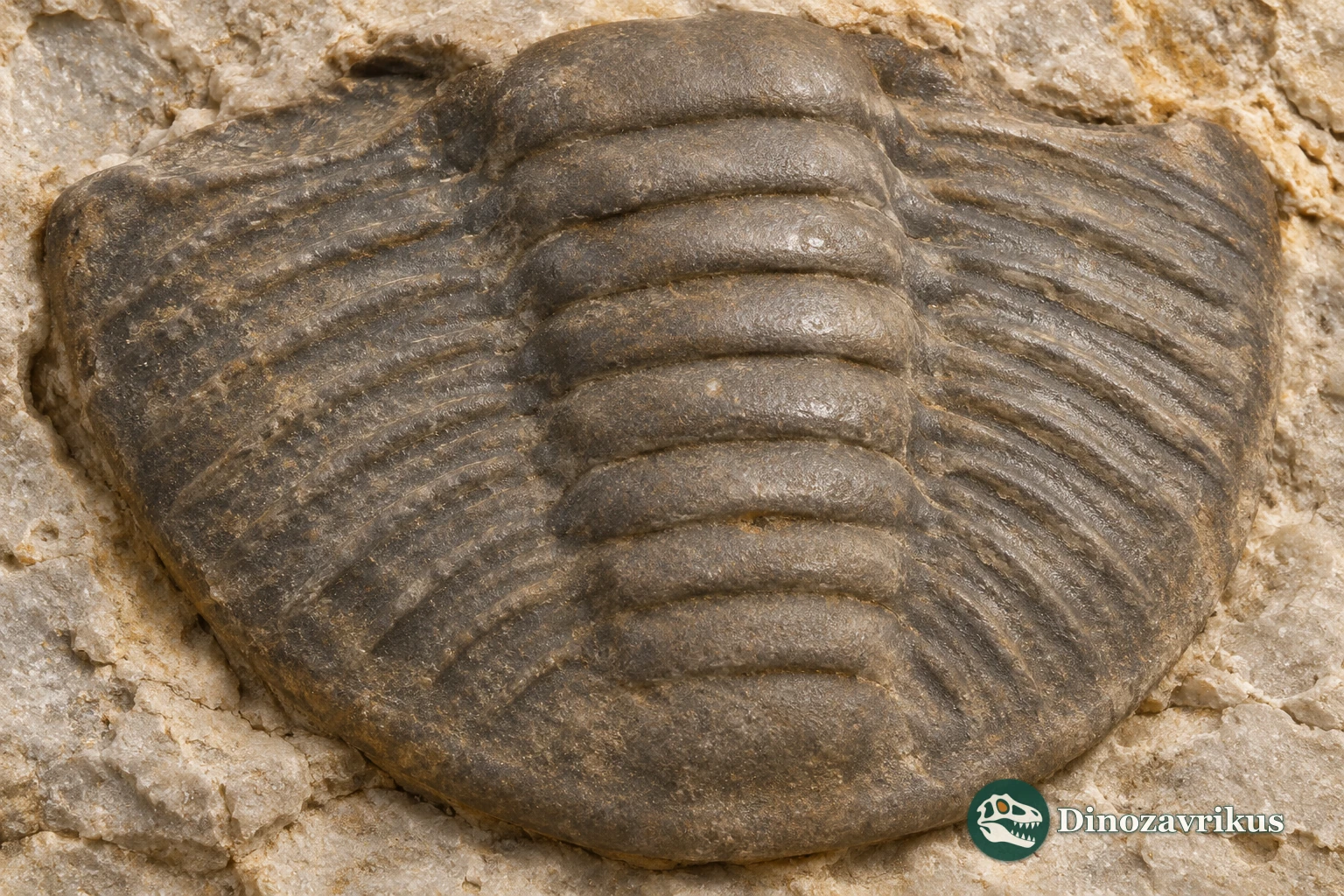
Delaria was a Permian trilobite documented in West Texas. The tail axis carries about ten rings in some species and up to sixteen in others. These differences can be seen on tail shields found separately from the rest of the shell.
Quick facts
| Group | Trilobita, Phillipsiidae |
|---|---|
| Period | Permian |
| Genus named | James Marvin Weller, 1944 |
| Type species | Delaria antiqua |
| Key records | West Texas, United States |
| D. brevis type specimen | Holotype USNM PAL447546 |
What can the fossils tell us?
The shape of this raised part of the head helps compare Delaria with other phillipsiids.
D. brevis has nine to ten, while D. westexensis has fifteen to sixteen.
These sections show a change in local marine faunas. The placement of a fossil in the section cannot assign a precise water depth to the individual.
How Delaria was named
George Girty described the Texan species antiqua in 1908 and provisionally assigned it to Anisopyge. In 1944 James Marvin Weller made it the type species of Delaria. David Brezinski's 1992 revision added four new species from West Texas.
The glabella broadens at the front and narrows opposite the eyes. Small lobes stand out toward the rear. This pattern recalls Ditomopyge, but the glabella of Delaria is narrower and reaches the front margin.
Two holotypes from one formation
The holotypes of D. brevis and D. westexensis come from the Road Canyon Formation in Brewster County, Texas. They are held at the Smithsonian National Museum of Natural History as USNM PAL447546 and USNM PAL447549. The museum records list Gustav Cooper and Richard Grant as the collectors of both specimens.
The tail axis has nine to ten rings in D. brevis, thirteen to fourteen in D. granti and fifteen to sixteen in D. westexensis. Its side profile also varies. In D. brevis the axis lacks the lengthwise arch seen in the other two species.
Changing faunas in the Texan seas
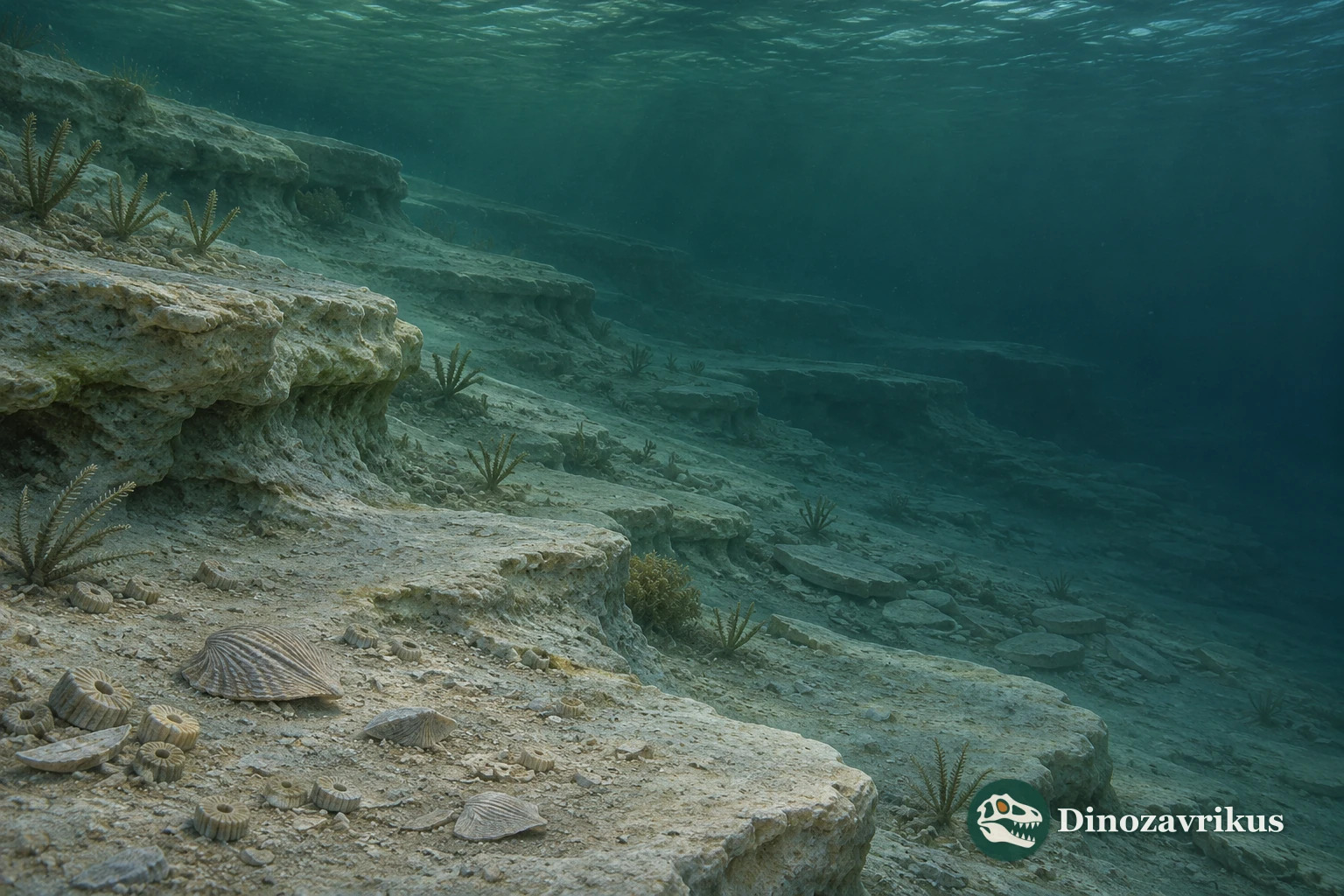
Brezinski distinguished two trilobite faunas in the West Texas Permian succession. Delaria belongs to the upper one, present in late Leonardian and Guadalupian strata alongside Anisopyge and Novoameura. Ditomopyge and Triproetus are typical of the older local beds.
Brezinski proposed that the younger fauna first developed in deeper waters of the Marfa and Delaware basins. As sea level rose, its members reached reefs along the shelf margin. This interpretation draws on where the fossils occur in the sequence and on the types of sediment around them.
Frequently asked questions
When did Delaria live?
It lived during the Permian. In West Texas the documented fauna occurs in late Leonardian and Guadalupian strata.
Who established the genus?
James Marvin Weller established it in 1944. Its type species had already been described by George Girty.
How many tail rings did D. brevis have?
The tail axis has nine to ten rings, fewer than in D. granti and D. westexensis.
Where is the D. brevis holotype kept?
It is in the Smithsonian National Museum of Natural History, under specimen number USNM PAL447546.