

Delpitoscyllium was an extinct nurse shark. The Danish species has narrow front teeth with one pair of small cusplets. Crowns widen towards the corners of the mouth, where a second pair appears. The pattern matters when comparing them with Moroccan teeth and deciding how much weight to place on a single ridge.
Quick facts
| Group | Nurse sharks |
|---|---|
| Named by | Abdellah Noubhani and Henri Cappetta, 1997 |
| Type species | Delpitoscyllium africanum |
| Danish sites | Terkelskov and Faxe |
| Danish age | Danian, Early Palaeocene |
| Fossil record | Isolated teeth |
What can the fossils tell us?
Front teeth have one pair of cusplets. Posterior crowns add a second pair.
The Danish specimens lack a pronounced keel at the tip of the main cusp. It is uncertain whether the difference is sufficient to separate species.
The Faxe limestone preserves the setting in which teeth were buried. It does not establish the depth at which the animal usually lived.
Two early names and a genus erected later
James William Davis described a tooth from Terkelskov in Denmark as Scyllium planum in 1890. Maurice Leriche named another species Ginglymostoma africanum in 1927. Abdellah Noubhani and Henri Cappetta erected Delpitoscyllium for the African species in 1997. Among the distinguishing features were the small number of lateral cusplets and a median keel on the outer face of the main cusp.
In 2015 Jan Adolfssen and David Ward re-examined Davis's specimen MGUH 1400 alongside four museum specimens from Faxe and additional privately held teeth. They moved the Danish species to Delpitoscyllium, retaining the epithet planum. The Danish crowns lack the pronounced keel seen on Moroccan teeth.
Crown shape changes across the mouth
On a front tooth the main cusp sits between two small cusplets that lean towards it. Lateral teeth are wider and their cusplets stand straight or point away from each other. Farther back, a second small pair appears and the crown becomes slightly asymmetrical. The teeth have an S-shaped profile and an apron curves over the root. None of the described Danish teeth preserves its root.
Multi-cusped crowns also appear in older carpet sharks such as Cantioscyllium. Cusplet count alone cannot identify the genus. The inclination of the tips, the contour of the main cusp and the expected position within the tooth row provide useful comparisons.
The question raised by a single keel
The revision retained D. planum and D. africanum as separate species, while allowing that the keel might vary among populations. A broad posterior tooth figured from Morocco already resembles the Danish material. If further specimens show that the forms represent one species, the older name planum would have priority. That remains a hypothesis.
The Early Palaeocene sea at Faxe
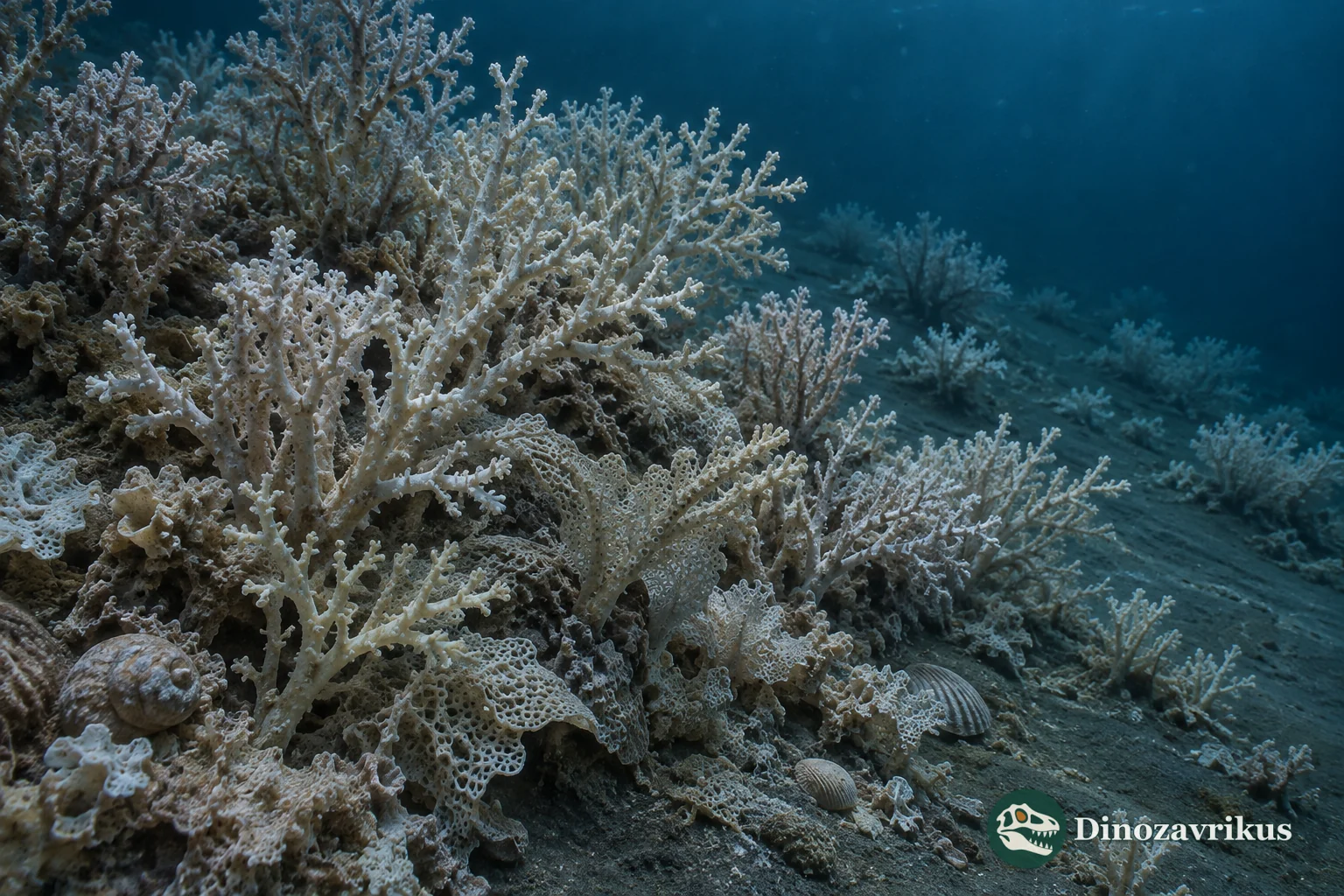
The Faxe limestone preserves mounds built by corals and bryozoans. Branching corals in this assemblage lived in cool water and did not rely on photosynthetic symbionts as many living tropical reef corals do. The teeth record the shark in this marine basin. The burial setting alone does not establish its usual swimming depth.
The pointed main cusp and smaller cusplets could help retain prey. The isolated Danish crowns give no direct evidence of the shark's diet, body size or feeding behaviour.
Frequently asked questions
What did teeth of the Danish species look like?
Front teeth are narrow with one pair of cusplets. Broad rear teeth add a second pair.
When did the Danish species live?
Its teeth were recovered from Danian rocks of Early Palaeocene age.
What distinguishes the Danish and Moroccan material?
A pronounced median keel on the outer face of the main cusp occurs in the Moroccan material and is absent in the Danish series.
Have the Danish and African species been combined?
They remain separate in the revision. Additional finds would help test whether they belong to the same species.