

Didymoconus is an Oligocene mammal whose position among placentals has long been debated. Its earliest named species came from Mongolia and were founded on an incomplete skull and jaw fragments. Later, a Chinese specimen of D. berkeyi added associated limb bones. Those bones offer a rare way to ask how the animal moved, while the skull and teeth remain central to its classification.
This genus belongs in the ancient mammal catalogue. The Oligocene Amphechinus represents a different small-mammal lineage, and Hyaenodon belongs to a separate predatory group. Sharing a geological interval does not make these animals close relatives.
Quick facts
| Scientific name | Didymoconus Matthew and Granger, 1924 |
|---|---|
| Type species | D. colgatei |
| Family | Didymoconidae, with debated wider affinities |
| Type area | Hsanda Gol, Mongolia |
| Type fossil | AMNH 19124, incomplete skull and jaw |
| Other key fossil | IVPP V11983, skull and limb elements of D. berkeyi |
| Age | Oligocene; the Lanzhou specimen is bracketed to about 27–30 Ma |
What can the fossils tell us?
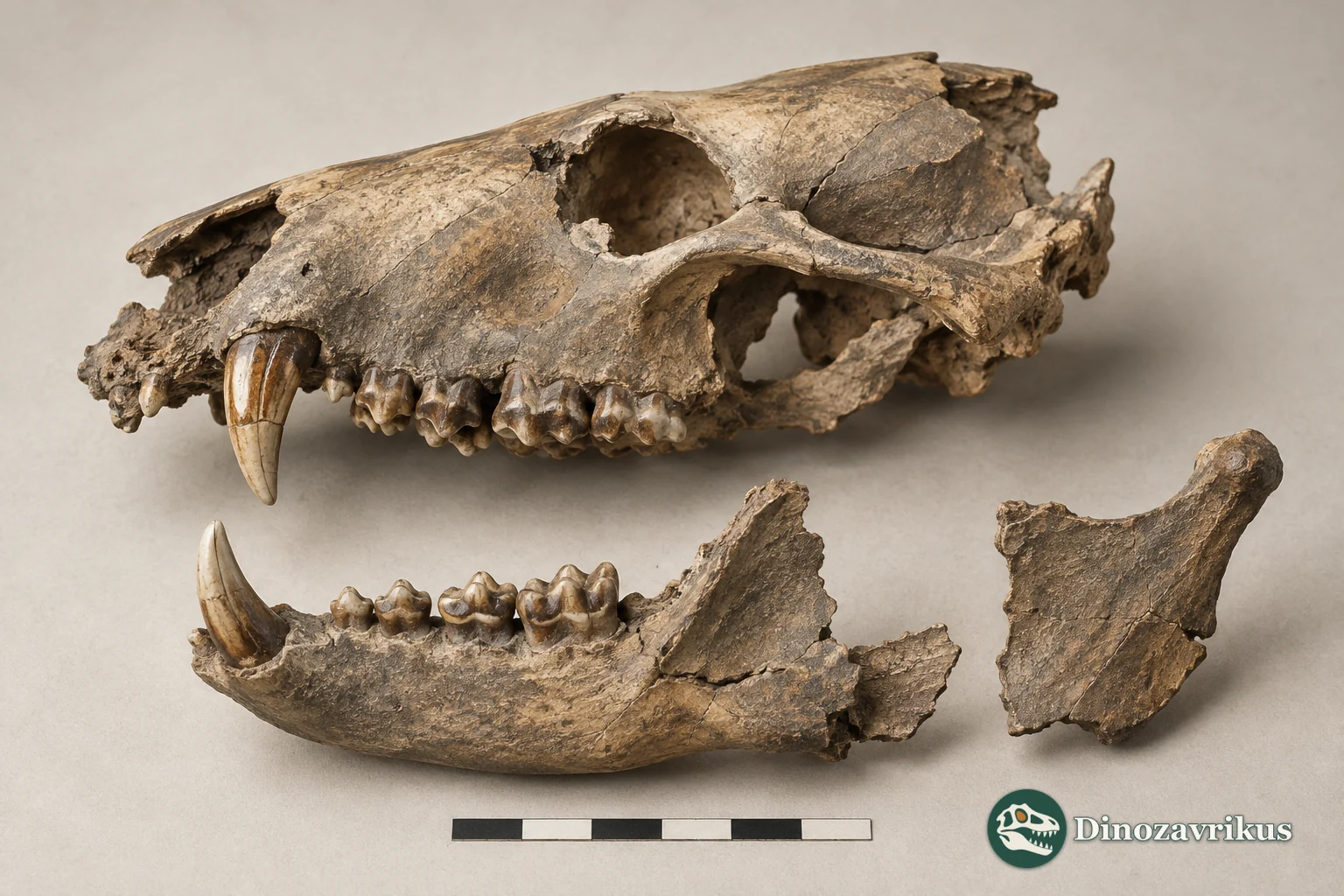
AMNH 19124 preserves an incomplete skull and jaw of D. colgatei. Later preparation corrected characters that were unclear in its first published figure.
IVPP V11983 preserves strong forelimb elements and claws with D. berkeyi cranial material. Functional interpretation supports digging, but no burrow can be assigned to this animal.
Lopatin's 2006 revision treated Tshelkaria as a junior synonym of Didymoconus after re-examining dental and cranial characters. That is a taxonomic conclusion, not a new fossil find.
Discovery and type specimens
William Diller Matthew and Walter Granger named Didymoconus colgatei and the larger D. berkeyi in 1924 from Mongolia's Hsanda Gol area. The first species was based on an incomplete skull with a lower jaw and additional jaw fragments. The second originally rested on one lower-jaw fragment. Their fossils could establish dental differences before anyone had a comparable associated skeleton for both species.
The D. colgatei type skull is AMNH 19124. Its early illustration was drawn before the specimen had been completely prepared. Later work exposed features that had appeared absent. An apparently small preparation problem mattered to classification: characters in the old figure had been used to separate Didymoconus from another proposed genus.
Teeth, names and relationships
Didymoconids combine a reduced tooth row with unusual paired cusps on cheek teeth. Researchers compare the development of premolar and molar cusps rather than judging a species from tooth size alone. Wear, the tooth's position and the age of its owner can alter the visible outline. D. berkeyi is generally larger than D. colgatei, but the specimens are not interchangeable parts of one animal.
Some related material was described as Tshelkaria in 1960. In a 2006 revision, Lopatin concluded that the corrected anatomy of the D. colgatei type removed the key generic distinction and treated Tshelkaria as a younger name for Didymoconus. The family has been placed near several different placental lineages; even an early paper's use of the word carnivore does not establish membership of the living carnivoran order.
The Lanzhou skeleton and possible digging
IVPP V11983, attributed to D. berkeyi, came from the Lanzhou Basin in Gansu, China. Its skull is fractured and distorted, but parts of the jaw and postcranial skeleton occur with it. Magnetic correlations of the enclosing strata bracket the find to roughly 27–30 million years ago. This dates a geological interval, not the exact day on which the animal died.
The comparatively strong forearm, broad hand and substantial claws support a functional inference that D. berkeyi could dig. The shoulder and elbow anatomy would help apply force to the substrate. They do not tell us how long it stayed underground, whether it made a permanent burrow, or whether every species in the genus had identical habits.
Landscape and limits of a life portrait
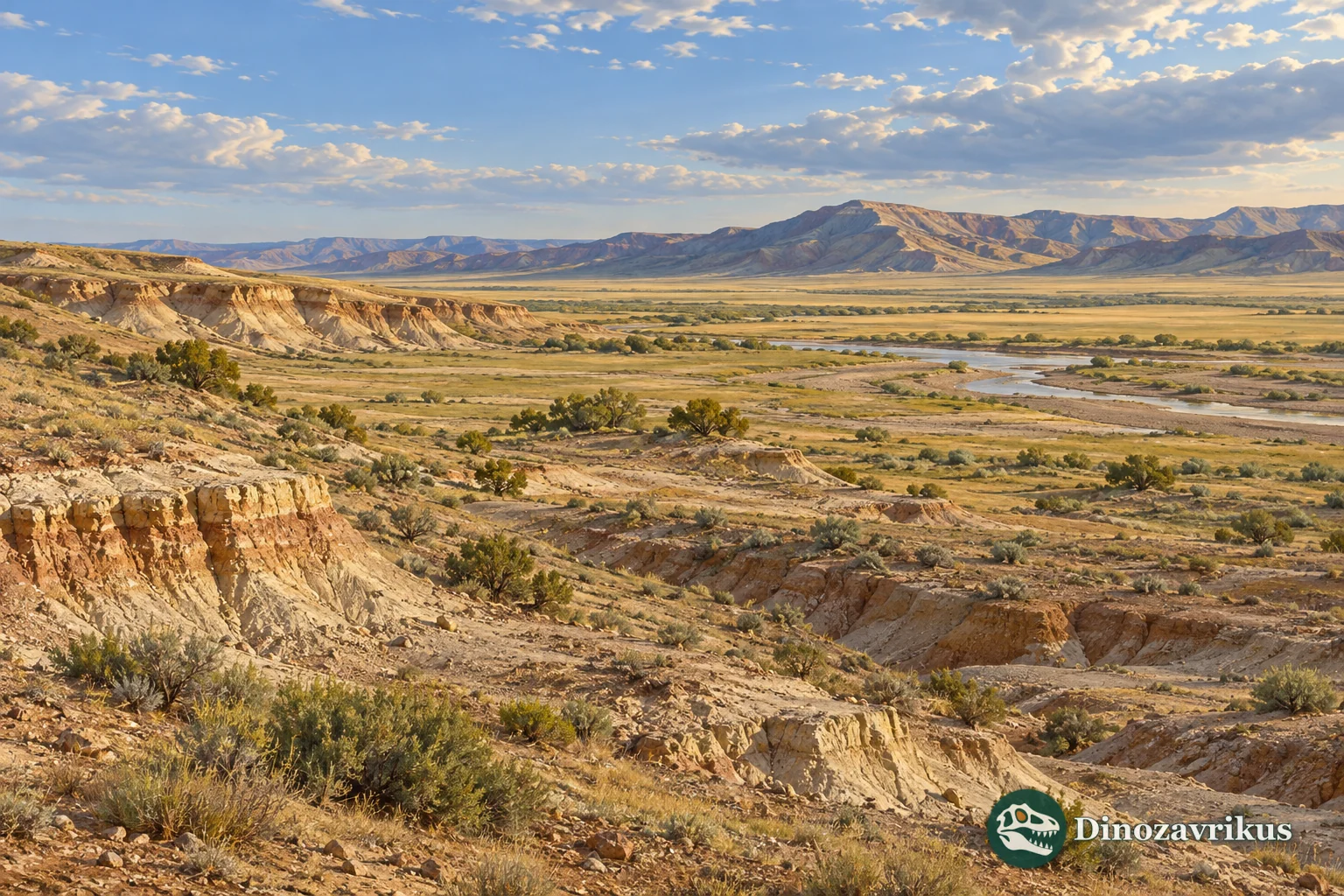
Hsanda Gol and Tatal Gol fossils come from Oligocene deposits in Mongolia. Other material broadens the geographical record into northern China and Kazakhstan under the revised genus concept. Mammal assemblages in the Taatsiin Gol region suggest open areas, though the vegetation at each fossil spot cannot be reconstructed precisely from a genus name.
Large canines and chewing anatomy are compatible with eating animal food, perhaps small prey, but no preserved meal identifies a menu. The cover's fur, ears and color are artistic choices. The associated Chinese specimen supplies more direct information about limbs than the older Mongolian type, and the two evidence levels should remain distinct.
Frequently asked questions
Which species were named first?
Matthew and Granger named D. colgatei and the larger D. berkeyi from Mongolian fossils in 1924.
Is a complete skeleton known?
No. The Chinese D. berkeyi specimen includes associated skull and limb material, but it is incomplete.
Why has digging been proposed?
Strong forelimb elements, a broad hand and claws support that functional interpretation; no attributable burrow is known.
What happened to the name Tshelkaria?
A 2006 revision treated Tshelkaria as a junior synonym of Didymoconus after reassessing the type skull and teeth.