

Dinofelis was an extinct felid genus within the sabre-toothed subfamily. Fossils are known from Africa and Eurasia, with some North American forms also assigned to the genus. Its upper canines varied in length and flattening between lineages. It was not one unchanging sabre-toothed cat. The cover's coat pattern is an artistic choice.
Alongside Homotherium and Megantereon, Dinofelis illustrates the diversity of sabre-toothed cats. Large canines do not prove that these genera shared a hunting style or prey. Researchers compare dental combinations, localities and layers.
Quick facts
| Family | Felidae |
|---|---|
| Subfamily | Machairodontinae |
| Age | Pliocene and Pleistocene, varying by species |
| Regions | Africa and Eurasia; some North American forms |
| Evidence | Skulls, jaws, teeth and some limb bones |
| Predation | Carnivory is anatomical; particular prey is unproven |
What can the fossils tell us?
Upper canines and carnassials must be compared with skulls. Canine length varies; one tooth cannot establish a complete hunting method.
South African deposits contain several carnivores and primates. Bones in the same cave layer do not show which predator, if any, killed a particular primate.
Revisions recognize several species and leave fragmentary fossils at genus level when diagnostic characters are missing.
Species and revision of the fossils
A systematic revision by Lars Werdelin and Margaret Lewis compared skulls, jaws and teeth that had received differing identifications. It recognized several Dinofelis species while leaving some fragmentary fossils without a species name. Later North African material widened the discussion of variation. The count of species depends on diagnostic criteria and cannot simply be assigned to each newly recovered bone.
The South African forms D. barlowi and D. piveteaui are distinguished by combinations of characters, although isolated teeth can overlap in variation. Drimolen material suggests at least two Dinofelis forms in one cave system. This makes species naming from a single canine hazardous.
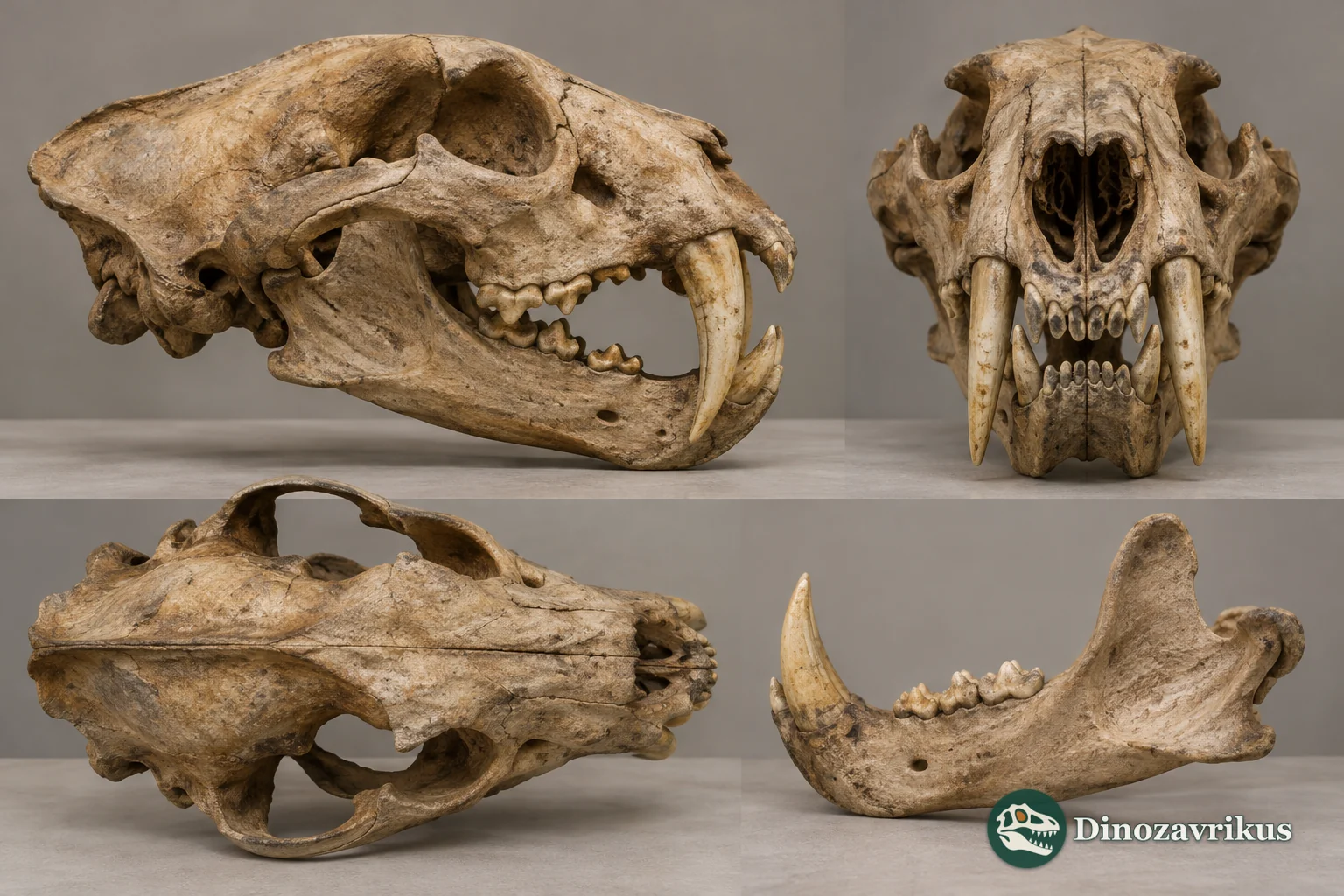
Canines and hunting inferences
Dinofelis upper canines were laterally compressed and differ from those of living big cats. Their form changed during the genus's evolution; the younger D. piveteaui was described in the revision as more specialized in sabre-toothed morphology. Functional arguments about a bite must consider the full skull, lower jaw and neck, not canine length alone.
Some localities also preserve postcranial bones that can inform body proportions and movement. Measurements from one species cannot automatically be transferred to the whole genus. The cover depicts a plausible animal, not a measured portrait of every Dinofelis population.
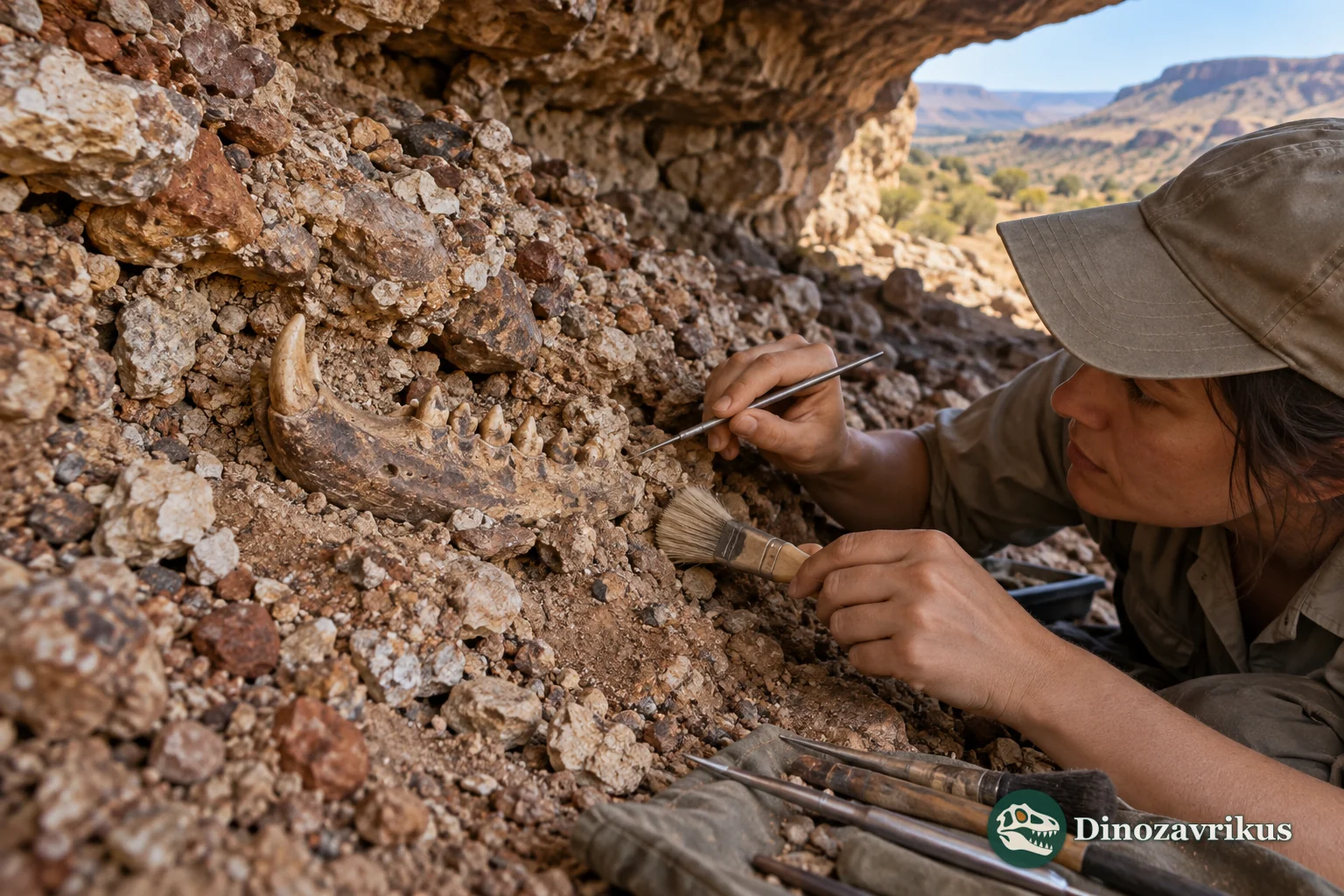
Cave deposits and ancient primates
South African caves contain large felids alongside other carnivores, ungulates and ancient primates. A layer containing Paranthropus does not identify Dinofelis as its killer. Caves accumulated animals by several processes over time, including carnivore transport, water movement and collapse. A particular attack would require direct diagnostic traces and a secure context.
Some injuries to ancient human relatives have been attributed to large cats, but they cannot be assigned to Dinofelis without distinguishing evidence. A Drimolen study noted no direct evidence that carnivores brought the hominin remains into the sampled deposits. The popular image of a habitual hominin hunter remains a hypothesis rather than an established trait of this genus.
Frequently asked questions
Was Dinofelis the same animal as Smilodon?
No. Both were sabre-toothed felids, but they were distinct genera with different histories and anatomy.
Did all Dinofelis species have identical canines?
No. Canine length and specialization differed; researchers identify species by combinations of characters.
Is it proven to have hunted early humans?
No. Association in cave deposits does not demonstrate a particular attack or identify its predator.
Why are some fossils not named to species?
A lone tooth or damaged jaw can lack characters needed to distinguish close species, so revisions may retain only a genus-level identification.