

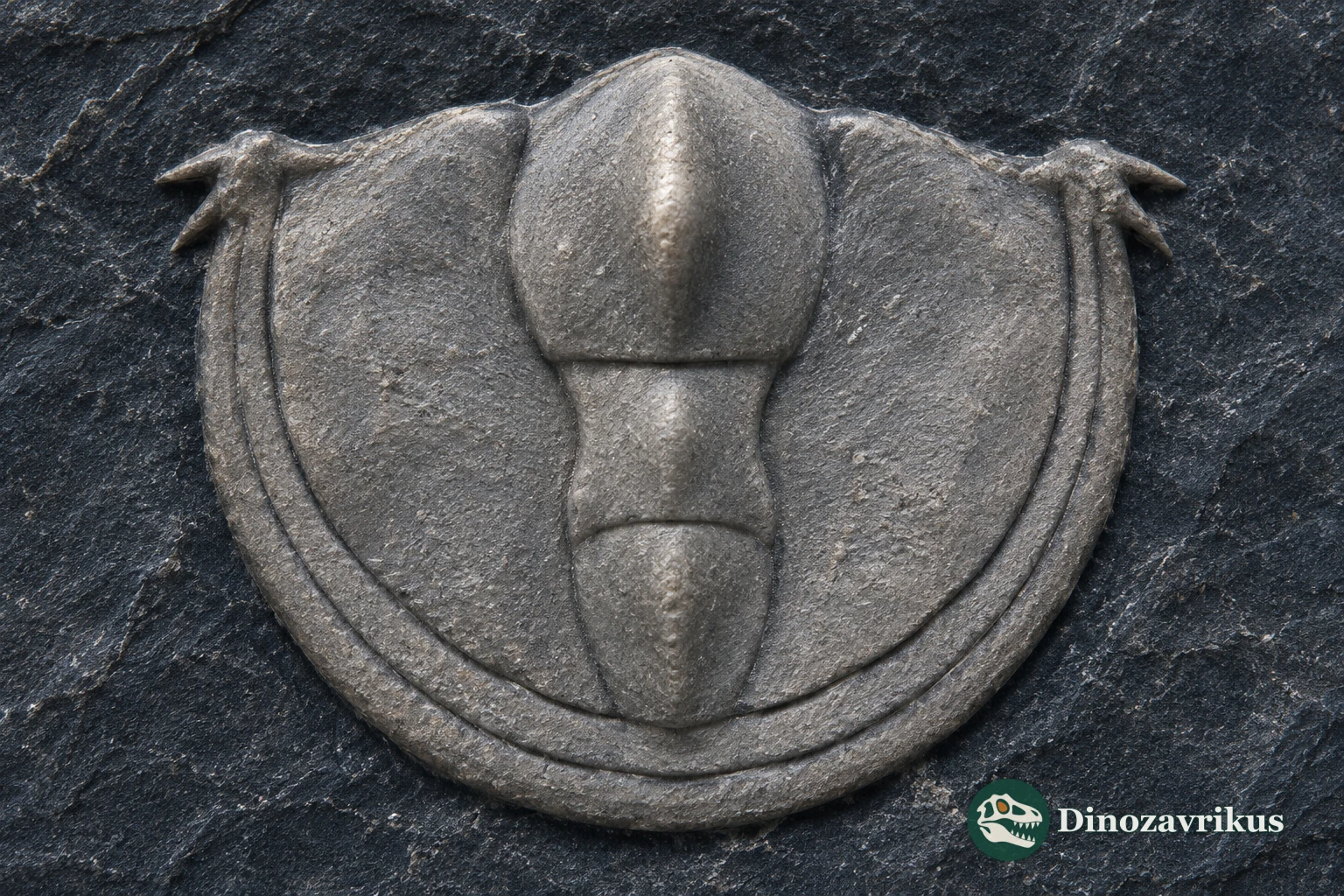
Diplagnostus was a small Cambrian agnostoid. Furrows divide its tail border into bands. The border and the shape of the axis help compare shields from Sweden, South China and the Himalaya, even though some details vary between localities.
Quick facts
| Group | Agnostida, Diplagnostidae |
|---|---|
| Age of key fossils | Middle Cambrian |
| Genus named | Otto Jaekel, 1909 |
| Type species | Diplagnostus planicauda |
| Swedish locality | Andrarum, Skåne |
| Himalayan locality | Kuru section, Zanskar |
What can the fossils tell us?
These grooves and the prominent node on the axis help identify Diplagnostus. The spines at its corners are sometimes reduced.
The original types could not be located. Later specimens from Andrarum preserve the same parts of the shell.
The Teta Member contains other agnostoids alongside Diplagnostus. Their identifications help compare sections on different palaeocontinents.
The Swedish name and the Andrarum specimens
Nils Peter Angelin named Agnostus planicauda in 1851. Otto Jaekel established Diplagnostus in 1909. Recent revisions identify Angelin's species as its type. The original type material could not be located, giving later specimens from Andrarum in southern Sweden particular value.
These include the head shield SGU 4870 and the tail shield SGU 4871. Both provide a basis for comparing fossils from other areas. The Australian form once named Enetagnostus humilis has been interpreted as the same species.
What the tail shield reveals
Typical examples have furrows dividing the tail border and two small spines near its rear corners. The middle of the axis narrows slightly and bears an elongated raised node. The rear part of the axis is longer than the front.
The heads of several diplagnostids can look similar. Researchers therefore examine the tail and consider variation within a species. Some Zanskar shields, for example, have very weak rear spines or none at all.
Detached shields from the Himalaya
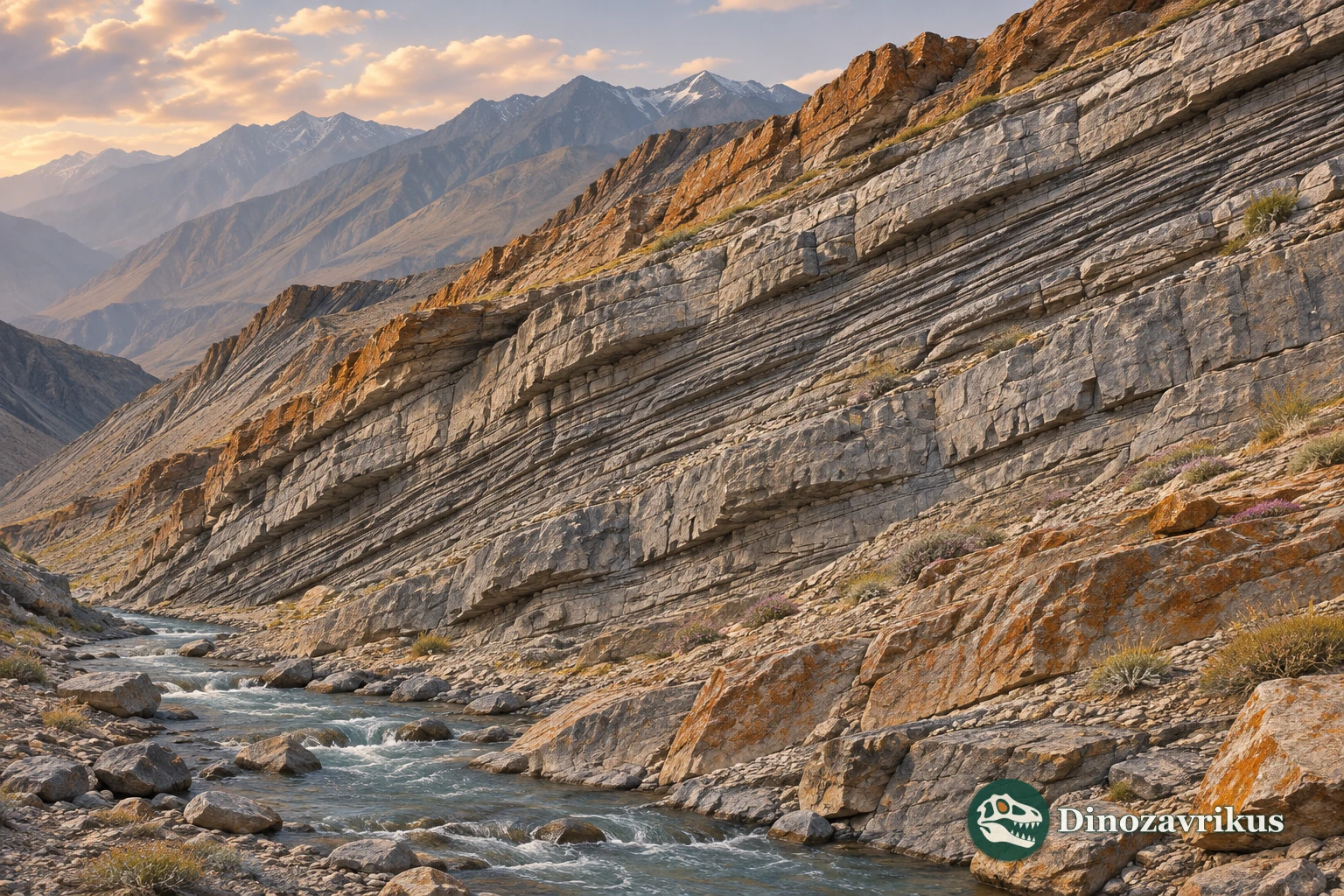
Limestone in the Teta Member of the Karsha Formation yielded five heads and five tails assigned to D. planicauda. They came from a level 36.05 m above the base of the Kuru section, in the Lejopyge acantha Zone of the Guzhangian Stage.
Associated species help correlate Cambrian rock sections. Species of Lejopyge are among those used in the Himalaya. The Diplagnostus shields from Zanskar have a rounder glabellar front than specimens from South China. Such differences matter when comparing samples across regions.
Frequently asked questions
What is the type species of Diplagnostus?
Diplagnostus planicauda, originally named as a species of Agnostus by Angelin in 1851.
What distinguishes the tail shield?
Furrows subdivide the border, and the raised axis carries an elongated node.
Did all shields bear tail spines?
Typical specimens bear a pair. Some from Zanskar have weaker spines or none at all.
What was found in the Kuru section?
Five head shields and five tail shields assigned to D. planicauda were described from one limestone level.