

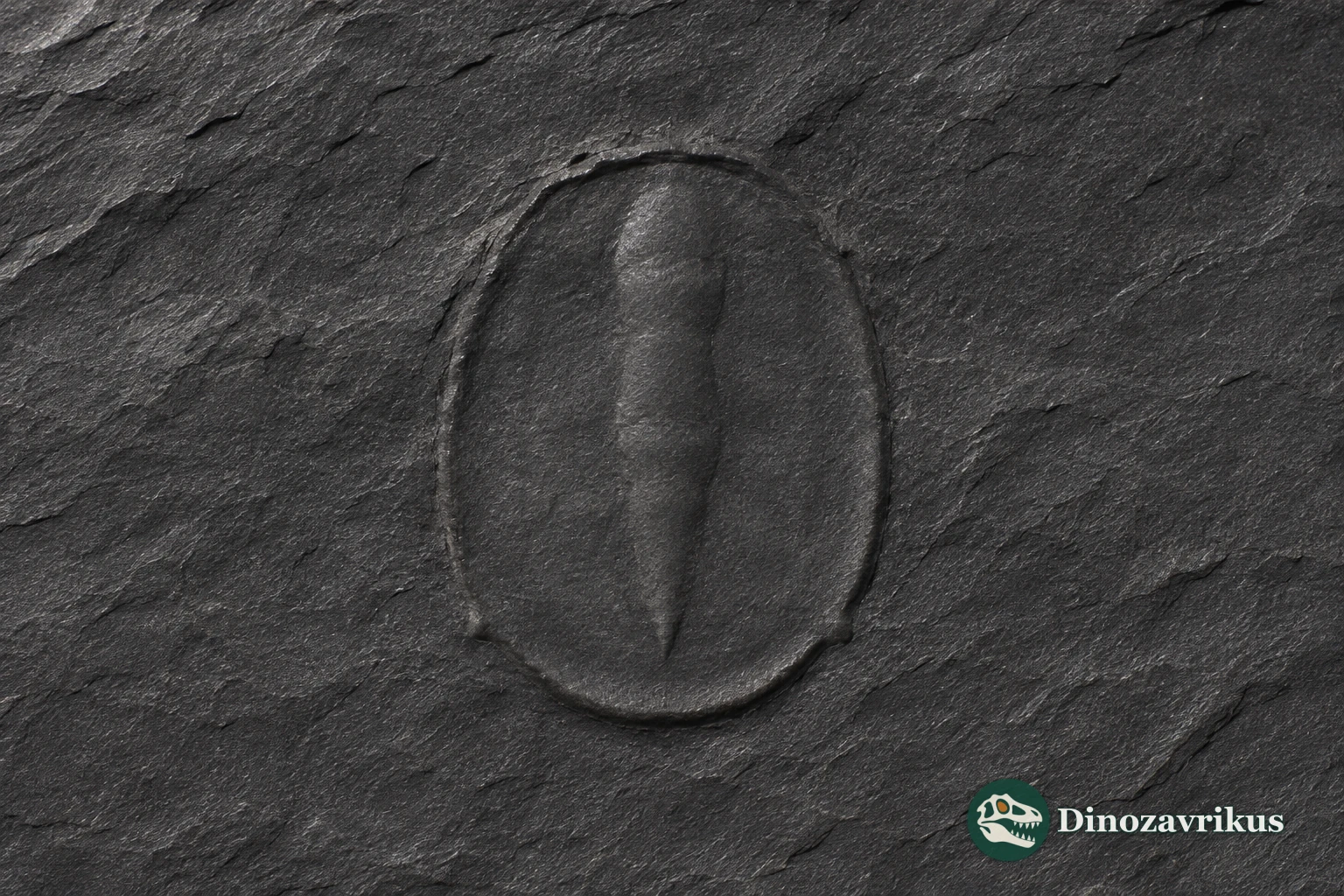
The long axis of the tail shield in Doryagnostus bears faint grooves that often show only as constrictions on its sides. Paleontologists once used the positions of its marginal spines to distinguish Australian and Scandinavian specimens. A larger Norwegian sample showed that this feature varies even at one locality.
Quick facts
| Group | Agnostida |
|---|---|
| Age | Middle Cambrian |
| Named by | Teiichi Kobayashi, 1939 |
| Type species | Doryagnostus incertus |
| Lectotype | Tail shield PMO 28200 |
| Type locality | Krekling, Norway |
What can the fossils tell us?
The axis in the original drawing looks wider than on specimens examined later.
Small Swedish shields sometimes retain faint transverse grooves that fade in larger specimens.
On Norwegian specimens the spines can sit ahead of or behind the axial tip. Position alone cannot separate the two samples.
The Krekling type material
Waldemar Brøgger described Agnostus incertus in 1878 from detached head and tail shields in black shale at Krekling, southern Norway. Teiichi Kobayashi made it the type species of Doryagnostus in 1939. Frank Nikolaisen and Gunnar Henningsmoen traced material with Brøgger’s original label and in 1990 selected a nearly complete flattened tail shield, PMO 28200, as lectotype.
Greenish shale of the Kistedal Formation in Finnmark yielded 16 head shields and 13 detached tail shields of varying completeness. A separate tail shield retained parts of the thorax and the back of the head in articulation.
Reading the relief on the shields
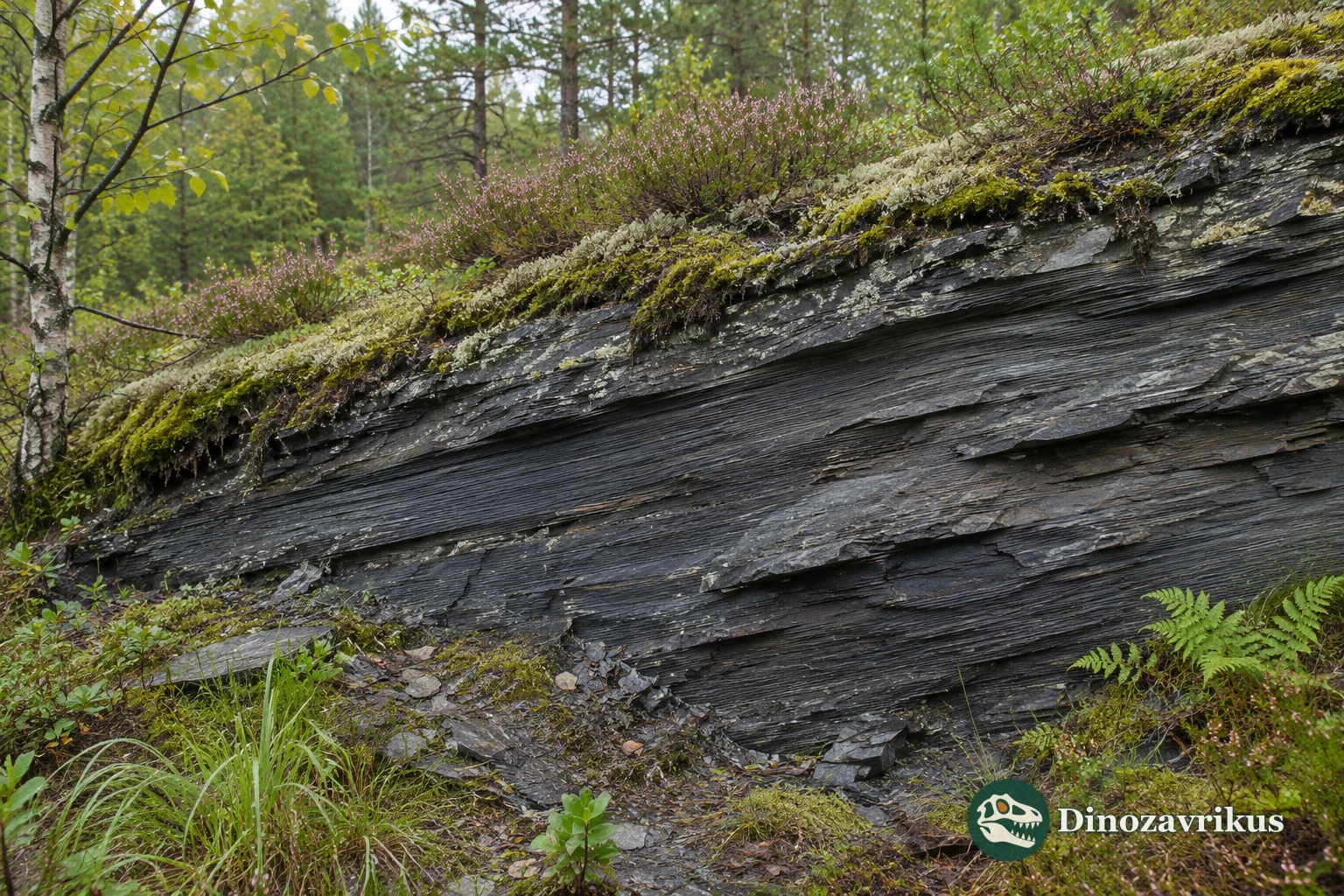
The type species has mostly smooth cheeks that taper moderately forward. The rear lobe of the glabella is slender and nearly parallel-sided. The long tail axis usually ends in a point. Anders Westergård found one or two faint grooves crossing the axis in small specimens. On larger shields the divisions are chiefly visible as lateral constrictions.
In D. deltoides a transverse groove on the head bends more strongly forward, and the triangular area in front is more distinct. Most Scandinavian D. incertus specimens come from the Ptychagnostus punctuosus Zone. Other species of Ptychagnostus also help correlate Cambrian sections.
The Australian material and its name
Australian fossils called D. magister have been distinguished by larger marginal spines, the places where the spines sit on the rim and a less strongly rounded tail margin. At Krekling, however, those spines can sit either before or behind the end of the axis. Nikolaisen and Henningsmoen found the outline of the rear rim more consistent and kept the two forms separate. A 2023 study of Swedish fossils followed a later revision that included the Australian form in D. incertus.
Frequently asked questions
Which specimen anchors the name of the type species?
PMO 28200 is a nearly complete tail shield from Krekling and is the designated lectotype.
What is joined together in the Finnmark specimen?
The tail shield retains parts of the thorax and back of the head.
How visible are the axial rings on young tail shields?
One or two grooves can be seen crossing the axis on some of the small shields.
Can spine position distinguish the Norwegian and Australian fossils?
Norwegian specimens vary in spine position. Paleontologists also compare the outline of the rim and the shape of the axis.