

Dunderbergia was a late Cambrian trilobite best known from detached head and tail pieces. Its name also applies to an interval recognised by a characteristic assemblage of trilobites in western North America. Separate shell parts help identify species within that broader picture.
Quick facts
| Group | Trilobites |
|---|---|
| Age | Late Cambrian |
| Genus named | Charles Walcott, 1924 |
| Type species | Dunderbergia nitida |
| Main remains | Isolated head and tail shields |
| Recorded areas | Western US and Newfoundland |
What can the fossils tell us?
The height and shape of this lobe, the size of the eye lobe and surface granules help distinguish species.
The left sides are joined to each other and to the tail shield, while the right sides are free. The cause of the abnormality is unresolved.
Dunderbergia gives the zone its name. The limits depend on changes in more than one trilobite taxon.
From Nevada to Newfoundland
Charles Walcott established Dunderbergia in 1924. James Hall and Robert Whitfield described the type species in 1877 as Crepicephalus (Loganellus) nitidus. It came from the Dunderberg Formation in Nevada. The raised central lobe is a conspicuous feature of the head, while the known tail shields are short and wide.
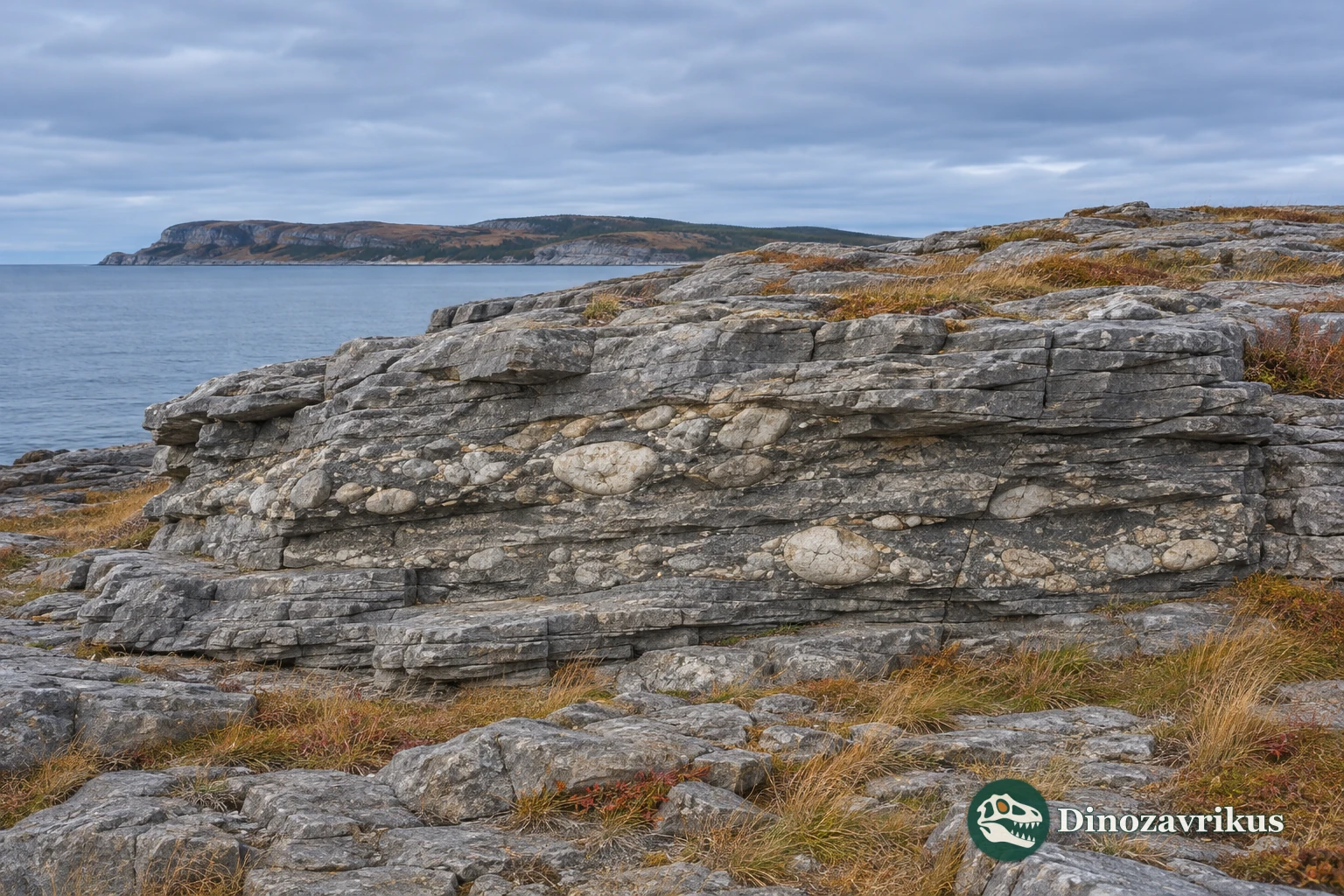
In 2026, Stephen Westrop, Jennifer Eoff and Robert Mayer described Dunderbergia bovicephala from the Shallow Bay Formation of western Newfoundland. The holotype casts light on the shape of the head. It is cranidium GSC 143199, recovered from a limestone boulder on the Cow Head Peninsula. The authors also figured a separate cheek, hypostome and tail shields. These pieces distinguish the species but do not provide a count of its movable trunk segments.
An unusual tail shield
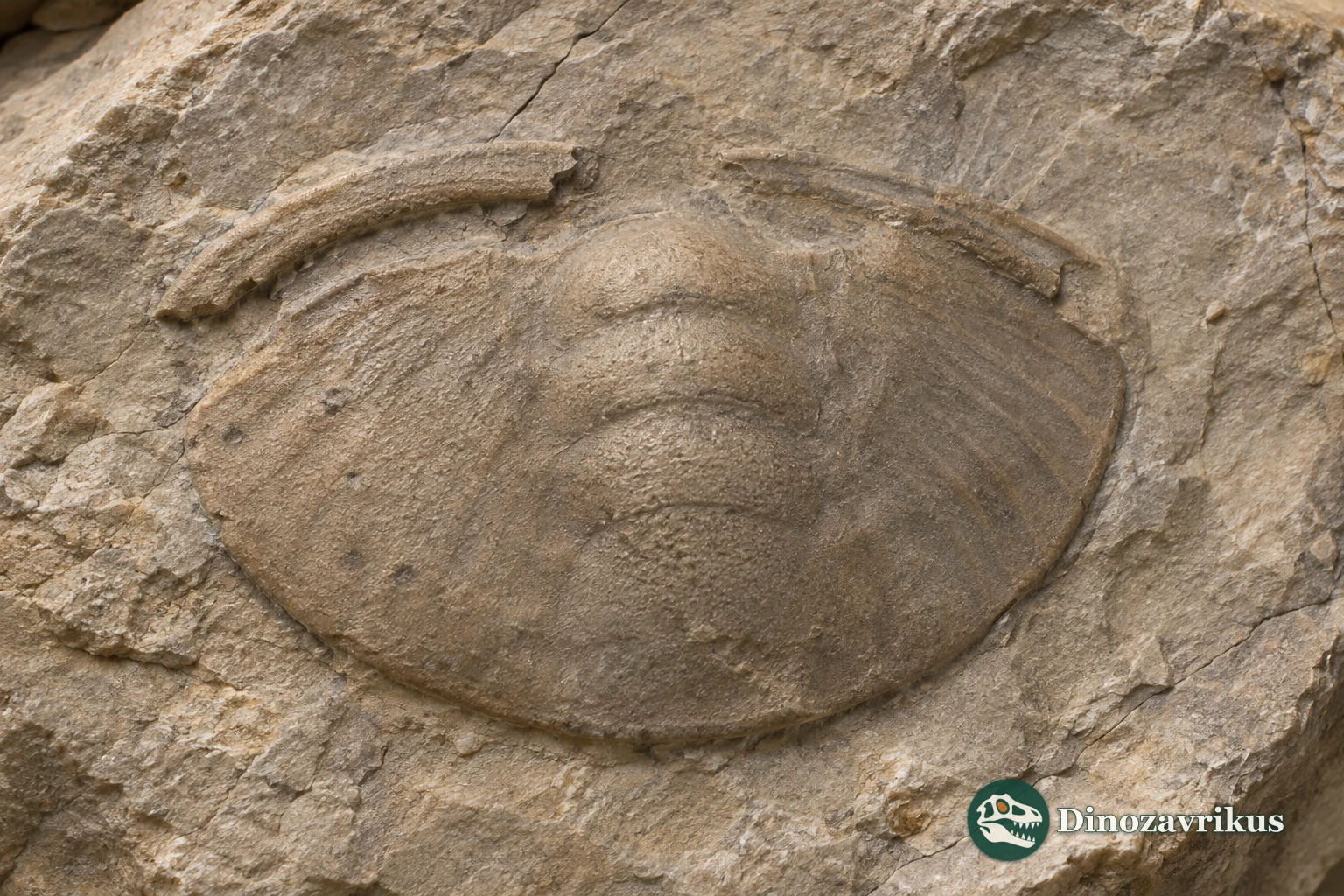
Allison Palmer described a tail shield of Dunderbergia bigranulosa from Nevada with two distorted segments. Their right sides remained free. On the left, the segments were fused with one another and with the rest of the shield. Palmer interpreted it as a probable abnormality. Its cause cannot be determined from that single piece.
An assemblage zone, from one section to another
In the Great Basin, Palmer placed the Dunderbergia Zone above the Prehousia Zone and below the Elvinia Zone. The Aphelaspis interval lies farther down in that sequence. The zone is named after the genus but recognised through a characteristic group of trilobites.
Texas and the Great Basin do not always preserve the same diagnostic species. Species they share can support an approximate correlation, while the exact levels of some boundaries remain difficult to match between sections.
Frequently asked questions
What is the type species of Dunderbergia?
Dunderbergia nitida, first described by Hall and Whitfield in 1877 from Nevada.
What does the Newfoundland holotype preserve?
The central head shield. GSC 143199 came from a limestone boulder on the Cow Head Peninsula.
What is unusual about the Nevada D. bigranulosa specimen?
Two segments are fused on the left to each other and to the tail shield, with their right sides free.
Which zones lie on either side of the Dunderbergia Zone in Palmer's scheme?
In the Great Basin, Prehousia lies below it and Elvinia above it.