

Duriatitan was a sauropod from Late Jurassic England. A large left humerus survives from the type specimen. It provides a reliable measure of one part of the forelimb and much less information about the animal's total length.
Quick facts
| Group | Sauropods (Sauropoda) |
|---|---|
| Age | Late Jurassic (early Kimmeridgian) |
| Region | Europe (Dorset, England) |
| Diet | Herbivorous |
| Type species | Duriatitan humerocristatus |
| Holotype | NHMUK R44635, a left humerus about 1.35 m long |
| Strata | Kimmeridge Clay Formation |
What can the fossils tell us?
The holotype NHMUK R44635 is a left humerus. Its length is measurable while the neck and tail are unknown.
The upper part of the humerus bears a deltopectoral crest. Damage to this region limits comparisons with other sauropods.
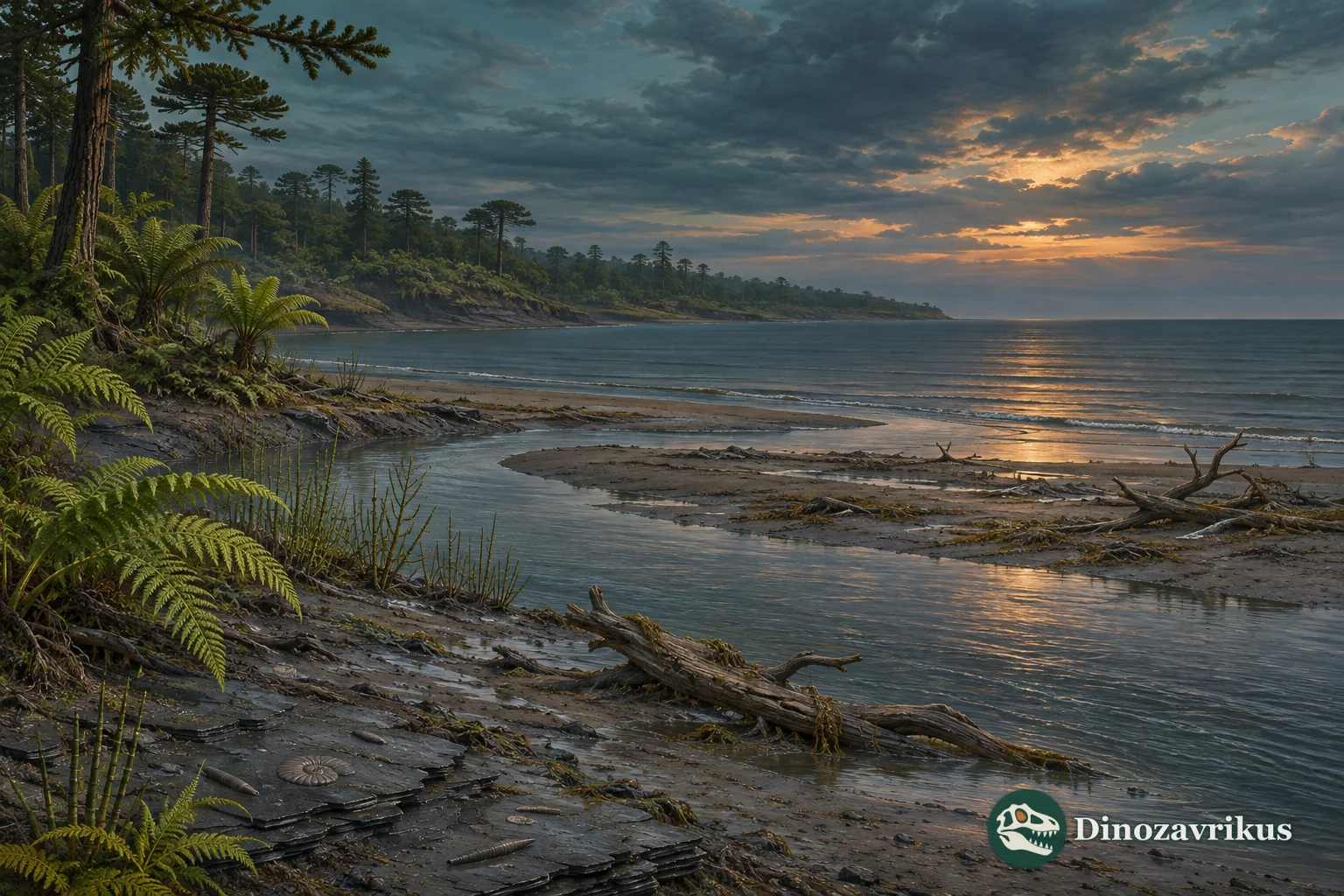
The bone of a land animal occurs in marine sediment. The deposit records where the bone was buried and gives little information about the dinosaur's behaviour.
One bone and several names
John Hulke described the bone from near Weymouth in 1874 as a species of Cetiosaurus. Later authors assigned it to other genera. In 2010 Paul Barrett, Roger Benson and Paul Upchurch revised the dinosaurs of Dorset and established the genus Duriatitan. The first part of the name comes from the Latin name for Dorset.
The type left humerus is long and relatively slender. A deltopectoral crest near its upper end provided an attachment for muscles associated with the shoulder and forelimb. The species epithet humerocristatus refers to this crest.
What can be reconstructed from the arm
The available evidence tentatively places Duriatitan among titanosauriforms. The damaged area makes it hard to check the features that might place it within a narrower branch. Slender humeri occur in more than one sauropod lineage, so proportions alone cannot identify a family.
A humerus about 1.35 metres long indicates a large animal. Estimating total length from it is difficult because sauropods had different proportions of the humerus, neck, trunk and tail. Herbivory follows from the broader sauropod anatomy. The type preserves no teeth or food remains.
Frequently asked questions
Where was Duriatitan found?
The fossil came from marine Kimmeridge Clay deposits near Weymouth in southern England.
How long is the humerus?
It measures about 1.35 metres. The full body length is more difficult to establish.
What does the name mean?
The genus name refers to Dorset, and the species epithet refers to the crest on the humerus.
Can Duriatitan be assigned to a family?
It is tentatively identified as a titanosauriform. The preserved material is too limited for a narrower assignment.