

Echmatemys was an Eocene freshwater turtle from North America. Its species were long recognised chiefly from their shells. A Wyoming specimen preserving the skull, shell and limbs together provided a way to test which isolated fossils came from the same species.
Quick facts
| Group | Turtles, geoemydids (Geoemydidae) |
|---|---|
| Age | Eocene |
| Region | North America, western United States |
| Type species | Echmatemys septaria (Echmatemys stevensoniana) |
| Scientific name | Echmatemys |
| Diet | No direct dietary evidence |
What can the fossils tell us?
Green River specimen TMP 2008.00.14 preserves the skull, shell and limbs together. It made a description of the skull of Echmatemys haydeni possible.
The boundaries of the external scutes made grooves in the bone. Their course relative to the bone sutures helps distinguish shells.
Shells changed as turtles grew. Identifying a juvenile is strongest when several features survive and can be examined together.
The name Echmatemys
Oliver Hay introduced the genus in 1906 with E. septaria as its type species. It had previously been described as Emys septaria. More recent work has treated it as a synonym of E. stevensoniana. Several historical species were named from isolated shells. Revising those names involves testing whether the same shell features recur in comparable specimens.
Gilmore's slab and the Eocene record
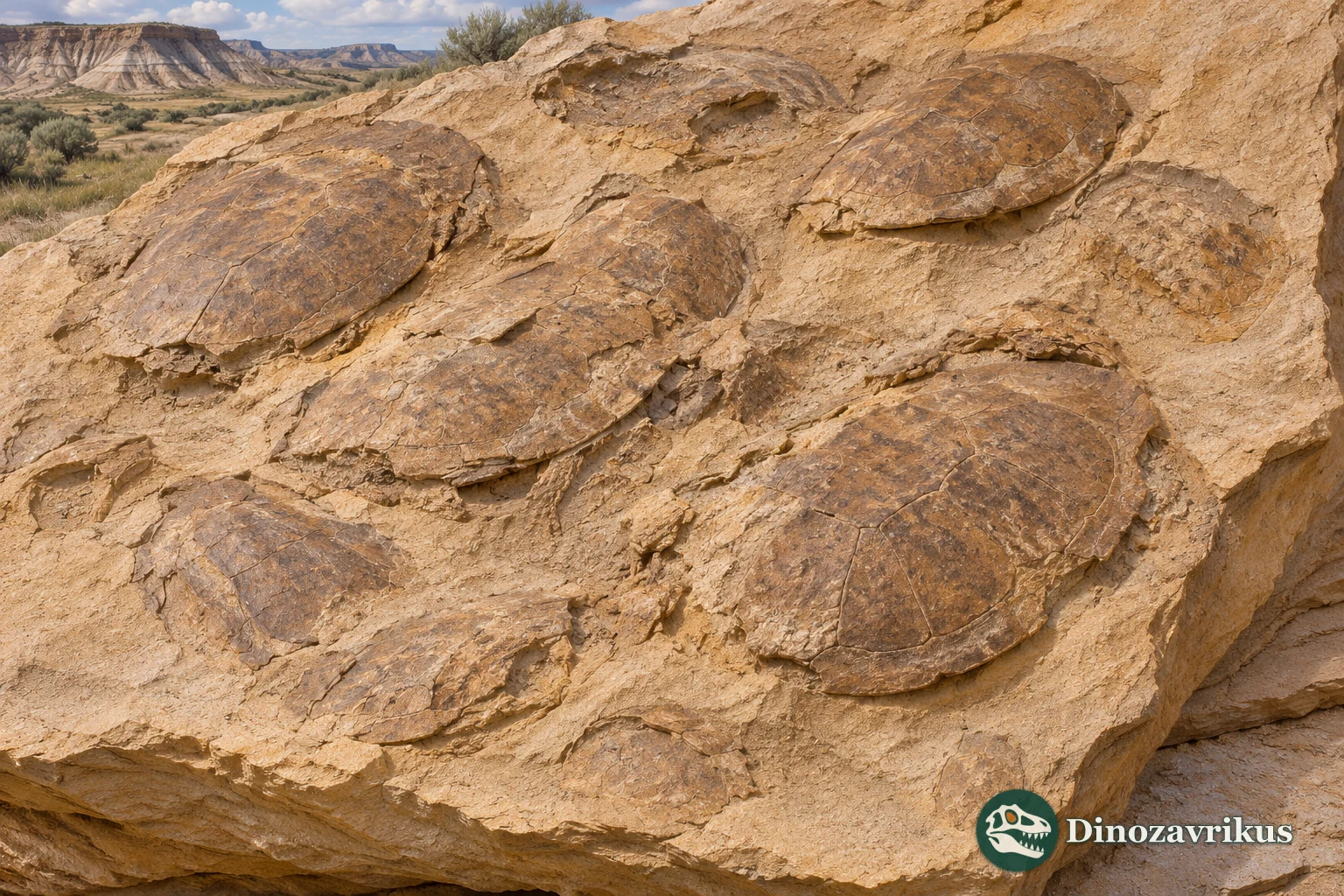
Charles Gilmore described a Wyoming slab preserving several turtle shells in 1945. Evangelos Vlachos reexamined those fossils in a 2020 revision of the genus. Early records come from the Willwood Formation, which also preserves the lizard Anolbanolis. Other specimens from the Green River and Bridger formations carry the record into later Eocene deposits.
An articulated skeleton linked skull and shell
The Green River specimen TMP 2008.00.14 preserves its shell, skull and limbs together. Shell features identify it as E. haydeni. Its 31 mm skull gave researchers a direct comparison for USNM 17999, an isolated skull from the Bridger Formation, and supported identifying that skull as the same species.
A young Echmatemys
Specimen FOBU 14014, a nearly complete carapace of a young E. naomi, measured 110 mm. Researchers saw four growth lines in one of its costal bones and proposed an age of about four years. The length is a direct measurement of the juvenile. The age depends on the interpretation of the growth lines.
Relationships and habitat
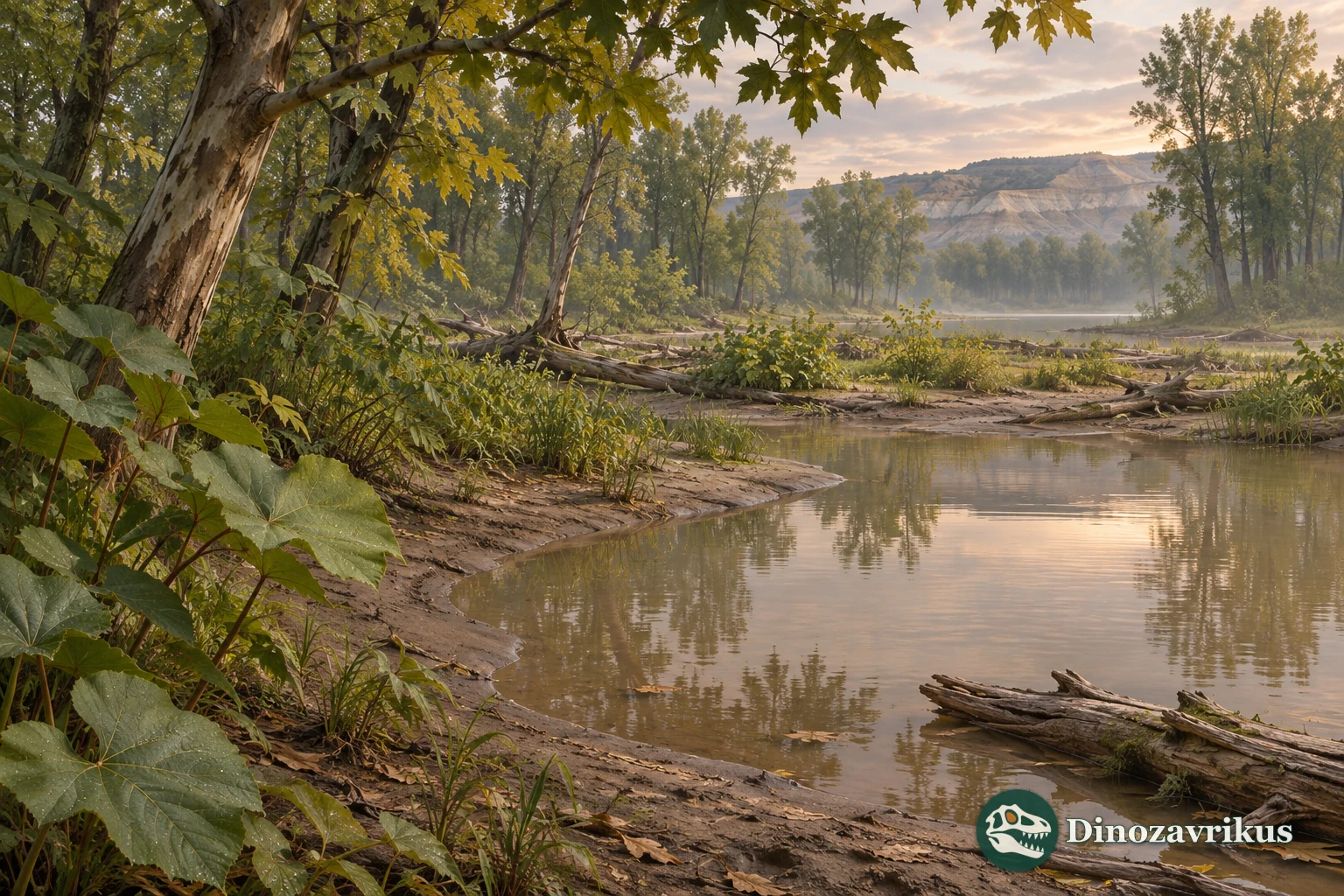
Echmatemys is traditionally assigned to Geoemydidae. Phylogenetic analyses have placed its species near living geoemydids or near the base of the wider group containing geoemydids and tortoises. The result depends on the characters used in the analysis. Its shell anatomy and the deposits in which it occurs support a freshwater habit.
Frequently asked questions
Where has Echmatemys been found?
It occurs in Eocene deposits of western North America, including several fossil-bearing formations in Wyoming.
Why was a skull-bearing skeleton important?
The shell bore features identifying E. haydeni. Since the skull lay in place, researchers could link its anatomy directly to that species.
Why have some historical names been combined?
Shell characters vary among individuals and through growth. Revisions test whether the features once used to name species reliably distinguish them.
How large was a young Echmatemys?
One young E. naomi had a 110 mm carapace. Researchers estimated that it died at about four years of age.