

Edlartetia was a Miocene member of the true lizard family. Fragments of lower jaws from France, Germany and Austria reveal details of its teeth. Some have an expanded tip with a distinct constriction just below it.
Quick facts
| Group | True lizards (Lacertidae) |
|---|---|
| Age | Miocene |
| Region | Europe, France, Germany and Austria |
| Type species | Edlartetia sansaniensis |
| Scientific name | Edlartetia |
| Diet | No direct evidence |
What can the fossils tell us?
The species name is anchored to a fragmentary right dentary from Sansan. Other dentary fragments were identified in Germany and Austria.
The constriction and the shape of the expanded tooth tip together help researchers identify the material.
The material preserves parts of the jaw. Body proportions, coloration and exact diet remain unknown.
How the species got its name
Édouard Lartet described the species as Lacerta sansaniensis in 1851, naming it for Sansan in southwestern France. Marc Augé and Jean-Claude Rage created the genus Edlartetia in a later revision. The neotype MNHN Sa 23595 is an incomplete right dentary from Sansan.
Reading the teeth
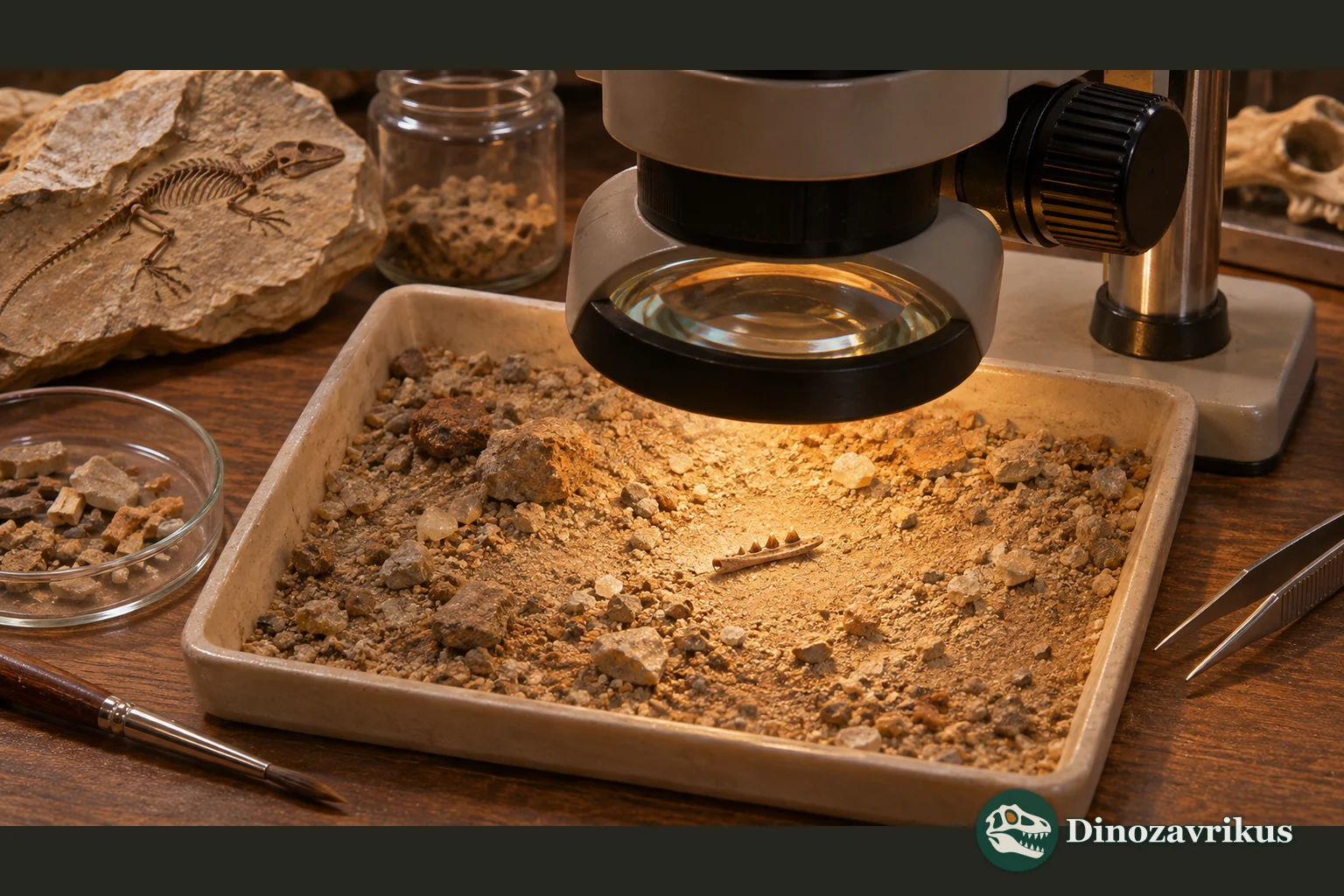
A left dentary from Sandelzhausen in Germany preserves seven tooth positions. The expanded crowns have a roughly triangular or teardrop outline, with a cutting edge along the rear of the tip. The shape of the crown and the constriction below it help identify even a small piece of jaw. Tooth structure likewise helps compare jaw fragments of another fossil lacertid, Mediolacerta.
A record across the Miocene
The German jaw comes from the late Early Miocene, while the French type material is Middle Miocene. The material from Kohfidisch in Austria is Late Miocene. The localities show when and where the genus is recorded. The structure of one tooth row is insufficient to establish exactly what prey the lizard caught or how it captured it.
Frequently asked questions
Where was the neotype found?
It comes from Middle Miocene deposits at Sansan in southwestern France.
Where does the tooth narrow?
The constriction sits on the upper part of the shaft immediately below the expanded crown.
Which is older, the German or French find?
The Sandelzhausen dentary comes from the late Early Miocene and predates the type material from Sansan.
Can the fragments tell us what the whole lizard looked like?
The dentaries reveal the shape and arrangement of the teeth. A reliable reconstruction of the body would require other parts of the skeleton.