

Elbretornis was a Late Cretaceous enantiornithine from northwestern Argentina. The bones that define the species include the upper wing and parts of the shoulder and forearm. An opening near the shoulder joint provides evidence that part of the respiratory system extended into the humerus.
Quick facts
| Group | Enantiornithines (Enantiornithes) |
|---|---|
| Age | Late Cretaceous (Maastrichtian) |
| Region | South America (Salta Province, Argentina) |
| Diet | Exact diet unknown |
| Type species | Elbretornis bonapartei |
| Holotype | PVL 4022, humerus with associated forearm and shoulder bones |
| Deposits | Lecho Formation |
| Locality | El Brete |
What can the fossils tell us?
The upper wing bone and several associated elements provide points of comparison for the shoulder joint. The form of the head and the plumage remain unknown.
Its shape and position support an interpretation as an entrance for an air sac extension. It leaves the extent of the rest of the system open.
The site preserves multiple enantiornithines. Their bones allow anatomical comparisons, and the fossil association gives little information about their individual behaviour.
The bones that define the species
Cyril Walker and Gareth Dyke named the bird in their study of the El Brete collection, published in the journal volume dated 2009. The genus takes its name from the site. The species honours José Bonaparte, who led fieldwork there.
The type material, PVL 4022, includes a humerus, radius, ulna, scapula and coracoid. These elements link the shoulder and different segments of the wing. Enantiornis, the bird on which Walker based the group name Enantiornithes, also comes from El Brete.
The opening near the shoulder
On the back of the humerus near its upper end, a hole leads into the interior of the bone. In living birds, a branch of the clavicular air sac can enter the humerus in a similar position. The feature is evidence of skeletal pneumaticity in one of the wing bones. The fossil provides no measurement of its breathing rate or flight abilities.
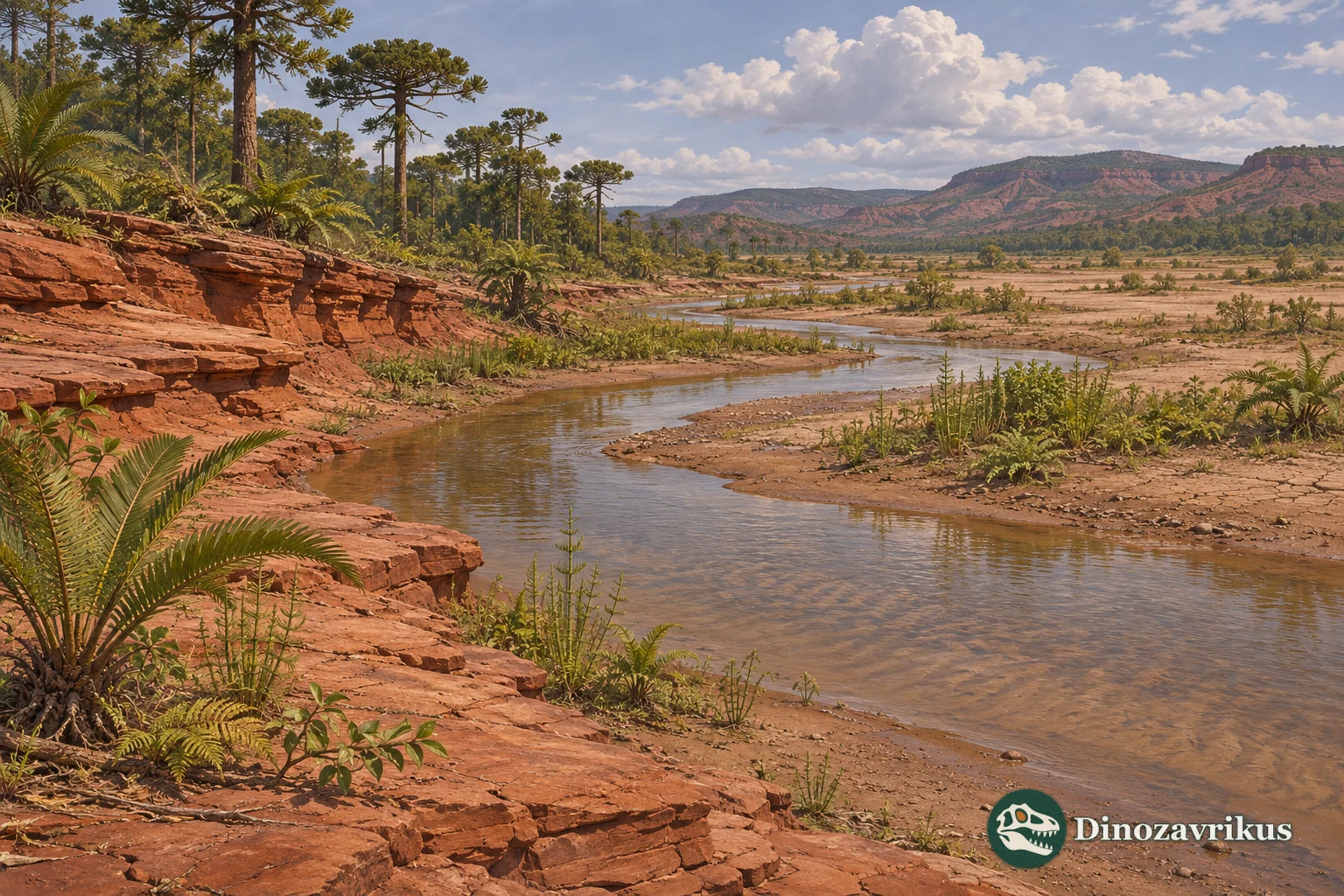
The bird remains occur in sandstones of the Lecho Formation. Sedimentary evidence from El Brete points to a coastal plain with river channels and standing water. The deposit records where the bones accumulated. The birds' feeding habits remain unresolved.
Frequently asked questions
Where was Elbretornis discovered?
Its remains came from the Lecho Formation at El Brete in Salta Province, Argentina.
What is preserved?
The holotype includes the upper wing bone and associated parts of the forearm and shoulder.
What does a pneumatized bone contain?
An extension of an air sac entered the interior. A foramen near the shoulder joint is evidence of this feature in Elbretornis.
Who was the species named after?
José Bonaparte, the Argentine palaeontologist who led fieldwork at El Brete.