

Elrathina was a Middle Cambrian trilobite genus. Adults in the original material of the type species show 17 or 18 thoracic segments and a small tail shield. Subtle differences in the head and tail shields distinguish some otherwise similar species.
Quick facts
| Group | Trilobites |
|---|---|
| Age | Middle Cambrian, Miaolingian |
| Region | North America (Canada, United States and Greenland) |
| Diet | Unknown |
| Type species | Elrathina cordillerae |
| Genus named by | Charles Resser, 1937 |
What can the fossils tell us?
Adults in Rominger's series display 17 or 18 segments. Most of the articulated specimens lack free cheeks.
Geyer and Peel recognised a separate species on anatomical grounds. They left it without a formal name in that study.
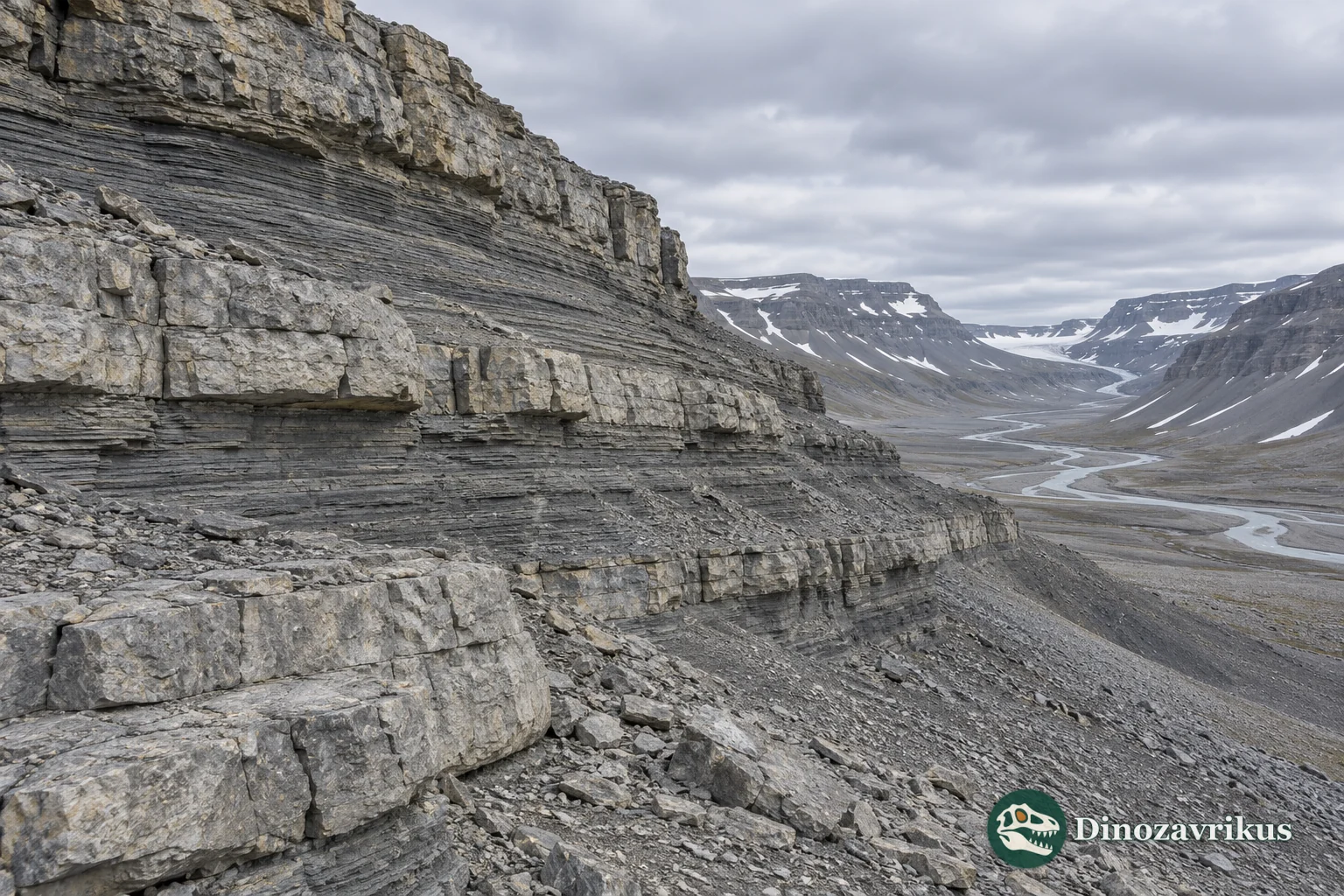
Fossils from the Ekspedition Bræ Formation retain small differences in the head and tail and in the shell surface.
The original Mount Stephen fossils
In 1887 Carl Rominger described the type species as Conocephalites cordillerae from Mount Stephen, British Columbia. Charles Resser established Elrathina in 1937. Rominger's original material is now at the University of Michigan Museum of Paleontology. It includes eight syntypes on six slabs.
A redescription counted 17 or 18 segments on adult thoraces in the type lot. The eye lobes are small and set in front of the midpoint of the head. The pygidium is short, with a weakly defined border. Elrathina lends its name to a regional biozone alongside Bathyuriscus.
Why some fossils changed species
Gerd Geyer and John Peel compared the type material with fossils from the Burgess Shale. Almost all the Burgess Shale specimens they reviewed under the old name showed differences in the head and tail shields. The authors recognised these as a separate species, which they described informally without a new name.
In the Ekspedition Bræ Formation of North Greenland, the same study described E. aphrodite, E. athena and E. hera. Differences in glabellar outline, eye position and shell surface helped distinguish them. In Idaho, E. idahoensis occurs in the Lakeview Limestone. It was formerly assigned to Elrathia.
Frequently asked questions
How many thoracic segments did the type species have?
Adults in Rominger's original material show 17 or 18.
Where are the original Elrathina cordillerae specimens held?
The original series from Mount Stephen is in the University of Michigan Museum of Paleontology.
What did the Burgess Shale revision find?
Most specimens examined differed from the type material of E. cordillerae. The authors recognised a separate species without giving it a formal name.
Which species were described from North Greenland?
E. aphrodite, E. athena and E. hera were described from the Ekspedition Bræ Formation.