

Enhydrictis is an extinct mustelid genus known primarily from Pleistocene Sardinia. Its type species, E. galictoides, was described from a skull; later finds added teeth and limb bones. Older material at Monte Tuttavista supported a second island species, E. praegalictoides. The coat on the cover is an artistic choice, not fossil evidence.
The fossil record makes this a case study in how a seemingly otter-like skull can lead to a more complicated interpretation when its palate, teeth and limbs are examined together.
Quick facts
| Group | Mustelidae, Galictini |
|---|---|
| Type species | Enhydrictis galictoides, named in 1901 |
| Earlier island species | E. praegalictoides, described in 2018 |
| Region | Sardinia, Italy |
| Age | Pleistocene; species occur in different intervals |
| Evidence | Skulls, jaws, teeth and some limb bones |
| Unresolved | The degree of aquatic adaptation |
What can the fossils tell us?
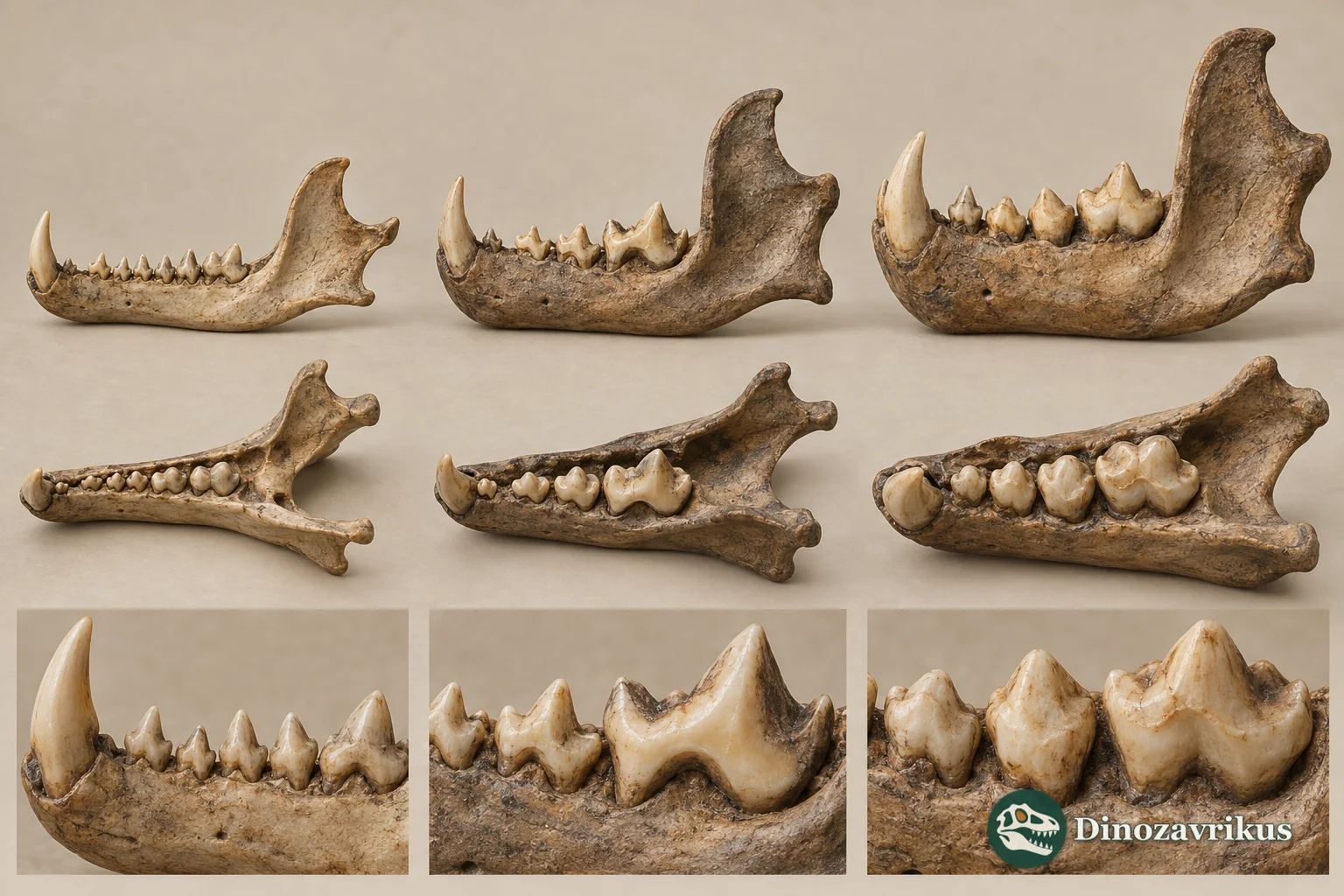
The original E. galictoides skull had a flattened upper profile. Palate and tooth characters differentiated it from otters; shape alone does not establish swimming habits.
Comparative skull and dental characters from Monte Tuttavista supported E. praegalictoides. A worn isolated tooth needs cautious identification.
Short limb proportions were taken as evidence for semiaquatic habits by some authors, while others favored terrestrial movement. Bones do not record observed behavior.
A skull that initially resembled an otter
Charles Immanuel Forsyth Major described E. galictoides in 1901 from a skull in the San Giovanni breccia near Iglesias. Its flattened upper profile and expanded rear cranium suggested an otter at first glance. Once the underside was exposed, the broad palate between the teeth and its long posterior extension revealed important differences from living otters.
Teeth and palate place the animal among another mustelid lineage related to grisons. The name's aquatic implication is not direct evidence of aquatic behavior. Some authors interpreted short limb proportions as semiaquatic; others found terrestrial movement more plausible. Neither interpretation is an observed behavior of the extinct animal.
A distinct form at Monte Tuttavista
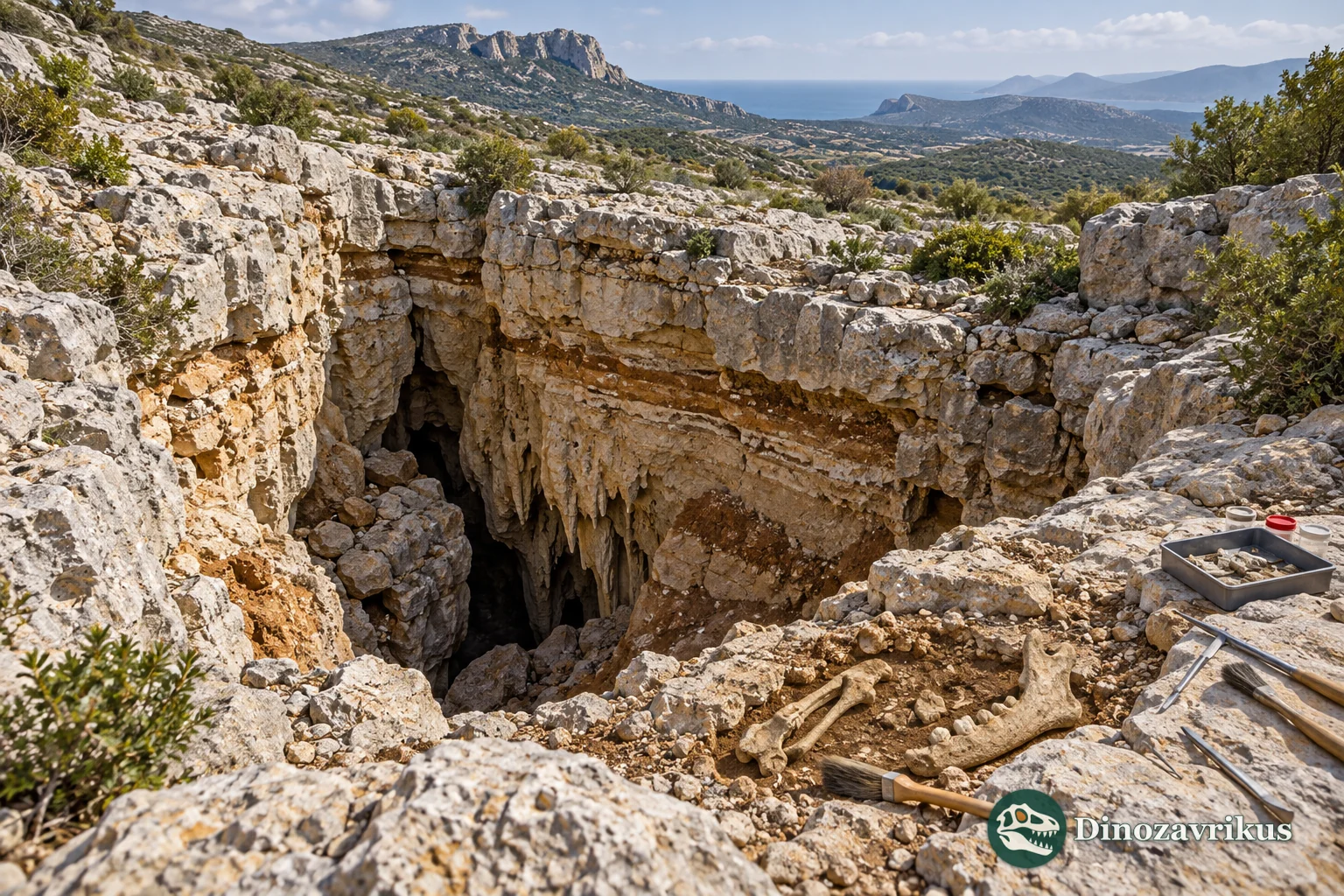
Limestone fissures at Monte Tuttavista near Orosei hold vertebrates from different Early and Middle Pleistocene intervals. In 2018 Lorenzo Rook and colleagues compared cranial, dental and other mustelid bones from these deposits. They named Enhydrictis praegalictoides alongside a separate island species of Pannonictis. These are distinct diagnosed forms, even though both occur in Sardinian records.
The new species resembles E. galictoides, yet differs in a combination of characters. A proposed evolutionary sequence is inferred from morphology and geological context. It is not an unbroken pedigree of every population. Later E. galictoides material is reported from additional Sardinian localities, including Dragonara.
What an island record can show
Fossils from different island deposits allow changes in faunas to be compared over time. They do not show the exact sea crossing of an ancestor. Similarities to mainland relatives support hypotheses of origin, while the later Sardinian fauna developed in an island setting. Prolagus also lived on the island, but a regional species list does not prove that particular individuals met.
Skulls provide taxonomic characters and limbs permit functional hypotheses. Neither preserves exact prey, coat color, body mass or frequency of swimming. The cover depicts a possible terrestrial appearance and should not be read as a measured reconstruction.
Frequently asked questions
Was Enhydrictis an otter?
No. Its skull initially looked otter-like, but the palate and teeth link it to a different mustelid lineage.
Which Sardinian species are described?
The type species E. galictoides and E. praegalictoides, named in 2018 from Monte Tuttavista, are discussed here.
Is swimming established?
No. Limb proportions have received both semiaquatic and terrestrial interpretations, and fossils cannot show the animal's behavior directly.
What remains are known?
Cranial and dental fossils as well as some limb bones are known; fur and stomach contents are not preserved.