

Entelodonts were an extinct family of artiodactyl mammals known from skulls, jaws, teeth and parts of skeletons across Eurasia, Africa and North America. They ranged from the Eocene to the Miocene and included animals with different sizes and anatomies. “Hell pigs” conveys the impression of their massive skulls, but it is not a precise statement of relationship or behaviour.
The family includes several genera, among them Eurasian Entelodon, North American Archaeotherium and the later Daeodon, also historically called Dinohyus. They should not be reduced to one “typical” animal. Entelodonts belong in the ancient mammal catalogue.
Quick facts
| Scientific name | Entelodontidae Lydekker, 1883 |
|---|---|
| Rank | Extinct mammal family |
| Broader group | Cetartiodactyla; relationships vary among analyses |
| Age | Eocene to Miocene, roughly 40–16 million years ago |
| Geographic range | Eurasia, Africa and North America |
| Known material | Skulls, jaws, teeth, vertebrae and limb bones |
| Diet | Probably varied and omnivorous; evidence differs among taxa |
| Representative genera | Entelodon, Archaeotherium, Daeodon and others |
What can the fossils tell us?
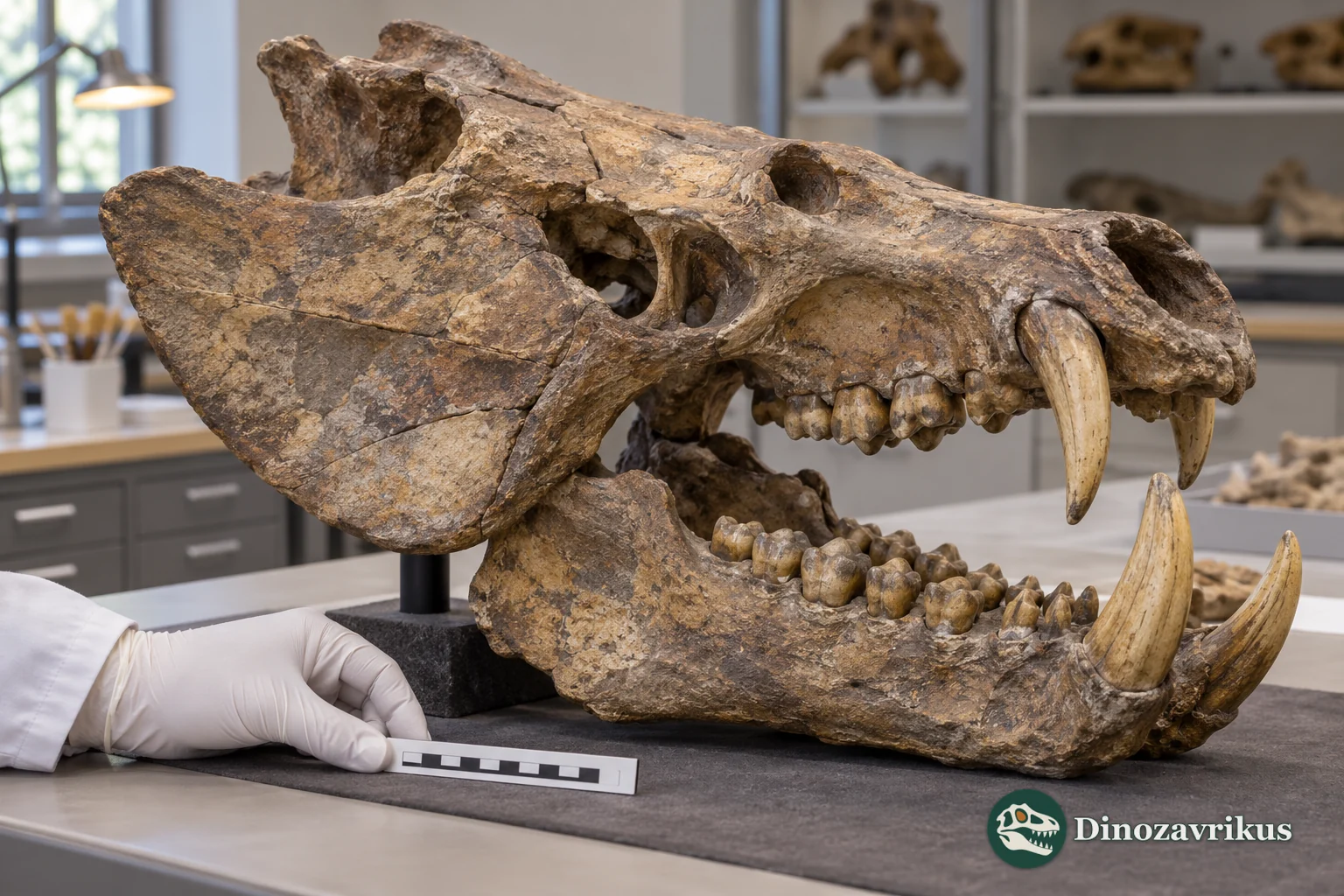
Fossil skulls preserve facial projections, strong jaws and expanded cheek arches. They reveal bone shape, not soft tissues or the exact function of each projection.
Incisors, canines and cheek teeth inform how food could be processed. Microwear in European Oligocene forms indicates variation, but one sample cannot represent the family.
Long bones and joints provide proportions and possible ranges of movement. They do not reveal running speed or prove hunting or scavenging.
Studies place entelodonts among extinct artiodactyls, while finer relationships remain debated. A massive skull alone does not justify the popular “hell pig” label.
How the family was studied
Entelodont history is tied to separate skulls and teeth found on several continents. Nineteenth-century authors erected names from isolated skull parts and dental differences. In 1909, Oliver Perry Hay Peterson published a broad revision comparing American material with previously described forms. It remains important historically, while later discoveries and phylogenetic methods have refined the family’s composition and relationships.
Not every genus is equally well represented. Some have skulls and parts of the postcranial skeleton; others are diagnosed from limited material. Old collections can contain bones from different layers and localities, so they cannot automatically be assembled into one skeleton. Systematics continues to depend on checking type specimens and diagnostic characters.
Skull, teeth and appearance
Many entelodonts had large skulls, expanded cheekbones and bony projections along the face. Fossils preserve the shape of those projections, not whether they were covered by thick skin, callus or other soft tissue. Images with colourful bosses or scars are artistic choices unless tied to specific fossil traces.
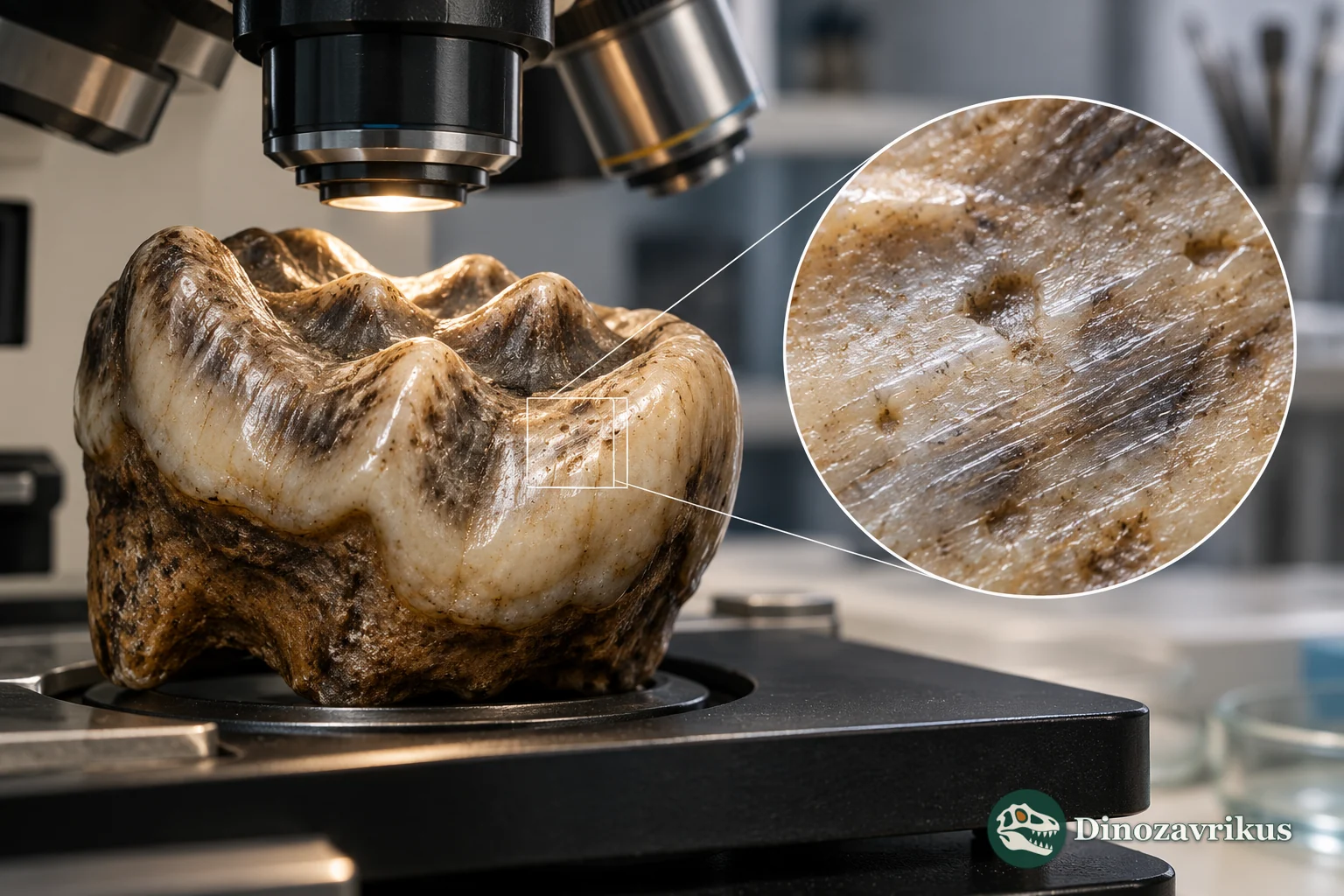
The tooth row combined incisors, large canines and cheek teeth. This arrangement could process a range of foods and is not the specialised dentition of a strict herbivore. Teeth alone do not show that every member regularly ate meat. Isotopes, wear marks and microscopic surface texture are separate lines of evidence and apply to particular samples.
Diet: more than predator or scavenger
Large canines and strong jaws inspired the familiar image of an entelodont as a top predator or scavenger. Those roles are possible, but do not follow automatically from skull size. Bone marks can be made by different animals, while entelodont jaws could also process tough plants, work carcasses or be used in interactions within the species.
Dental microwear in European Oligocene representatives showed varied signals and supported flexible omnivory, broadly comparable in range to modern wild pigs. It does not mean every entelodont ate the same foods. One sample cannot stand for every genus and interval; dietary flexibility is the better family-level summary, with taxa assessed separately.
Limbs and movement
Limb bones show that entelodonts were terrestrial animals able to support substantial loads. Bone proportions and joint surfaces can be compared with other artiodactyls to assess possible movement. Exact speed, agility and behaviour are not preserved as ready-made properties.
Neither large size nor strong forelimbs proves that an animal chased prey. Locomotion studies compare bone series, joints, trackways and geological context. A well-preserved limb constrains possible movement without recording an individual’s daily behaviour.
Range, diversity and extinction
Entelodont fossils occur in assemblages from Asia, Europe, Africa and North America. Regional histories differed: genera were not necessarily contemporaneous, and distribution depended on habitats and dispersal routes. This continental range describes the family over tens of millions of years, not one species.
Entelodonts had disappeared by the Miocene, but a single cause cannot be established. Climate and vegetation change may have reshaped ecosystems, while competition with other large mammals could have influenced local communities. Without secure regional sequences, these remain hypotheses rather than a demonstrated family-wide cause.
Frequently asked questions
Were entelodonts pigs?
They were artiodactyls, but not pigs in the narrow modern sense and not ancestors of domestic pigs. Their exact position within Cetartiodactyla remains debated.
Were all entelodonts predators?
No. Their skulls and teeth allowed different functions, and microwear points to varied omnivory in some Oligocene forms. That result cannot be transferred to every genus.
How did Entelodon differ from Archaeotherium?
They are different genera in the same family. Entelodon is known from Eurasia and Archaeotherium mainly from North America; comparisons should use diagnostic anatomy and context, not a generic “hell pig” image.
Why are entelodonts called “hell pigs”?
It is a popular nickname inspired by massive skulls, bony projections and large canines. It does not state their precise classification or establish diet and behaviour.