

Eoalligator chunyii was a fossil crocodilian from the Nanxiong Basin of southern China. Parts of its skull and jaws preserve a wavy tooth margin and a short joint between the halves of the lower jaw. These features became central to the debate over whether Eoalligator represents a distinct genus.
Quick facts
| Species | Eoalligator chunyii |
|---|---|
| Group | Crocodylia, exact relationships debated |
| Age of type material | Early Paleocene |
| Locality | Nanxiong Basin, Guangdong, China |
| Type material | IVPP V 2716, skull and jaw fragments |
| Named | Chung-Chien Young, 1964 |
What can the fossils tell us?
IVPP V 2716 comes from early Paleocene deposits. Some referred material came from another locality in the basin.
The symphysis reaches about the fourth tooth position. Other fragments preserve the pronounced waves of the tooth margin.
One study grouped it with true crocodiles. Others recovered it in an extinct East Asian group placed among early alligatoroids.
Fossils from the Nanxiong Basin
Chung-Chien Young described E. chunyii in 1964. The type series IVPP V 2716 came from the Shanghu Formation and included the rear of a skull and pieces of lower jaws. A 2018 reassessment restricted the type material and referred a separate dentary, IVPP V 2772.1, to the species.
The type locality is early Paleocene in age. The referred dentary IVPP V 2772.1 comes from a locality in the Upper Cretaceous Zhenshui Formation. Evidence for the genus in older deposits therefore depends on the reidentification of a separate fragment.
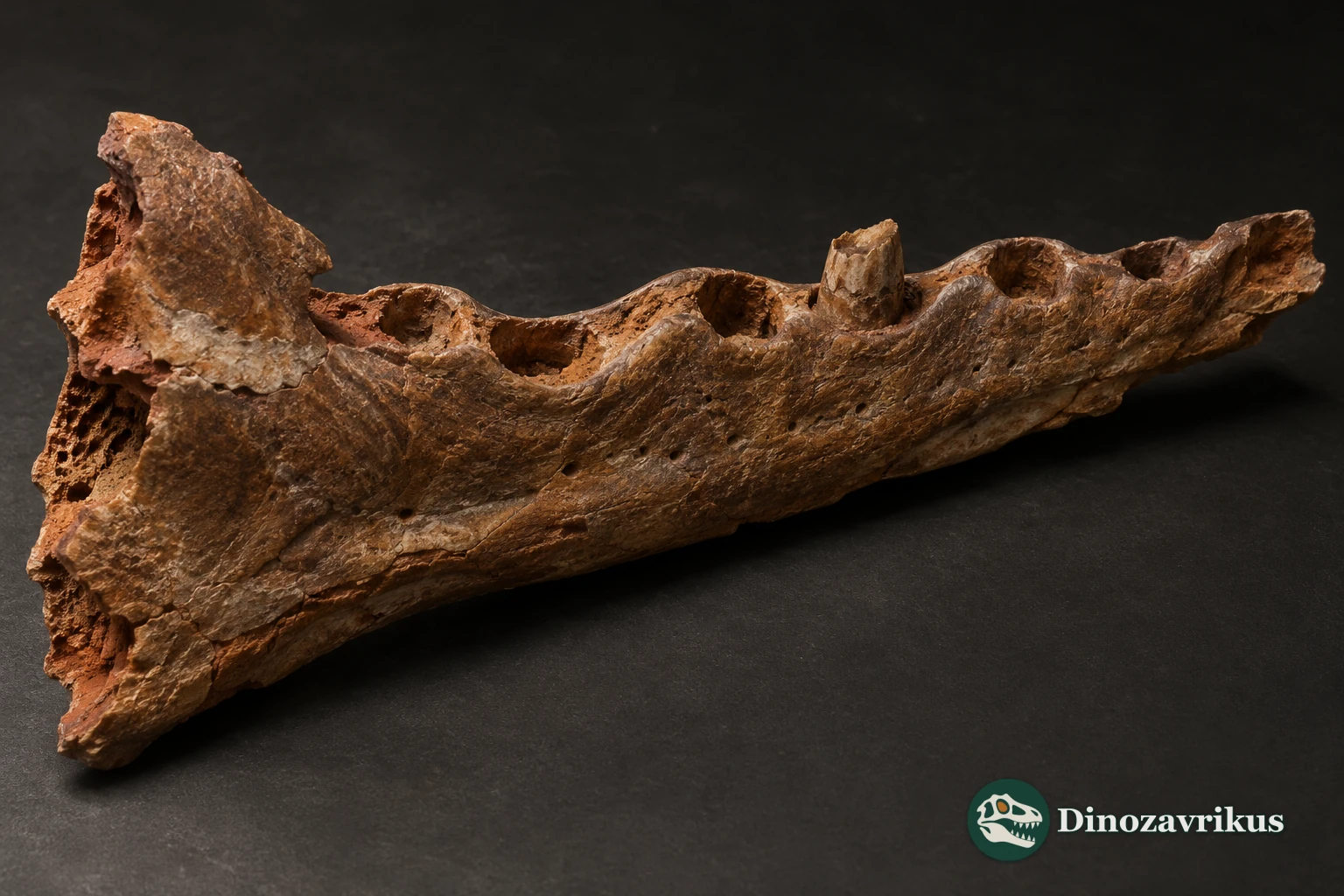
Jaw features that changed the identification
A 2016 study proposed treating Eoalligator as the same species as the Chinese Asiatosuchus nanlingensis. Some features around the jaw joint looked similar, and the two sets of fossils preserve different portions of the head.
The 2018 re-examination emphasized the strongly wavy tooth margin and short jaw symphysis of Eoalligator. The posterior tooth margin of the A. nanlingensis type is nearly straight. These differences supported recognising E. chunyii as a separate species again.
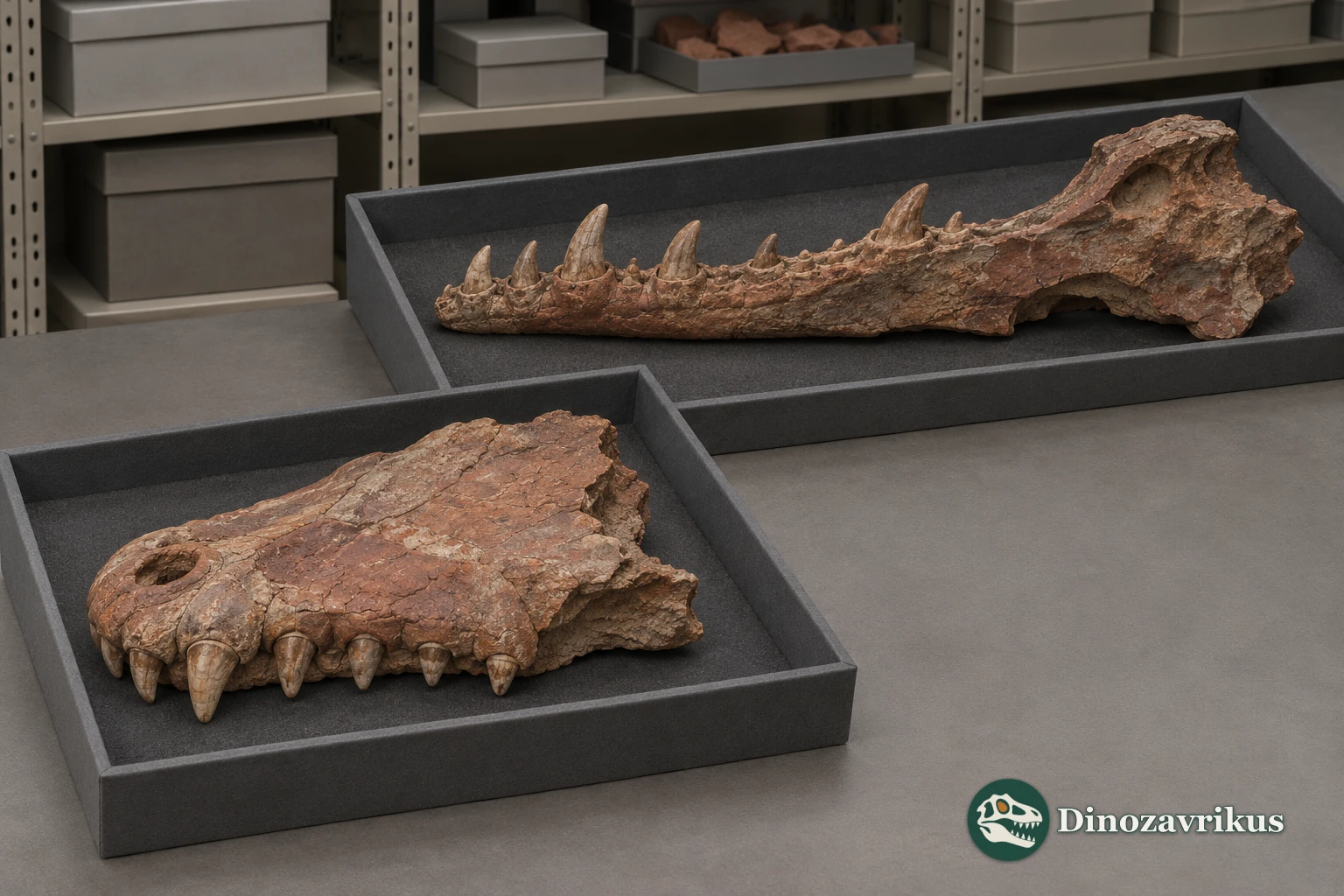
How it fits into the crocodilian tree
The name reflects its original classification. The 2018 study placed Eoalligator on the true crocodile side of the family tree. Other studies grouped it with extinct East and Southeast Asian crocodilians in Orientalosuchina. A 2025 analysis recovered that group among early alligatoroids but found weak support for its position there.
A species from Anhui formerly called Eoalligator huiningensis was moved to the separate genus Protoalligator in 2016. The two names reflect a history of classification, with type material from different regions of China.
Frequently asked questions
Where was the type material found?
It comes from early Paleocene deposits of the Nanxiong Basin in Guangdong, China.
Which features help identify the lower jaw?
The tooth margin is strongly wavy and the two halves join only as far back as around the fourth tooth.
Was Eoalligator an early alligatoroid?
Some analyses place it among early alligatoroids, while others recover it elsewhere on the crocodilian tree.
What happened to the species from Anhui?
It was transferred to the genus Protoalligator in the 2016 revision.