

Eoconodontus is a conodont genus identified from minute conical elements of its feeding apparatus. They occur in marine rocks near the end of the Cambrian and the beginning of the Ordovician. The lowest occurrence of its type species in a Utah section was proposed as a marker for the base of Cambrian Stage 10.
Quick facts
| Group | Conodonts |
|---|---|
| Age | Late Cambrian to Early Ordovician |
| Genus named | James Miller, 1980 |
| Type species | Eoconodontus notchpeakensis |
| Type deposits | Notch Peak Formation, Utah |
| Fossil material | Conical feeding elements |
What can the fossils tell us?
Both forms were attributed to one species. Isolated remains give no direct record of their positions within the apparatus.
This is a measurement in one section. Correlation elsewhere draws on the order of fossil records and additional markers.
The HERB excursion can help match the interval even in sections where diagnostic fossils are uncommon.
Two shapes among the Utah elements
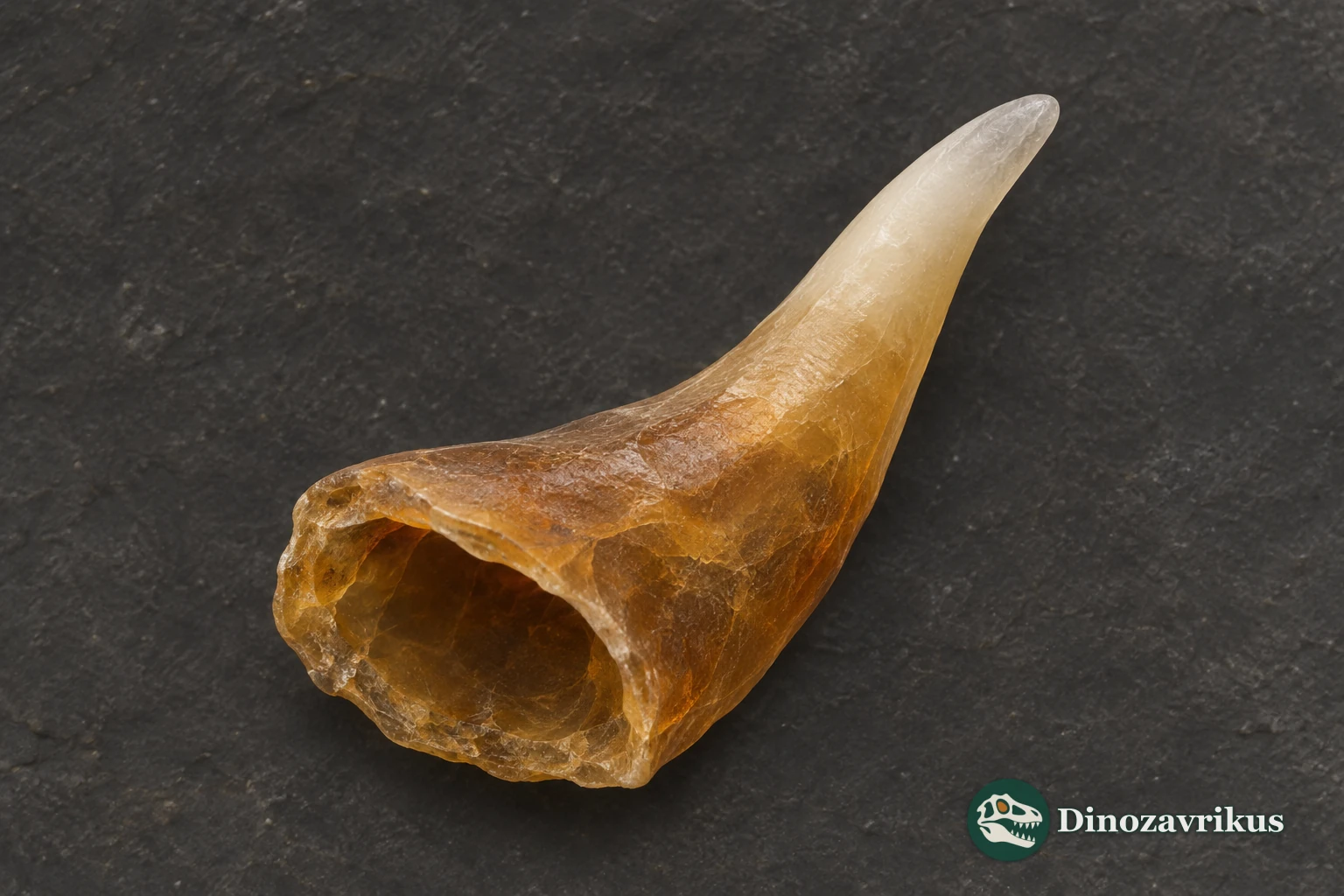
James Miller described the type species in 1969 as Proconodontus notchpeakensis and established Eoconodontus in 1980. Its fossils are gently curved cones. The tip contains a lighter region of tissue, and the base contains a cavity.
In the Lava Dam Five section, a single sample yielded the rounded element SUI 125992 and the laterally compressed element SUI 125993. Both were identified as E. notchpeakensis. The fossils illustrate forms included in the species, but because they were found separately they cannot show the complete arrangement in the animal.
Three metres above the Red Tops base
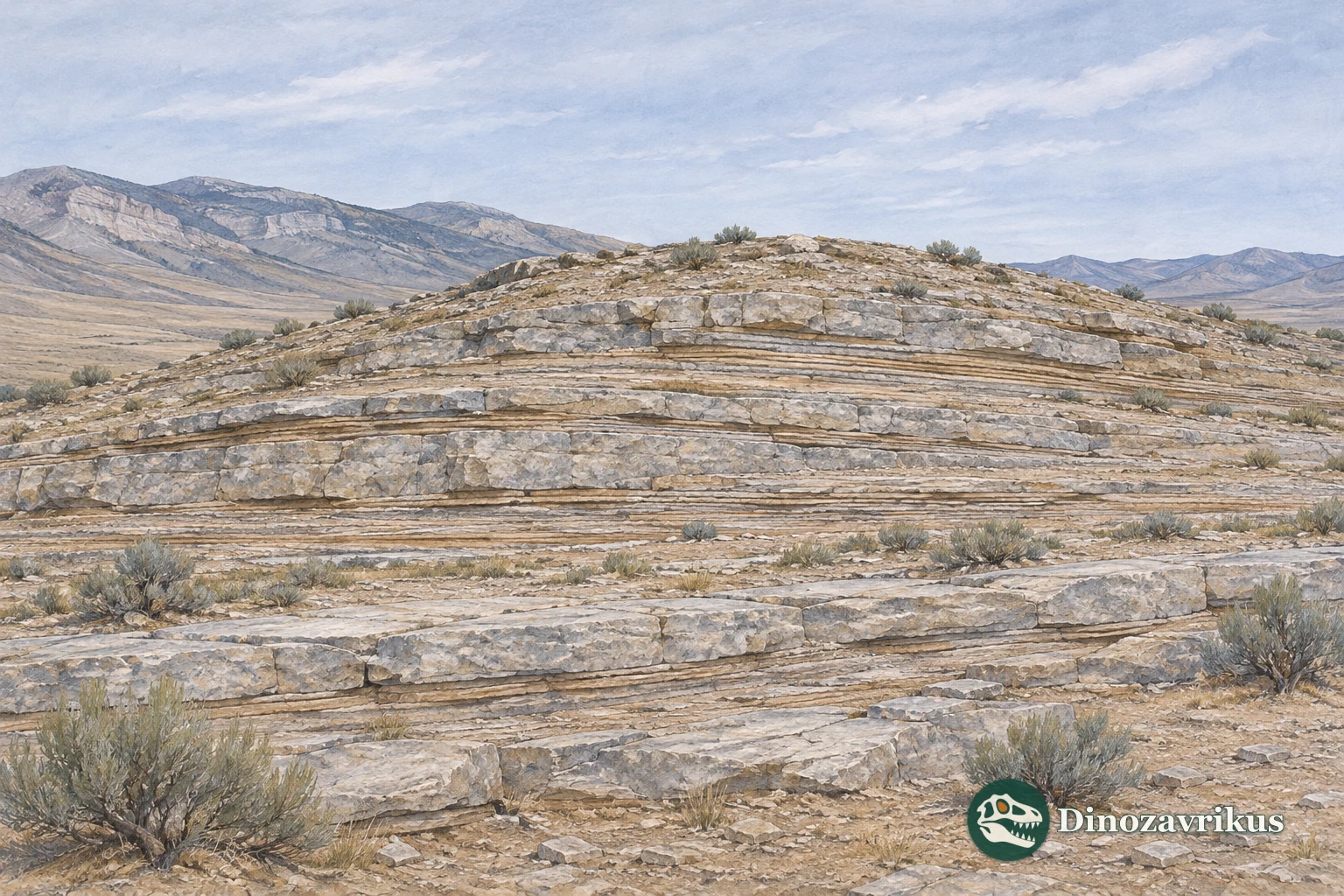
At Steamboat Pass in western Utah, the lowest specimens were found 3 m above the base of the Red Tops Member of the Notch Peak Formation. In 2011 Miller and colleagues proposed the level as the base of Cambrian Stage 10. The first occurrence of Lotagnostus americanus has also been discussed as a boundary marker.
The New York State Museum reported that the Cambrian Subcommission endorsed the conodont marker in February 2026. The June 2026 international chart still labels the interval Stage 10. Formal definition of the lower boundary requires ratification of a point in a reference section.
Signals in other sections
At Utah sections the proposed boundary is soon followed by a drop in the ratio of carbon-13 to carbon-12, known as the HERB excursion. A similar signal is documented in Australia, China and Newfoundland. The shift supplies a second line of evidence where the diagnostic fossils are scarce.
In the Wa’ergang section of southern China, E. notchpeakensis persists above the zone named for it. The upper part of its local range was correlated with the beginning of the Ordovician. An isolated find of the species is therefore insufficient to tell which side of the boundary between the periods a bed belongs to.
Frequently asked questions
What was the original name of the Eoconodontus type species?
Proconodontus notchpeakensis. Miller named it in 1969 and placed it in Eoconodontus when he established that genus in 1980.
Where is its lowest occurrence in the Steamboat Pass section?
Three metres above the base of the Red Tops Member of the Notch Peak Formation.
What is the HERB excursion?
A negative shift in the carbon isotope ratio recorded in several rock sections. It appears a short distance above the proposed Utah boundary.
Is Eoconodontus restricted to the Cambrian?
No. Its type species also occurs near the beginning of the Ordovician, including at Wa’ergang in southern China.