

Eorubeta nevadensis was a frog from what is now eastern Nevada. Its fossils come from an ancient upland basin. Paleocene occurrences are secure. The lowest frog-bearing beds could date to the very end of the Cretaceous, but the position of the Cretaceous–Paleogene boundary in this part of the sequence remains uncertain.
Quick facts
| Group | Frogs |
|---|---|
| Age | Paleocene |
| Region | North America, eastern Nevada, USA |
| Type species | Eorubeta nevadensis |
| Scientific name | Eorubeta |
| Diet | Exact prey is unknown |
What can the fossils tell us?
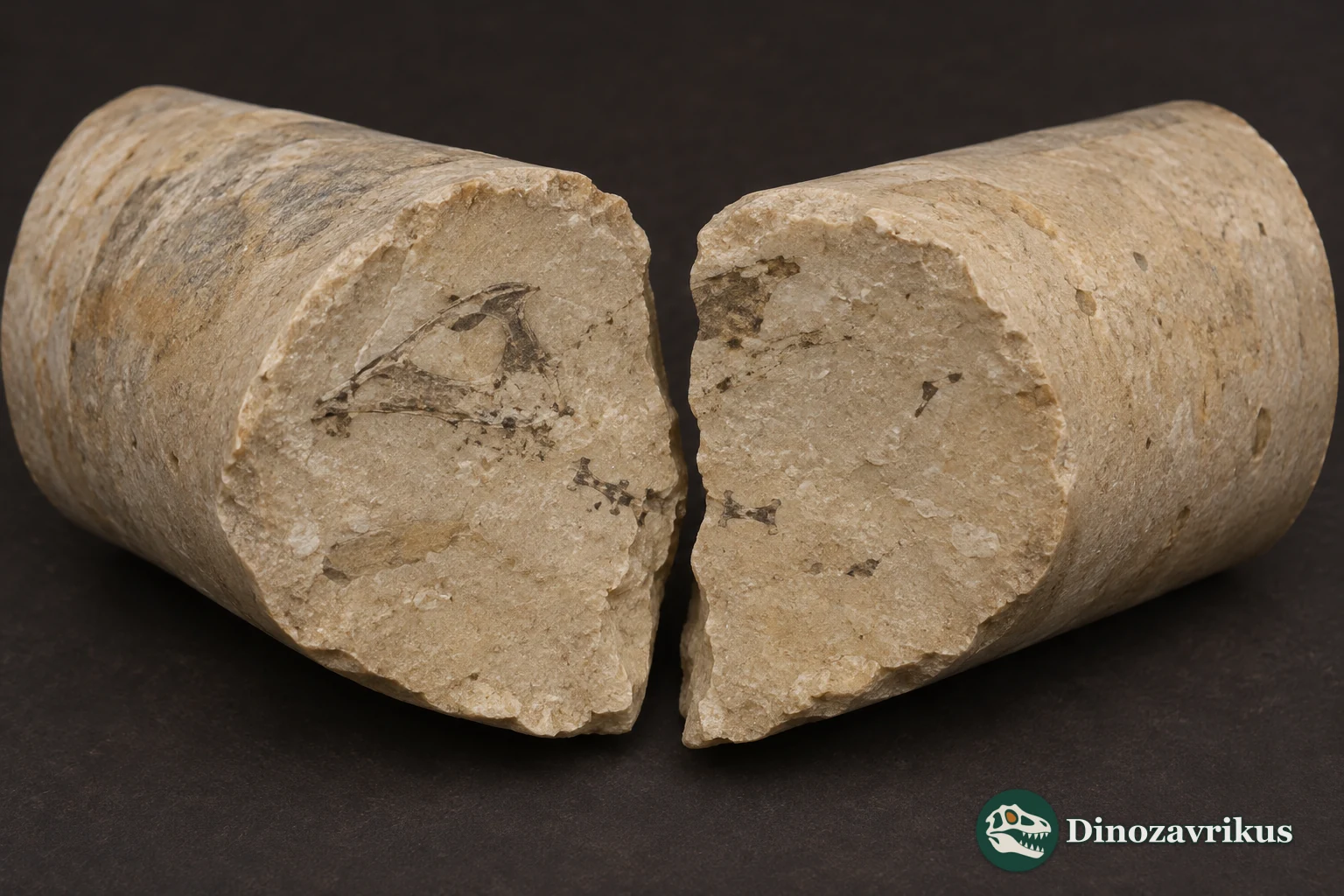
The well core holds parts of the type specimen’s skull and skeleton. Fossils from the outcrop supply more bones from the head, vertebral column and limb girdles.
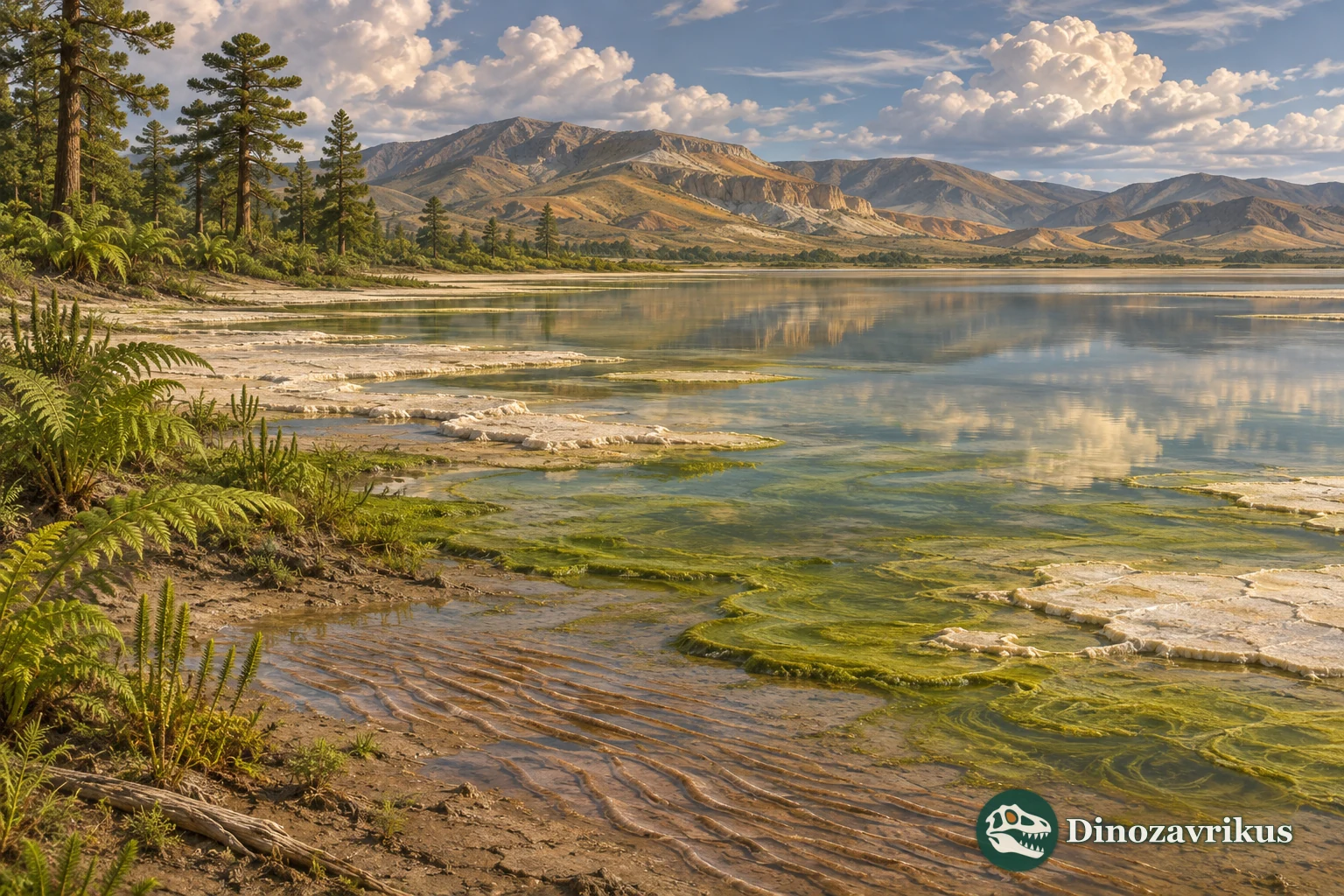
Lake carbonates and river-delta beds record the changing basin. Carbonate isotope data suggest the lake lay at high elevation.
The oldest frog-bearing rocks have an uncertain age. Paleocene finds alone cannot establish whether Eorubeta was present before the end-Cretaceous extinction.
A fossil in an oil-well core
Max Hecht named Eorubeta in 1960 from AMNH 7602, a partial skeleton preserved on matching faces of a split core. The material suggested an early Eocene age at the time. Peter Druschke found more remains in a surface exposure near Sheep Pass Canyon in 2005, and subsequent collecting brought to light dozens of specimens. Some retain parts of the skull in articulation, helping researchers identify bones that were difficult to interpret in the core.
Anatomy and relationships
The incomplete skulls indicate a roughly triangular head with a narrow, rounded snout. Pits and ridges ornament several bones in the skull roof. The articulated backbone has eight vertebrae ahead of the sacrum. Securely identified femora span 16 to 46 millimetres, and an even larger femur came from a weathered fossil whose identification is tentative. No specimen yielded an accurate snout-to-vent measurement. A 2018 analysis placed Eorubeta just outside Acosmanura, with weak support for that position.
Life in an upland basin
The lower of the two fossil-bearing units accumulated around a permanent freshwater lake. Carbonate isotope measurements put the estimated elevation of the lake basin between 2.2 and 3.5 kilometres. The overlying unit includes river-delta deposits. Fossil molluscs and ostracods support a Paleocene age for part of the succession, but the age of the oldest frog-bearing beds is less secure. Some European specimens of Palaeobatrachus preserve soft-tissue outlines, whereas the Nevada material provides a more detailed record of when and where Eorubeta lived.
Frequently asked questions
How was the first specimen discovered?
The partial skeleton was found in a core drilled by an oil company in White Pine County, Nevada.
How large was Eorubeta?
Its full body length is uncertain. The longest femur from securely identified material measures 46 millimetres.
Did Eorubeta survive the end-Cretaceous extinction?
Paleocene fossils establish its presence after the extinction. Its presence in the latest Cretaceous remains possible, pending a firmer date for the oldest fossils.
Was it related to modern South American frogs?
Hecht initially compared it with leptodactylids. Later analysis placed it outside the clade that includes that family, with limited support for its exact position.