

Eurudagnostus is a genus of small agnostoids. Its type species was originally described with a head shield and a tail shield. Reexamination showed that the two shields belonged to different species. The head was retained as the holotype, and other specimens were used to revise the genus.
Quick facts
| Group | Agnostida |
|---|---|
| Age of type material | Late Cambrian |
| Genus named | Elena Lermontova, 1951 |
| Type species | Eurudagnostus grandis |
| Type locality | Boshchekul borehole, Kazakhstan |
| Holotype of the type species | Cephalon TsNIGR 131/7350 |
What can the fossils tell us?
The Boshchekul shield is about 5 mm long. This measures one part of the shell, while the length of the entire animal is unknown.
Some specimens have only a small notch ahead of the glabella. It is assessed together with the shape of the shields.
The front transverse groove is impressed at the sides and fades across the centre of the axis. This helps compare isolated shields.
Two fossils from one borehole
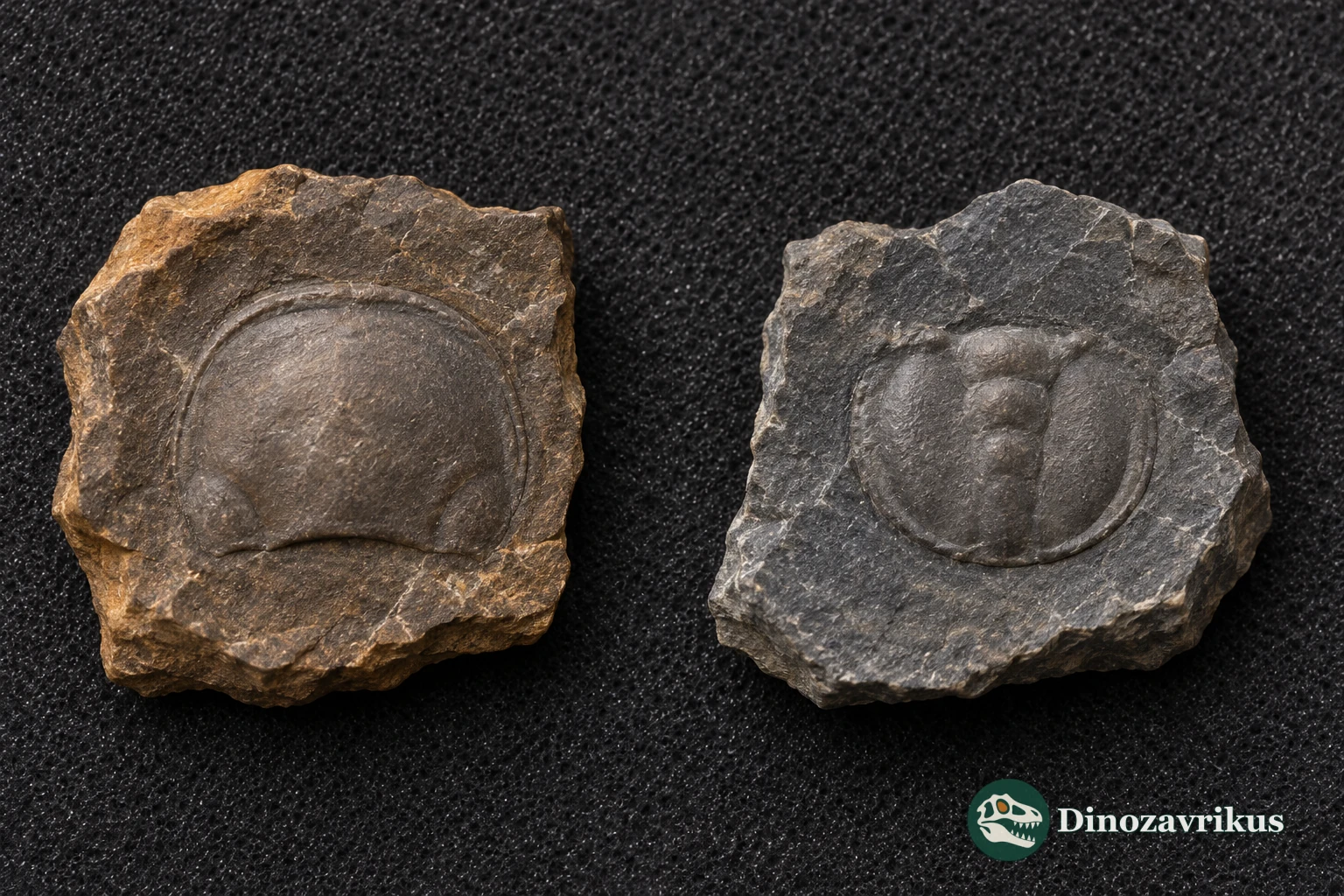
Elena Lermontova established Eurudagnostus in 1951 from Boshchekul borehole material in Kazakhstan. Eurudagnostus grandis became the type species. A head shield and a tail shield were originally treated together as its type material.
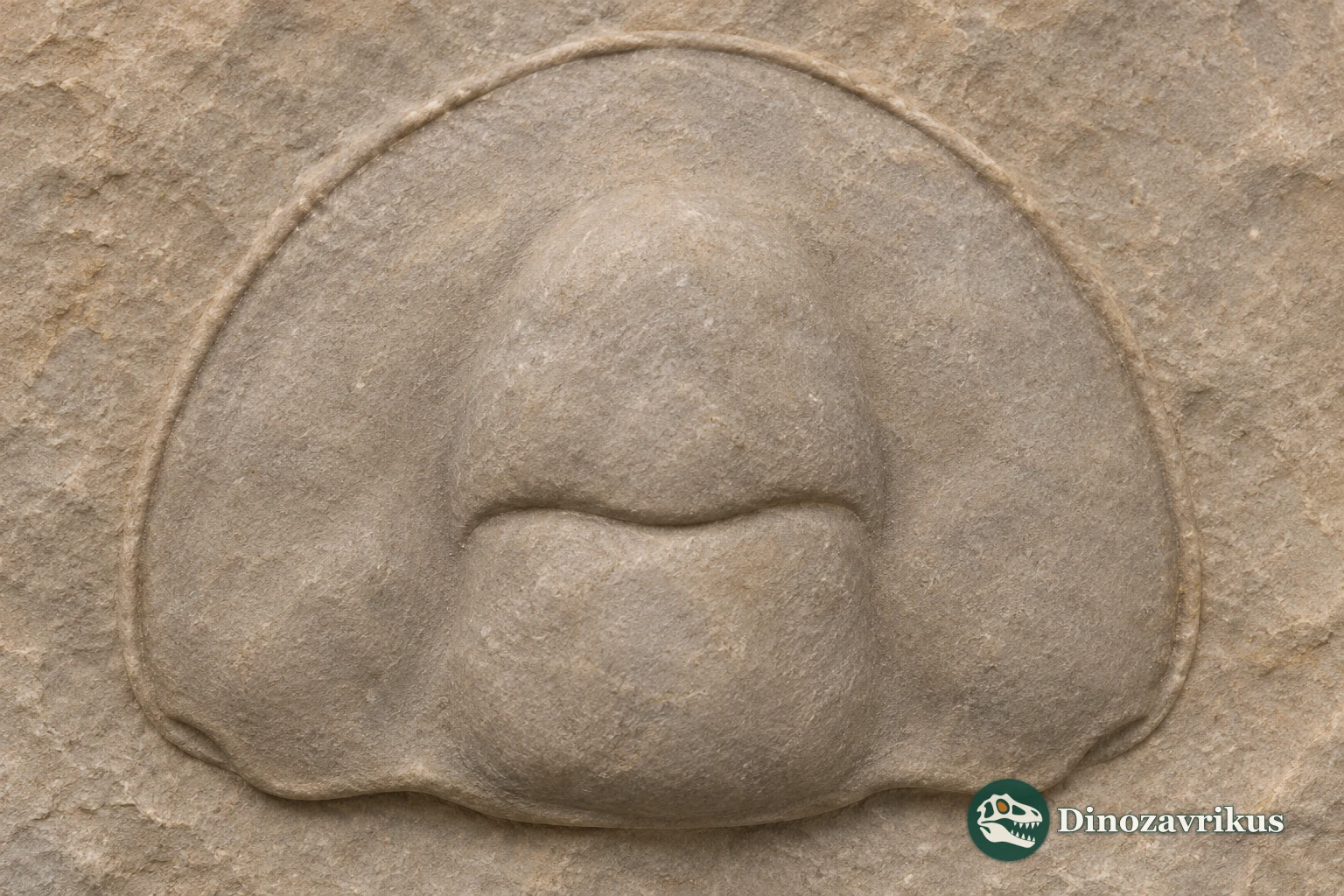
Elena Naimark and Tatyana Pegel reported that the two shields belonged to different individuals and different species. Cephalon TsNIGR 131/7350, about 5 mm long, was retained as the holotype of E. grandis. The original pair cannot establish the shape of that individual's complete shell.
Diagnostic grooves and a short axis
The transverse furrow on the glabella runs straight across it or bends rearward. The median groove in front of this raised central area is weak or absent, with some specimens retaining a short notch.
Eurudagnostus has a fine border furrow around its head and a short axis on its tail shield. The border and the shape of the tail axis are used together in comparisons with Micragnostus. The short axis also helps distinguish it from Oncagnostus, a genus with which it was previously combined.
What the revision changed
Naimark's 2014 revision recognised the genus as distinct and accepted twelve species. Material named E. brevispinus was included in the earlier-named E. chiushuensis. Specimens assigned to the latter species have been recorded on different continents.
Small differences in relief matter when samples are compared. Separate shields in the same rock can belong to different species. Estimates of geographic range depend on which parts of the shell are present and how securely they can be matched to type material.
Frequently asked questions
Where did the type material come from?
It was recovered from the Boshchekul borehole in Kazakhstan.
Which specimen was retained as the holotype?
The head shield TsNIGR 131/7350, which is about 5 mm long.
What is distinctive about the tail axis?
It is short, with an anterior transverse furrow that fades across the middle.
Why do some classifications use a different name?
Some authors included Eurudagnostus in Oncagnostus. Reexamination of the shields supported treatment as a separate genus.