

Most fossils preserve hard parts such as bones, teeth or shells. A few deposits also retain soft-tissue outlines, delicate skeletons, feathers, colour patterns or gut contents. These sites are often called exceptional-preservation deposits; the German term Lagerstätte is also used for fossil deposits notable for their abundance or preservation quality.
This is not one special fossilisation recipe. The Burgess Shale in Canada, Mazon Creek in the United States and Solnhofen in Germany preserve unusual detail, but their geological settings and early mineral pathways differ. In each case, burial and early chemical change helped protect remains, while later geological history left enough of that record intact.
What “exceptional preservation” describes
The term describes the quality or composition of a fossil record, not a perfectly unchanged ancient body. Remains may have collapsed, flattened and changed chemically while still retaining details that usually disappear before fossilisation. A soft-tissue impression is not necessarily preserved tissue: it may be a carbonaceous film, a mineral outline or a void later filled by other material.
Some deposits are remarkable for the number and diversity of fossils; others are especially valuable because they preserve fragile anatomical details. Those properties can occur together, but they do not have to. A dense shell bed may lack soft parts, while a thin slab with delicate impressions may contain few specimens. The label alone does not identify the process that formed a fossil.
Burgess Shale: soft-bodied animals in fine marine sediment
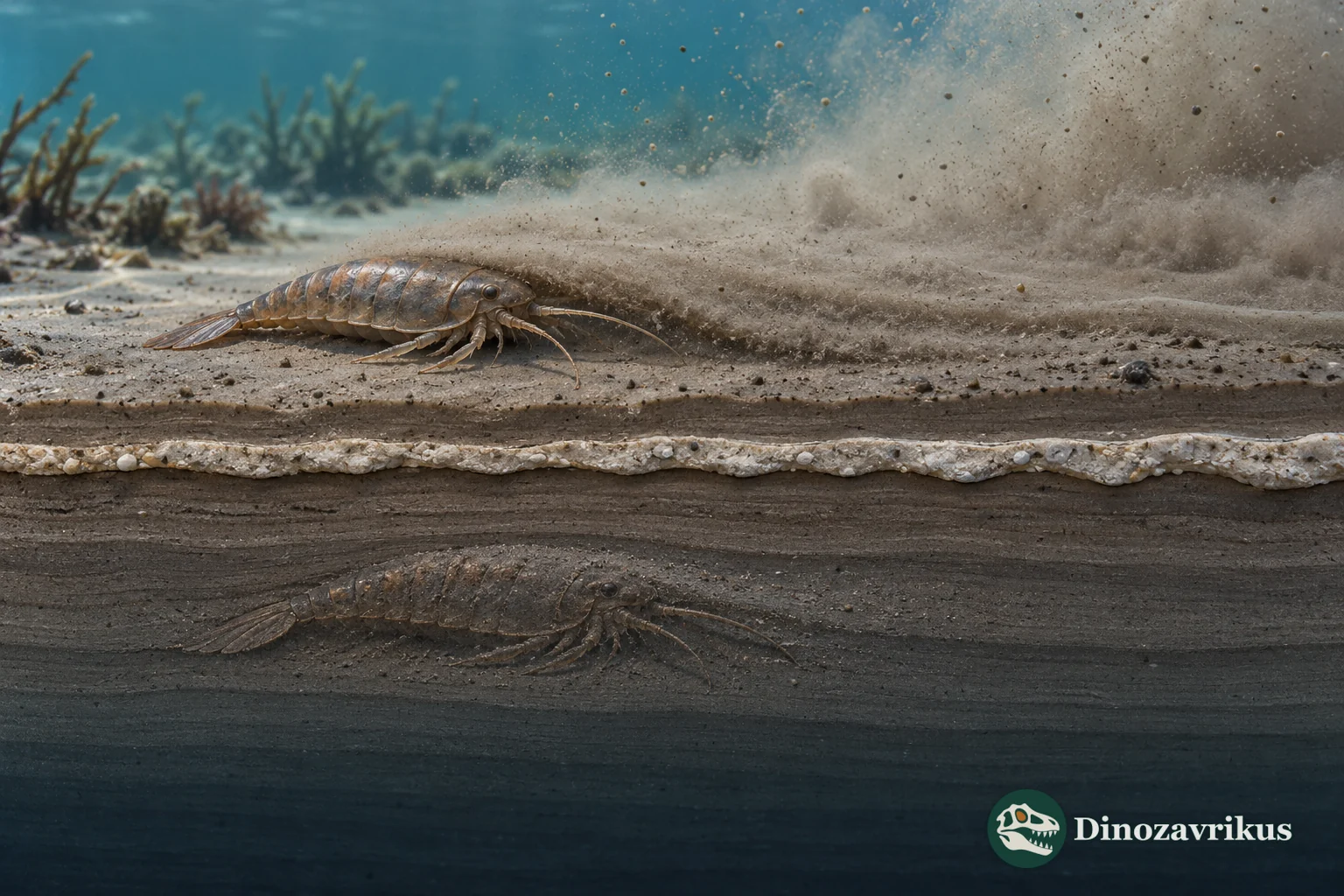
Cambrian shales of the Burgess Shale preserve impressions of soft-bodied animals and appendages that are uncommon in ordinary shelly assemblages. Sedimentological and geochemical work links this preservation to a combination of rapid burial in fine mud, restricted oxidant supply in pore water and early carbonate cementation near the top of beds. Slowed decay left a limited window for body outlines to persist, while fine sediment recorded them as thin films.
This model applies to studied Burgess Shale-type deposits, not to every fossil site. Water chemistry, oxygen access and the tissues preserved vary among deposits. The impressions are also incomplete: decay, compression and overlapping anatomy mean that researchers interpret them by comparing multiple specimens and other evidence. The site-specific overview of Burgess Shale fossils and their preservation follows that record in detail.
Mazon Creek: concretions forming around decaying remains
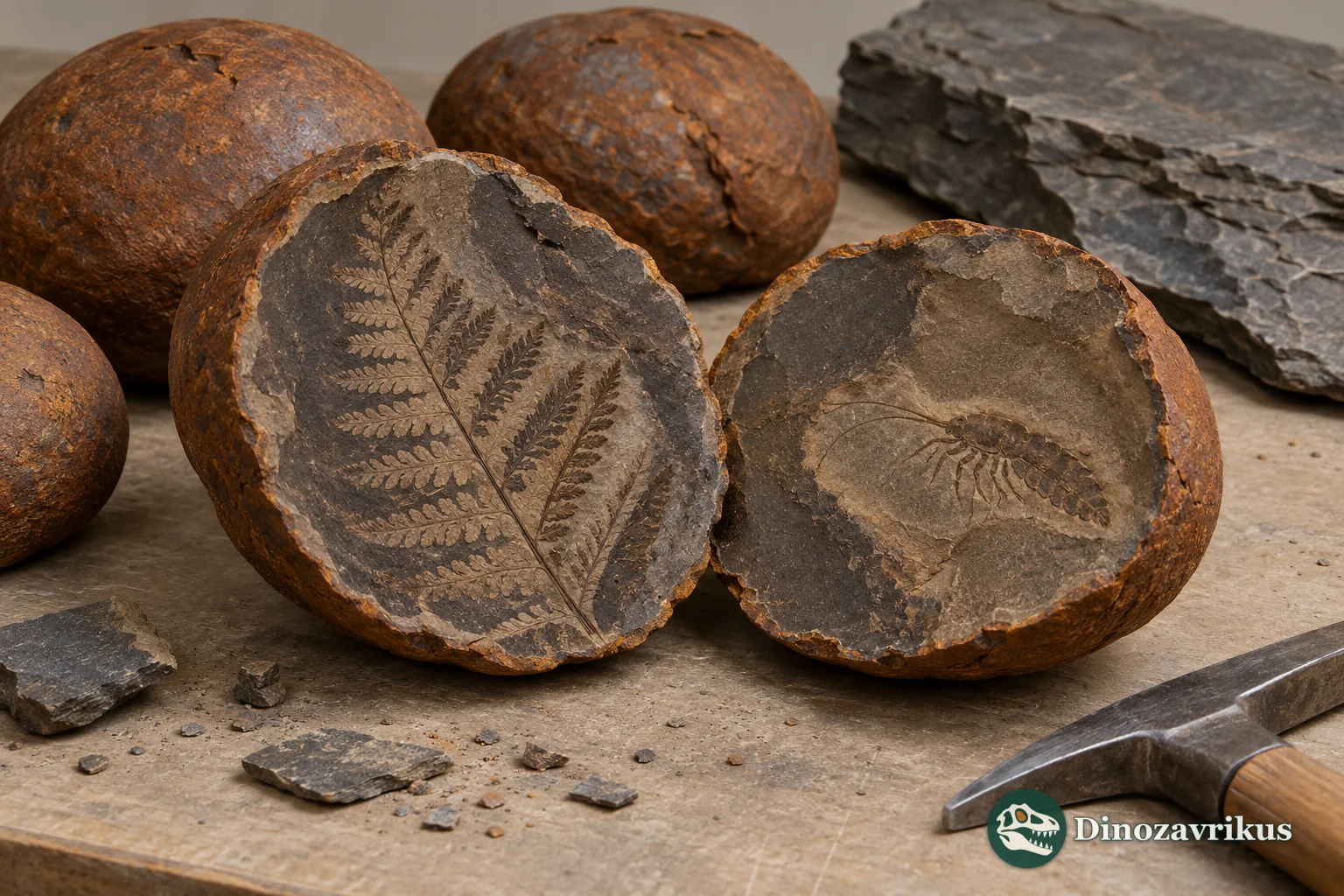
Many fossils from the Pennsylvanian deposits of Mazon Creek occur inside iron-rich siderite concretions. Geochemical analyses indicate that concretion growth began early, around organic remains as microbial reactions changed pore-water chemistry. Iron and carbonate minerals precipitated around the remains; cementation could occur before strong compaction of the surrounding mud, helping retain plant and animal forms, including fragile features.
Preservation varies even within a single concretion. Comparisons between Mazon Creek and other concretionary deposits show that the rate of cementation, the amount of decay before mineral precipitation and local environmental conditions affect the probability that soft tissues survive. Similar-looking siderite nodules do not guarantee an equal amount of anatomical information.
Solnhofen: thin limestone in lagoons
Upper Jurassic plattenkalks around Solnhofen preserve fish and reptile skeletons, feathers and other fine structures. Sediment accumulated in lagoons across an island archipelago; storms could carry material from islands and nearby marine habitats into the basins. Some lagoon bottoms were hypersaline and oxygen-poor, and fine carbonate mud was little disturbed by bottom-dwelling animals. Together these conditions could preserve outlines and reduce decay or movement.
Not every detail can be explained by one storm or by anoxia alone. Limestone composition, water circulation, bed position and early diagenesis varied. Solnhofen is famous for detail, yet many organisms there are rare: exceptional fidelity does not mean the deposit is a complete or evenly sampled ecosystem.
Why these windows are rare
Preserving delicate detail usually requires a narrow set of conditions. A remain must reach suitable sediment quickly enough to avoid complete decay or scavenging; chemical reactions must retain its shape before it disappears. The bed then has to survive compaction, heating, groundwater flow, erosion and weathering. If one stage fails, soft parts may vanish or become unrecognisable.
The geological sample is selective too. Suitable rocks may survive only in a small area, remain buried under younger strata or be eroded away. Exposed outcrops and quarries do not represent all ancient environments equally. A famous deposit widens what we know about anatomy and diversity, but it is not a random or complete census of past life.
All fossils pass through a chain of filters between death and discovery. That broader subject is taphonomy, while the main routes through which remains become fossils are covered in how fossils form and are preserved. Exceptional sites matter because they expose parts of that chain that are usually hidden from view. They are one set of clues among the many methods palaeontologists use to study fossils.
Frequently asked questions
Does Lagerstätte mean that an entire organism was preserved?
No. The term refers to an unusually rich fossil assemblage or exceptional preservation quality. Even a detailed impression is usually incomplete, flattened or chemically altered.
Are soft tissues preserved only without oxygen?
No. Restricted oxygen can slow decay in some settings, but deposits formed through different combinations of burial, pore-water chemistry and early mineralisation. There is no universal recipe.
Why are siderite concretions associated with Mazon Creek fossils?
Siderite precipitated early in sediment around organic material. A concretion could harden before strong compaction and help retain the shape of remains.
Can an exceptionally preserved deposit reconstruct a whole ecosystem?
No. Such beds reveal details rarely available elsewhere, but they represent limited environments and a selective geological sample. Researchers compare them with other sites and independent evidence.