

Explorornis was an enantiornithine bird from Late Cretaceous Uzbekistan. Its fossils are pieces of the coracoid, a bone that linked the shoulder joint and sternum. The preserved details allow comparisons with other birds from Dzharakuduk, while most of the animal's skeleton is unknown.
Quick facts
| Group | Enantiornithines (Enantiornithes) |
|---|---|
| Age | Late Cretaceous (Turonian) |
| Region | Central Asia (Dzharakuduk, Uzbekistan) |
| Diet | Exact diet unknown |
| Type species | Explorornis nessovi |
| Holotype | ZIN PO 4819, partial left coracoid |
| Formation | Bissekty Formation |
What can the fossils tell us?
The holotype ZIN PO 4819 preserves part of the bone connecting the shoulder region to the breastbone. It leaves most of the skeleton undocumented.
Coracoids from the site preserve different shapes of the shoulder end and shaft. Diagnostic comparisons depend on which part of the bone survives.
ZIN PO 4825 was originally placed in Enantiornis. Its later assignment to Explorornis reflects a comparison of shoulder bones.
Finds from Dzharakuduk
Andrei Panteleyev named Explorornis in 1998. The holotype of Explorornis nessovi, ZIN PO 4819, is part of a left coracoid from the Bissekty Formation. In a later study, Panteleyev examined 35 coracoids from the broader Dzharakuduk locality, including existing type specimens.
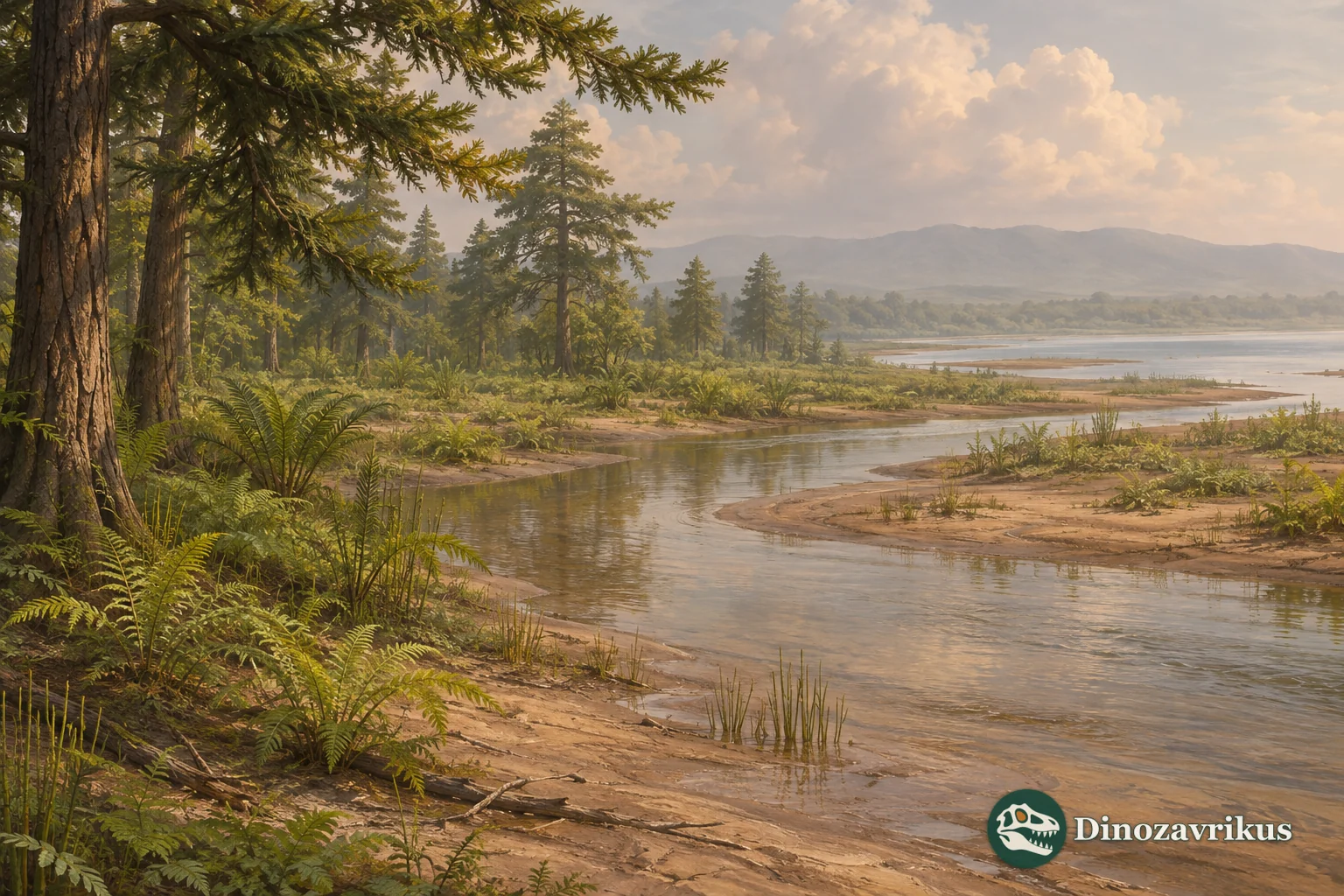
Modern studies place the Bissekty Formation at Dzharakuduk in the Turonian. Part of the succession consists of sands deposited by rivers. These deposits preserve isolated remains from several kinds of birds as well as other vertebrates.
Comparing the shoulder bones
The coracoid braces the shoulder against the sternum. Its shaft is preserved in some specimens, and others retain the end close to the shoulder joint. Differences in cross-section and the positions of hollows and openings help researchers recognise distinct forms. Overlapping anatomy is especially valuable when the fossils are fragmentary.
Lev Nessov and Panteleyev had previously named ZIN PO 4825 as a species of Enantiornis. It was reassigned to Explorornis as E. walkeri. That change records a revised comparison with other fossil birds.
The limits of the material
Coracoid fragments offer evidence about the construction of the shoulder girdle. Secure measurements of wingspan require more of the wing. Evidence for diet would have to come from other parts of a skeleton or preserved food remains. Those are unavailable for the type of Explorornis.
Frequently asked questions
Where was Explorornis found?
Its fossils came from Dzharakuduk in the central Kyzylkum, Uzbekistan.
What is the type specimen?
ZIN PO 4819 is a partial left coracoid, a bone of the shoulder girdle.
Why did the name of E. walkeri change?
It was initially assigned to Enantiornis and later moved to Explorornis after comparisons with other coracoids.
Is its wingspan known?
The shoulder fragments provide no reliable measurement of wingspan.