

Ferganobatrachus riabinini was a temnospondyl amphibian from the Middle Jurassic Fergana Depression, in present-day Kyrgyzstan. It is represented by an isolated clavicle, other cranial bones and vertebral hypocentra collected from several sites in the Balabansai Svita. The fossils are informative, but they do not make a complete skeleton.
Ferganobatrachus belongs in the Ancient amphibian catalogue. Another amphibian from the same regional assemblage, Kokartus, offers context for the diverse Jurassic fauna without supplying missing bones of Ferganobatrachus.
Quick facts
| Scientific name | Ferganobatrachus riabinini Nesov, 1990 |
|---|---|
| Group | Temnospondyl, usually referred to Brachyopoidea |
| Age | Bathonian–Callovian, Middle Jurassic |
| Formation | Balabansai Svita, Fergana Depression |
| Region | Kyrgyzstan, around Tash-Kumyr |
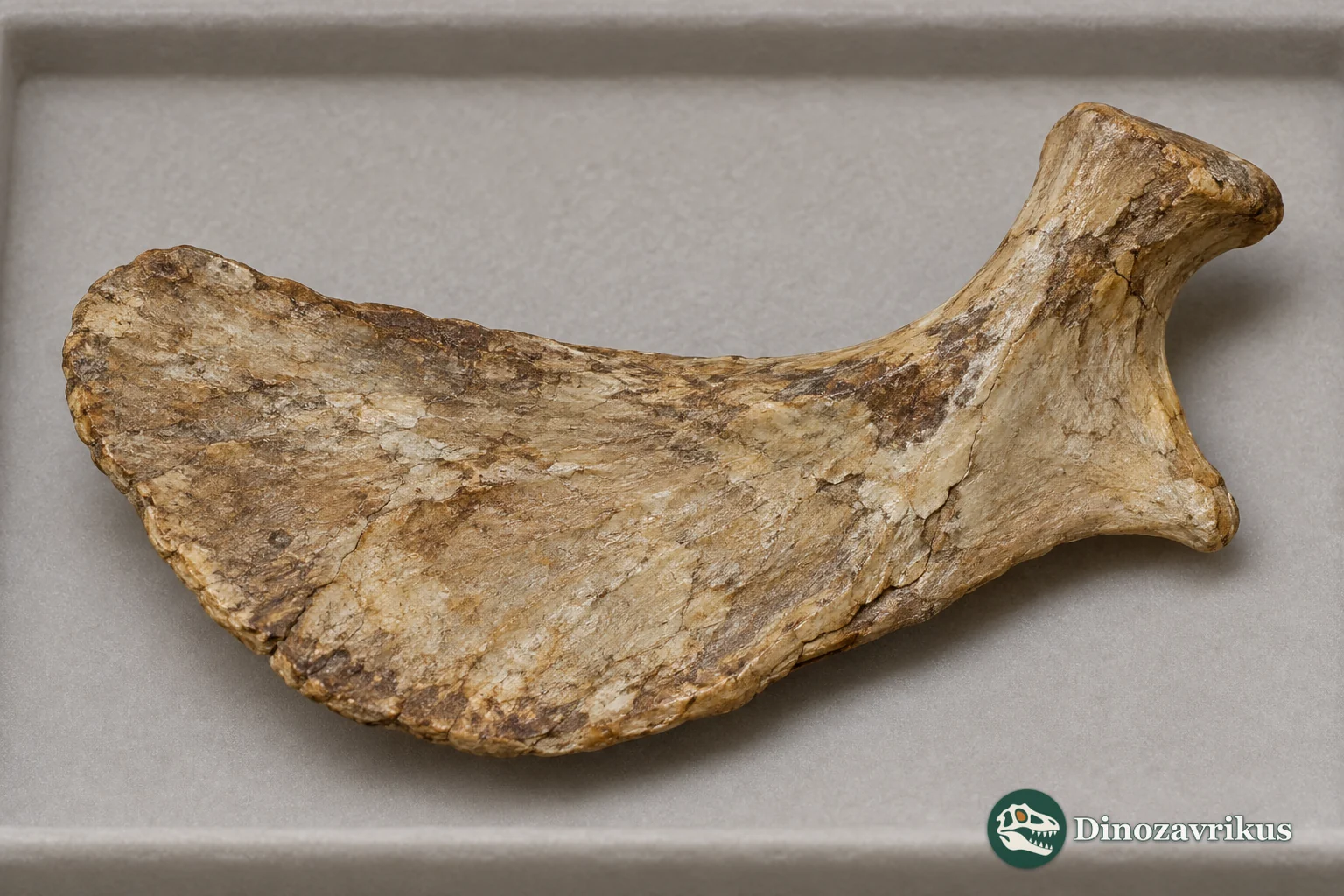
| Type material | A left clavicle |
| Other remains | Skull elements, teeth and isolated vertebral hypocentra |
What can the fossils tell us?
The broad clavicular plate and its ornament are among the main anatomical features used to recognize the taxon. The bone is not part of an articulated skeleton and cannot establish full-body proportions.
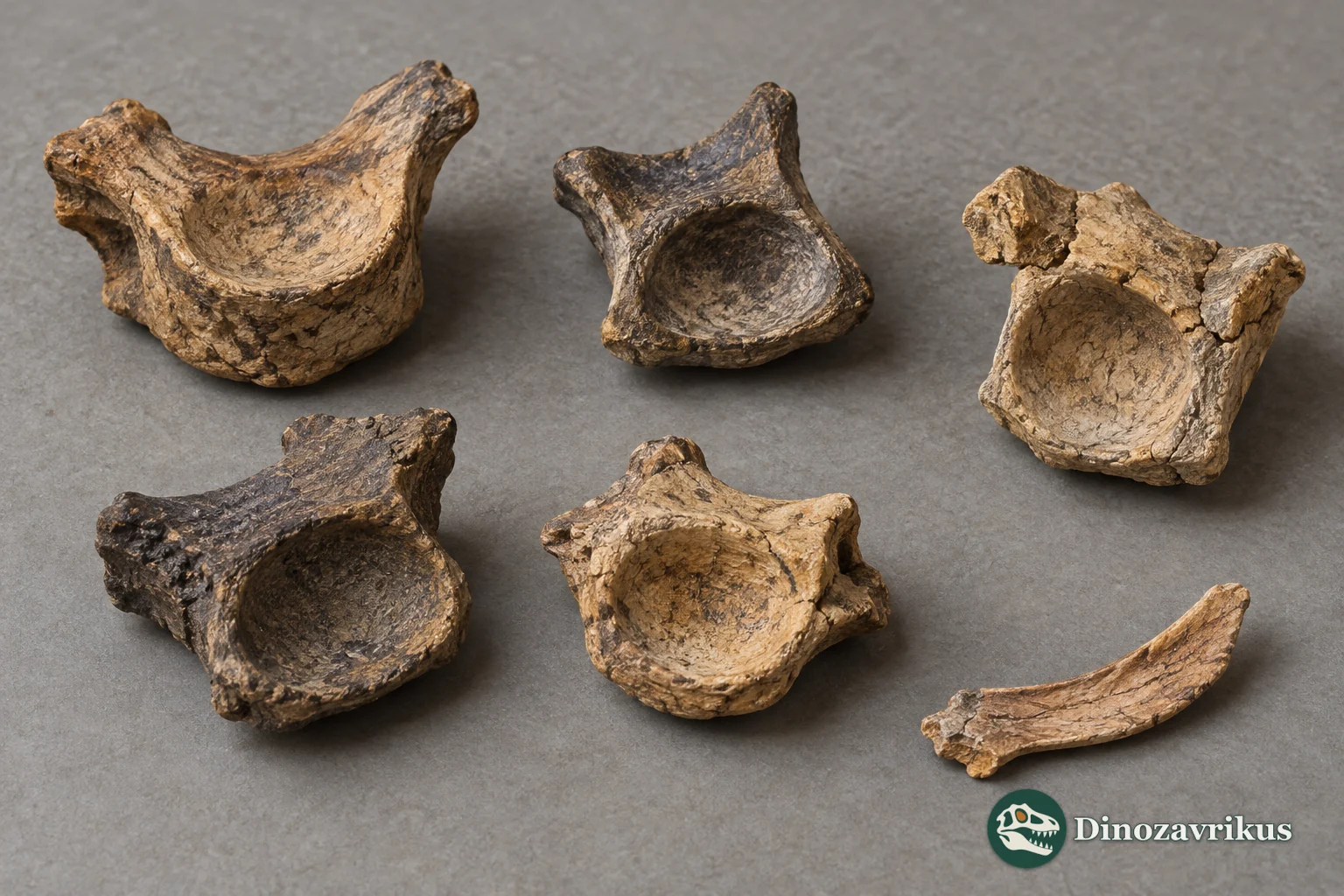
The 2008 revision reported isolated hypocentra and fragments from Changet, FTA-30, FTA-31, FTA-131 and FBX-23. Similar anatomy supports referral of some material, but separate specimens do not represent one individual.
Differences in size and structure of the hypocentra were used to recognize developmental stages. The sample does not form a continuous growth series or reveal the duration of development.
Researchers have proposed capitosaurid, brachyopid and less certain stereospondyl placements. Similarities to Gobiops prompted discussion of possible synonymy, but no formal merger has been established.
Discovery and type material
Lev Nesov named Ferganobatrachus riabinini in 1990 from the Middle Jurassic of the Fergana region. The holotype is a left clavicle. The original account also included several referred specimens: cranial fragments, teeth and vertebral elements. These scattered fossils formed the basis for a new genus, but they were not found as one articulated animal.
A joint research project later collected additional amphibian remains in the Fergana Depression between 2000 and 2003. Alexander Averianov, Thomas Martin, Pavel Skutschas, Anton Rezvy and Aizek Bakirov published a 2008 revision of amphibians from the Balabansai Svita. It described isolated postcranial material and clarified a catalogue number for one hypocentrum that had been cited incorrectly in an earlier paper.
Localities and geological age
The Balabansai Svita spans the late Bathonian to Callovian interval of the Middle Jurassic. Amphibian remains come from several localities around Tash-Kumyr in northern Fergana and from the Changet area farther east in the depression. Named sites include Sarykamyshsai 1, FTA-30 and FTA-31, Tashkumyr 1, FTA-131, and Dzhiddasi, FBX-23.
At FTA-131, several stereospondyl hypocentra were collected from a bone-bearing layer in calcareous sandstone. Other sites produced isolated clavicles and vertebral elements. These site records should remain distinct: geographic proximity and broad age do not make the fossils parts of one individual or one event.
Clavicle, skull and vertebrae
The clavicle is part of the shoulder girdle. In Ferganobatrachus, the ventral plate is broad and carries a combination of ornament types. The 2008 revision described a honeycomb-like pattern near the base of the dorsal process and radiating ridges across the rest of the plate. Its outline and process helped researchers compare the genus with other stereospondyls.
The referred vertebral material includes hypocentra, the lower components of the vertebrae in stereospondyl amphibians. Their size and structure vary across the collection. The fossils provide evidence of axial anatomy and development, but isolated centra do not preserve a continuous spine, tail or complete body outline.
Relationships and the comparison with Gobiops
The taxonomic position has shifted as researchers reconsidered incomplete bones. Nesov placed the genus among capitosaurids. Shishkin argued that the available hypocentrum did not show capitosauroid features and instead supported a brachyopid interpretation. Other authors accepted that placement, while Warren and Marsicano considered the material insufficient to determine its position within Stereospondyli.
The Central Asian temnospondyl Gobiops has also been proposed as a close relative or possible congener. Some clavicular similarities may be meaningful, while others could reflect growth or preservation. Averianov and colleagues did not formally synonymize the genera because the Ferganobatrachus material is incomplete. Until diagnostic differences and shared characters are tested with a broader sample, the names should remain separate in catalogue usage.
Growth and palaeoecology
The 2008 study identified remains attributed to larval and metamorphosed Ferganobatrachus. Changes in the hypocentra were used to distinguish developmental stages. The evidence supports growth-related variation, but the available fossils do not provide a complete sequence, age at metamorphosis, growth rate or reproductive maturity.
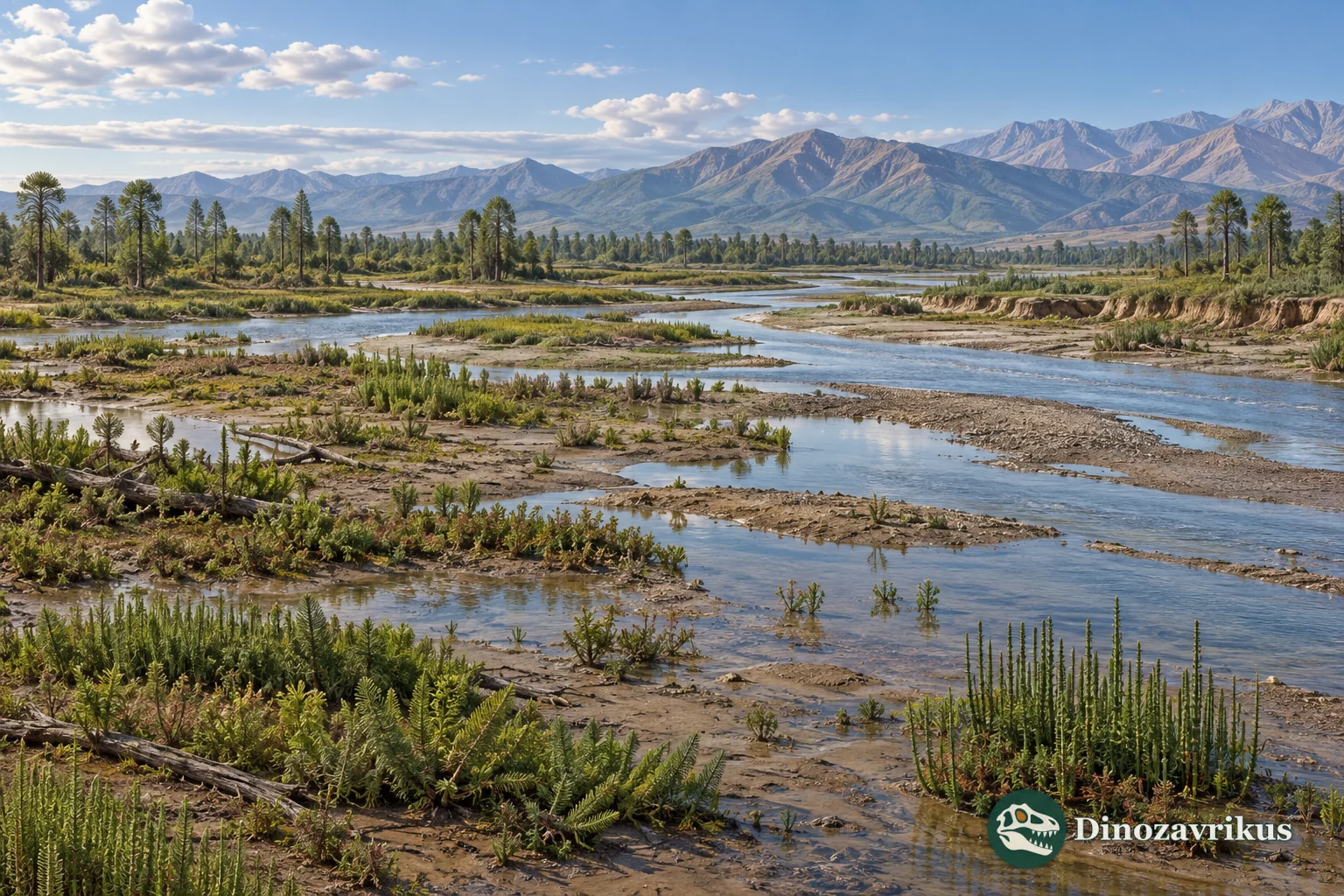
The wider Balabansai assemblage includes tetrapods associated with brackish-water to terrestrial settings. Several amphibian groups occur in the regional record, including temnospondyls and stem salamanders. That environmental range describes the formation, not one exact habitat occupied throughout the life of Ferganobatrachus.
No direct evidence establishes its diet or hunting method. The clavicle and vertebrae do not preserve stomach contents, bite traces or a diagnostic tooth row. A large aquatic temnospondyl appearance is plausible in a broad comparative sense, but size, prey and behaviour remain unknown for this genus.
What remains uncertain
The strongest conclusions concern the fossils themselves: a left clavicle anchors the name; other isolated cranial and postcranial bones have been referred to the genus; and additional sites broaden the known Middle Jurassic record. Classification within stereospondyls and the possible relationship to Gobiops remain debated.
No reliable total length or mass is available. Reconstructions should therefore be labelled as artistic interpretations, with the broad-headed aquatic outline treated as a comparative hypothesis rather than an anatomical portrait copied from a complete skeleton.
Frequently asked questions
When did Ferganobatrachus live?
It is known from the late Bathonian–Callovian interval of the Middle Jurassic Balabansai Svita.
Where were its fossils found?
The material comes from several Kyrgyz localities around Tash-Kumyr and from the Changet area in the Fergana Depression.
Was Ferganobatrachus the same genus as Gobiops?
A close relationship or synonymy has been discussed, but the genera have not been formally merged. The available Ferganobatrachus fossils are incomplete.
How large was Ferganobatrachus?
A reliable body length and mass have not been established. The described fossils are isolated bones rather than a complete skeleton.