

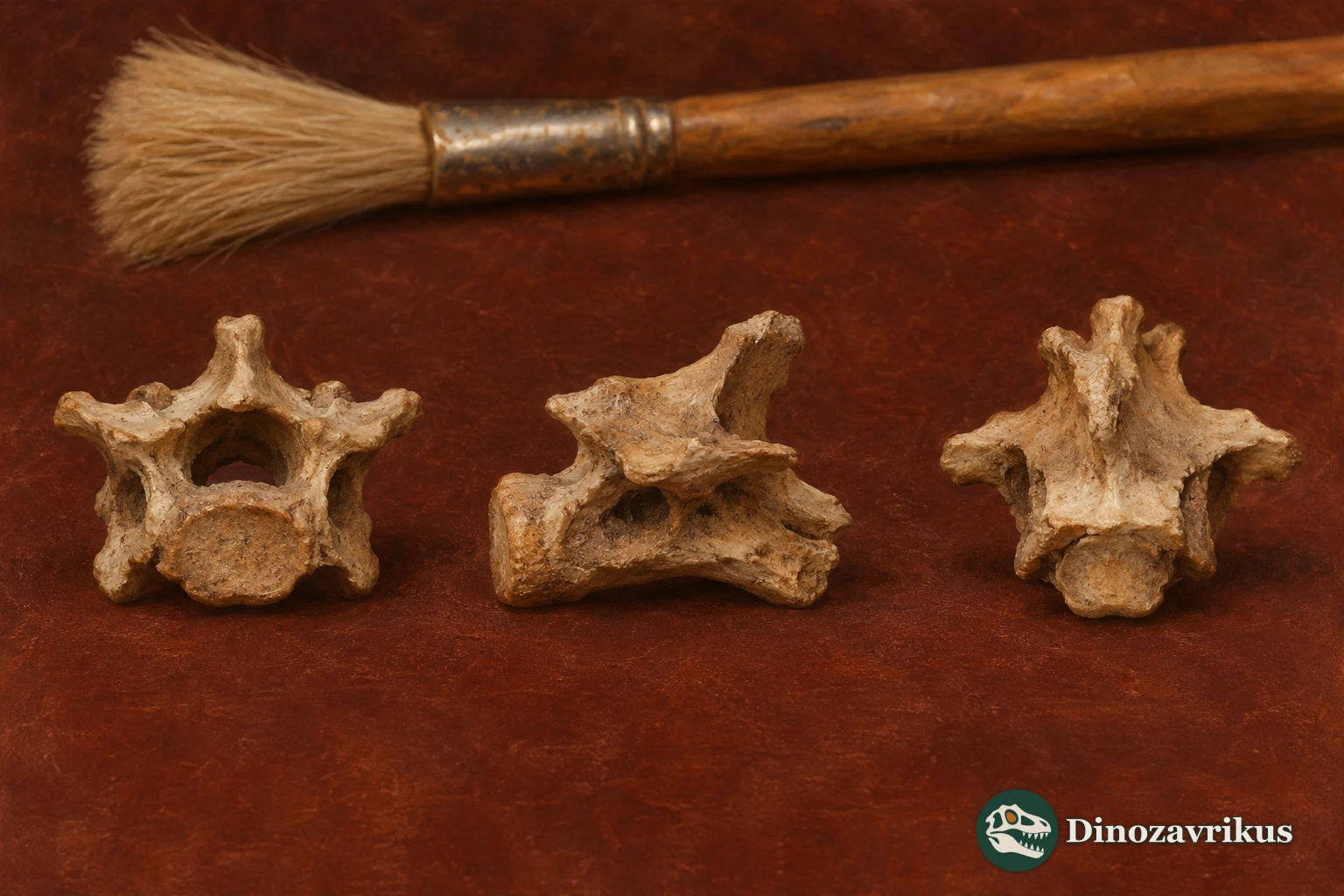
Geringophis is a fossil snake known from isolated vertebrae in North America. In the type species, the bony arch over the spinal cord is markedly flattened, with a tall spine rising above it. This combination helps identify the bones.
Quick facts
| Group | Snakes (Serpentes) |
|---|---|
| Age | Oligocene and Miocene |
| Region | North America, United States |
| Type species | Geringophis depressus |
| Scientific name | Geringophis |
| Diet | Diet unknown |
What can the fossils tell us?
The type species was described from three trunk vertebrae. Those fossils do not include a skull or an articulated skeleton.
The type species has a flattened arch and a tall neural spine with a bump at the back. The spine differs in other species.
The genus has been compared with sand boas. Isolated vertebrae offer limited evidence for assigning it to a living lineage.
The type species from Nebraska
J. Alan Holman named Geringophis depressus in 1976 from three trunk vertebrae from the Gering Formation. He described the beds as Lower Miocene. A later synthesis dated the type material to the Late Oligocene. An isolated vertebra assigned to the species was also found at the Miocene Norden Bridge locality.
Two other species
An Oligocene trunk vertebra, KU 49126, is the holotype of Geringophis vetus. Its neural spine is slightly longer and lacks the bump seen in the type species. Three vertebrae from the Early Oligocene I-75 locality in Florida were assigned to Geringophis robustus, which has a stouter vertebra and a thicker neural spine.
Relationships inferred from the spine
A low neural arch occurs in several groups of snakes. Geringophis and Ogmophis were historically treated as relatives of sand boas. The vertebrae alone offer little evidence for placing either in a modern lineage. They also give few clues about the length of the whole animal.
Frequently asked questions
Where was the type species found?
It was discovered in the Gering Formation of western Nebraska.
What distinguishes the Florida species?
Geringophis robustus has more robust vertebrae with a thicker neural spine.
When did the genus live?
Geringophis is known from Oligocene and Miocene deposits in North America.
What did Geringophis eat?
Its known vertebrae do not establish a precise diet.