

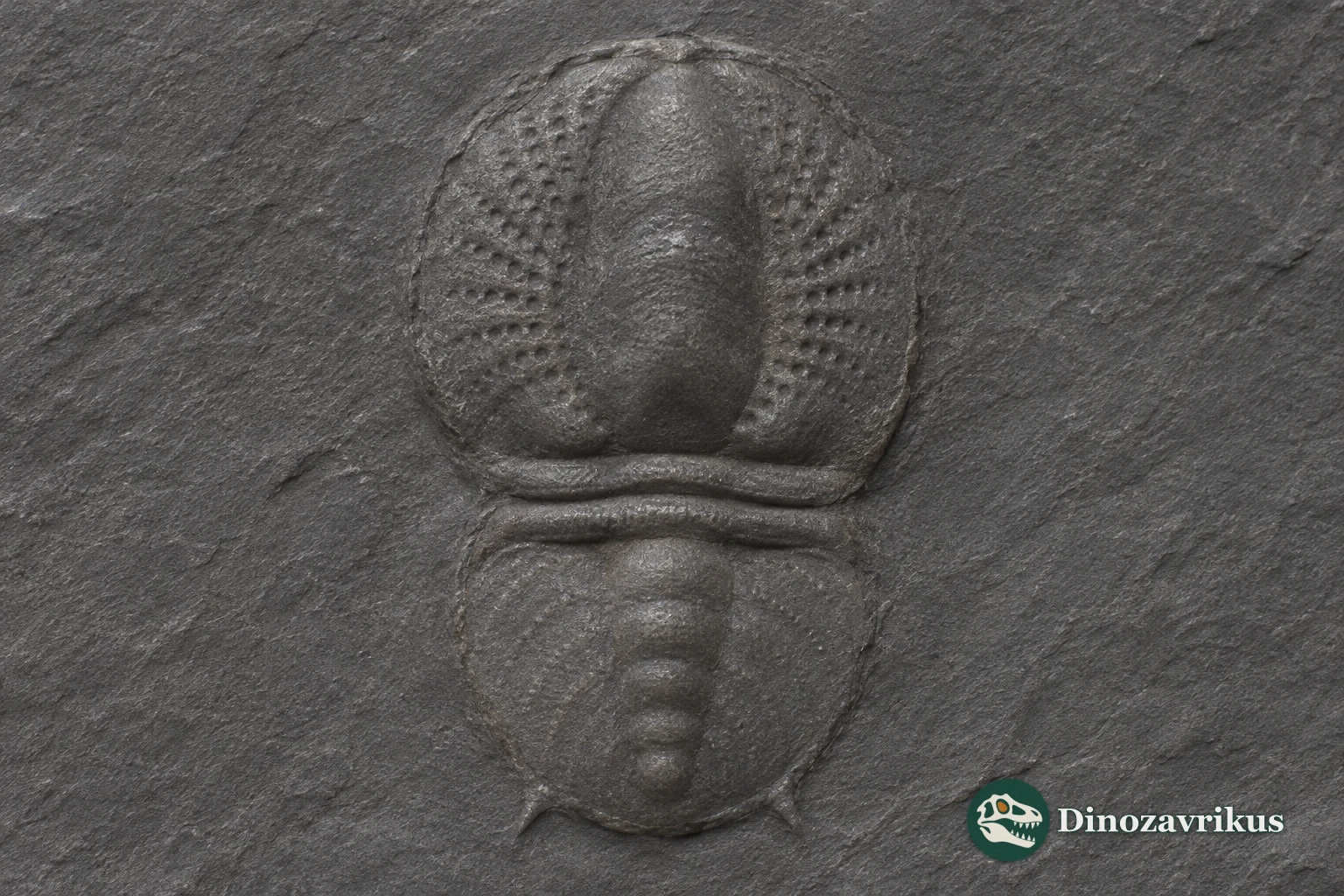
Goniagnostus was a Cambrian agnostid with a long raised axis on the head and short spines at the rear corners of the tail shield. Many specimens consist of a single shield. Complete shells from Tasmania show how the parts fitted together.
Quick facts
| Group | Arthropoda, Agnostida |
|---|---|
| Type species | Goniagnostus nathorsti |
| Age | Cambrian, Miaolingian Series |
| Neotype of the type species | PMO 19887, internal mould of a complete shell |
| Neotype locality | Krekling, Oslo Region, Norway |
| Other material | Articulated shells and detached shields from Tasmania |
What can the fossils tell us?
PMO 19887 preserves a complete shell. It provides a reference for separate shields and articulated specimens from elsewhere.
The glabella takes up about three quarters of the head’s length. The tail shield has an axial node and short posterolateral spines.
One yielded many complete Goniagnostus shells. The species was absent at the other. The wider fauna supports an inference about relative water depths.
The type species
Waldemar Brøgger described the type species in 1878 as Agnostus nathorsti. Benjamin Howell established Goniagnostus in 1935. David Bruton later designated PMO 19887 as neotype. It is an internal mould of a complete exoskeleton from shale at Krekling, Norway.
The type species occurs in Scandinavia, China and Australia. It names a fossil zone in Scandinavian successions. Adjacent zones, including some named for Ptychagnostus, help correlate different parts of the Cambrian record.
A long head axis and short tail spines
In the Tasmanian specimens the head shield is slightly larger than the tail shield. The two shields are joined by two free thoracic segments. The glabella, or raised axis of the head shield, runs for 75–80 per cent of its length. Radial depressions mark the cheeks, and a groove extends along the midline in front of the glabella.
The tail shield is wider than long. A node rises on its axis and short spines sit on either side behind the end of the axis. Tiny bumps coalesce into a network on parts of the shell. The strength of such details varies between specimens, making combinations of characters more informative than a single feature.
Why articulated fossils matter at Trial Ridge
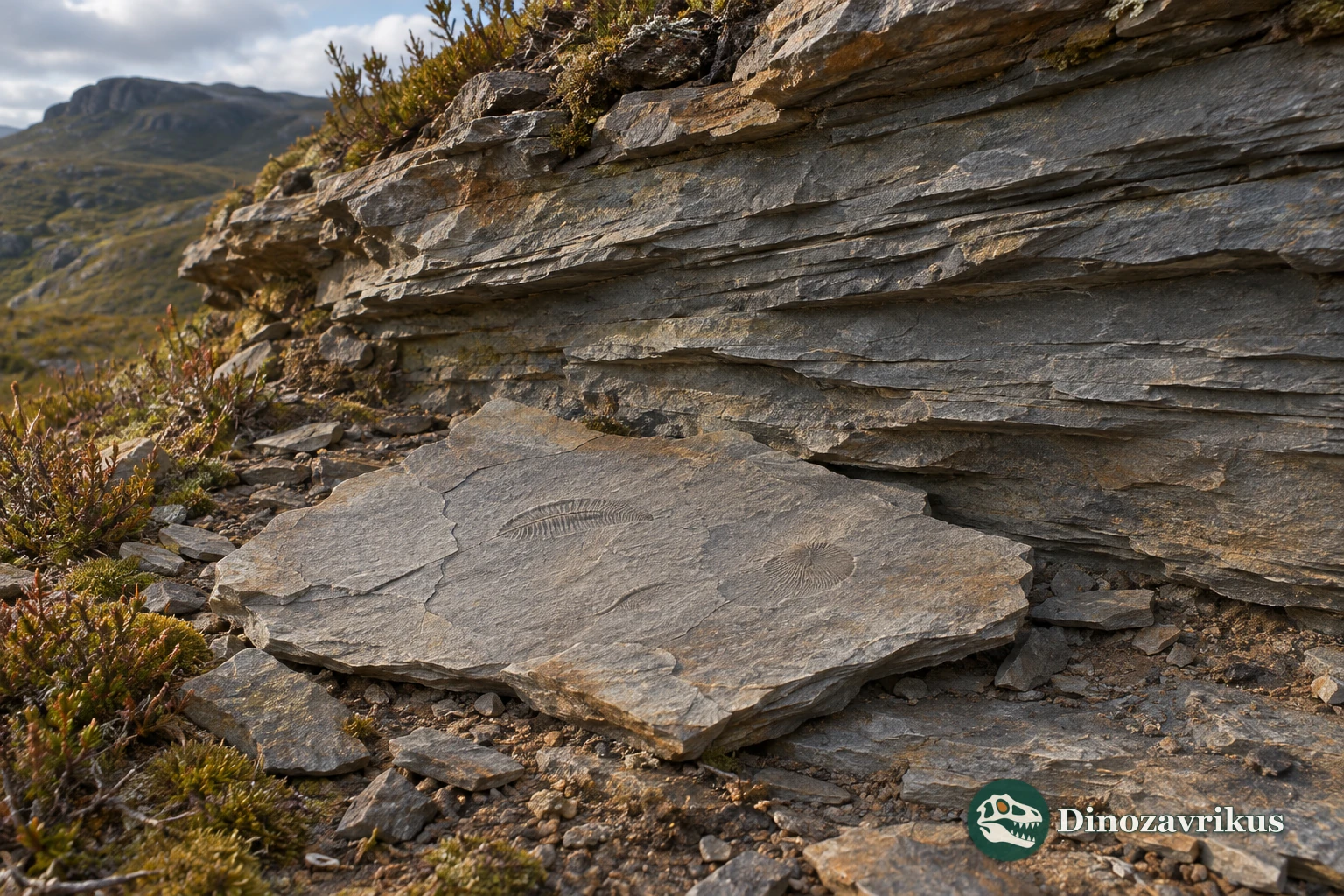
One Trial Ridge locality yielded 21 complete or nearly complete shells of Goniagnostus, ten isolated head shields and seven isolated tail shields. At another locality in the area, the agnostid fossils were all disarticulated and Goniagnostus was absent from the studied material.
The authors interpreted the differences in preservation and the broader assemblages as evidence for a relatively deeper depositional setting at the first site. This is an inference about burial conditions. The fossils do not establish the diet of Goniagnostus or how much time it spent above the seabed.
Frequently asked questions
Which specimen is the neotype?
PMO 19887, an internal mould of a complete shell from Krekling in Norway.
Where were its spines?
The Tasmanian specimens have a short spine on either side of the rear margin of the tail shield.
What do the complete Tasmanian shells show?
They link the head and tail shields to the same animal and preserve the thoracic segments between them.
Was Goniagnostus a deep-water animal?
The broader fossil assemblages suggest a relatively deeper setting at one Tasmanian locality. The exact depth and the behaviour of the animal remain uncertain.