

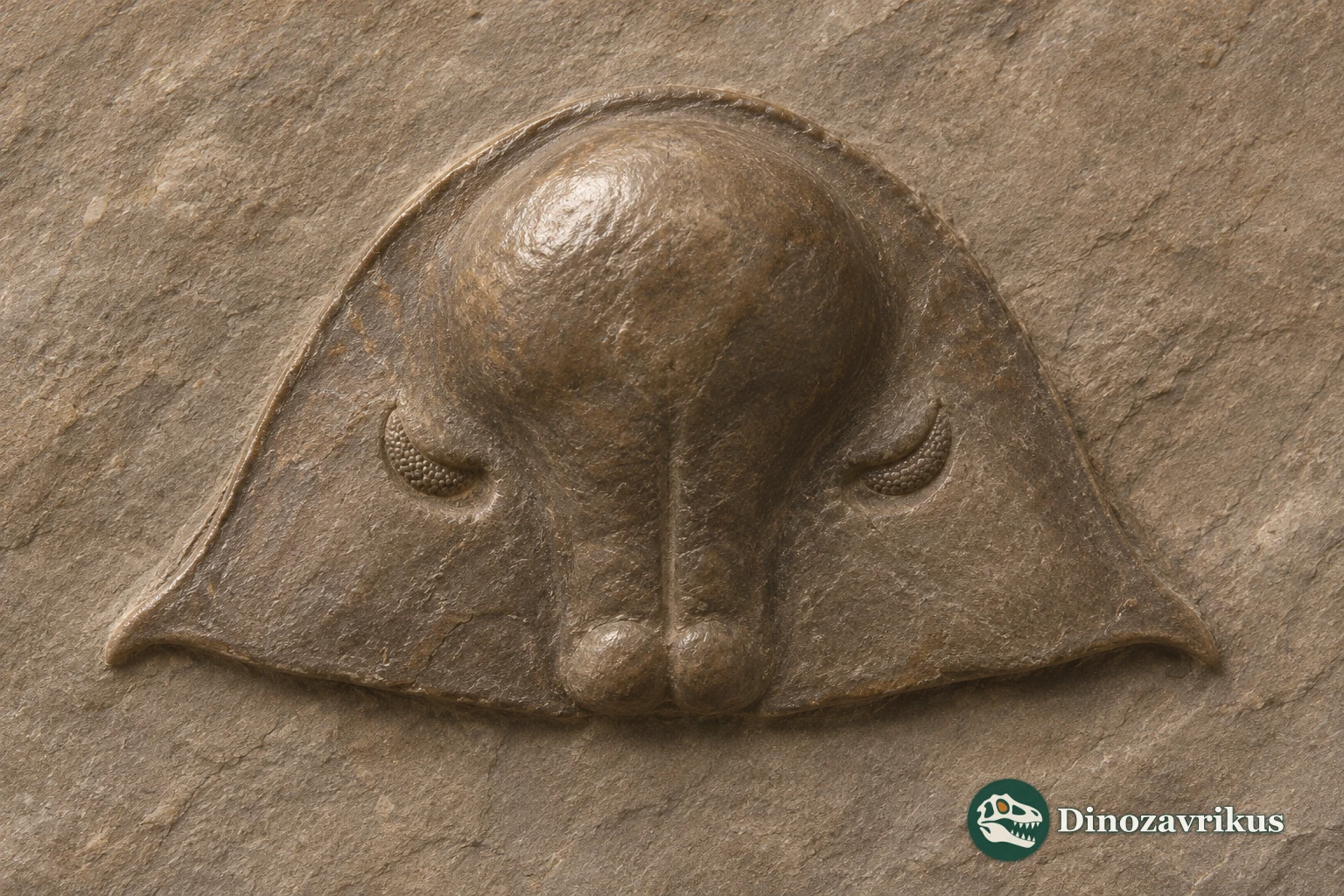
Griffithides is a Carboniferous trilobite with a pear-shaped glabella, the raised area along the middle of the head. The glabella bulges forward and has small, distinct lobes at its base. These features can be recognised on head shields detached from the rest of the exoskeleton.
Quick facts
| Group | Proetida |
|---|---|
| Well-documented age | Carboniferous |
| Genus named | Joseph Portlock, 1843 |
| Type species | Griffithides longiceps |
| Thoracic segments | Nine in the classic description |
| Records include | British Isles, Poland and the Urals |
What can the fossils tell us?
Its two small basal lobes are distinctly set off. This combination helps identify an isolated cranidium.
The International Commission on Zoological Nomenclature confirmed it as the type species in 1991.
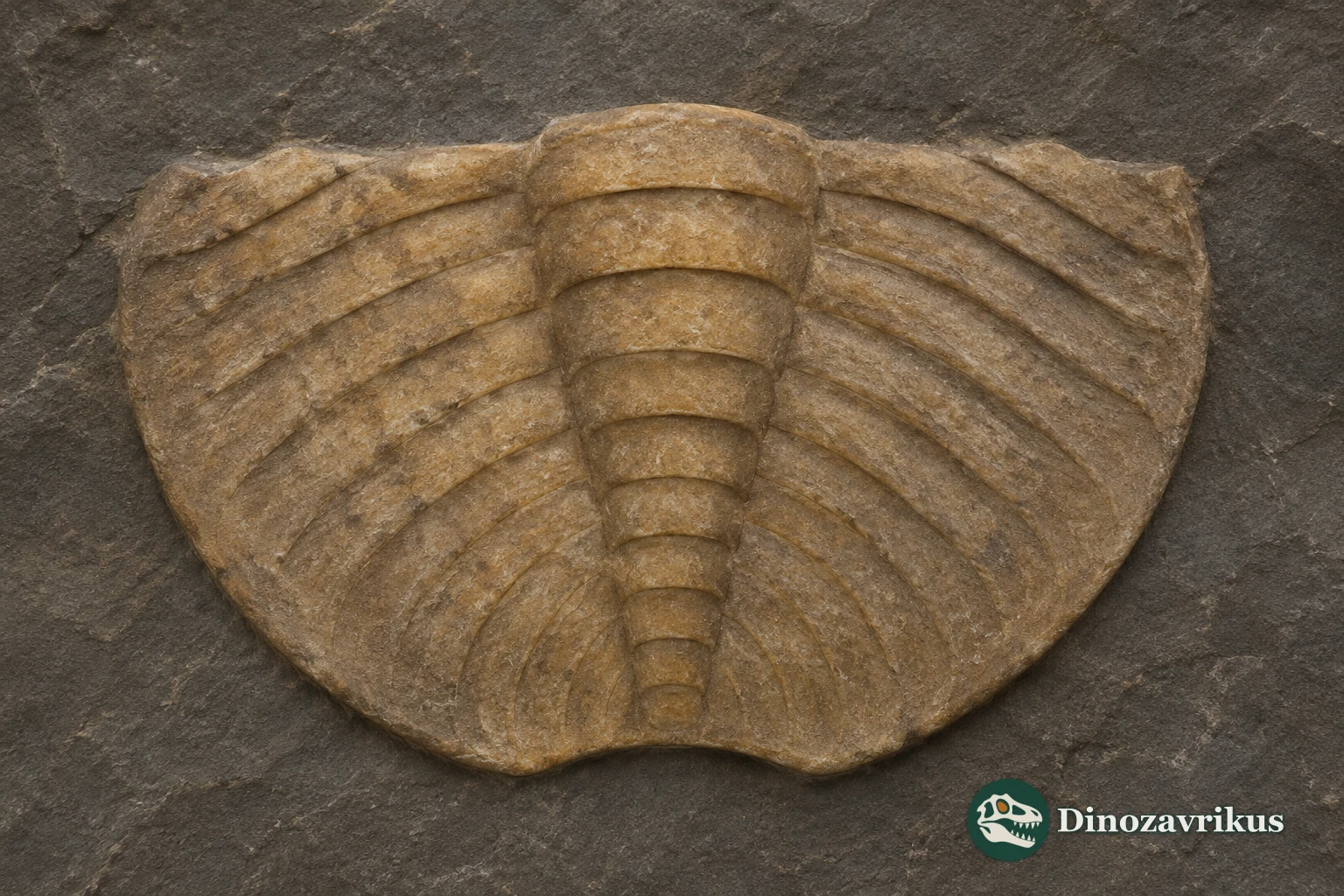
The Polish subspecies G. claviger halinae was described with thirteen axial rings and nine or ten ribs.
A type species confirmed in 1991
Joseph Portlock established Griffithides in 1843 with four species. Thomas Oldham later selected Asaphus globiceps as the type. Subsequent authors generally used Griffithides longiceps for that purpose, while A. globiceps became the type of Bollandia.
In 1991 the International Commission on Zoological Nomenclature confirmed G. longiceps as the type species and conserved Bollandia. Species once included in Griffithides have also been reassessed as their fossil material was revised. Some historical names now appear in discussions of Ditomopyge.
Reading the head and the tail separately
The glabella is markedly convex at the front. Its side furrows are subdued, and two small lobes stand out near the rear. The classic description gives nine freely articulating thoracic segments. Farther back, several fused segments make up the tail shield.
On a detached pygidium, useful features include the width and taper of the axis and the counts of axial rings and lateral ribs. Halszka Osmólska described G. claviger halinae from Upper Viséan limestone near Gałęzice in Poland. The tail has thirteen axial rings and nine or ten ribs. The holotype, Z. Pal. Tr. II/1, is a cranidium.
Frequently asked questions
How can a Griffithides head shield be recognised?
The glabella has an expanded front and small, clearly separated lobes at the rear.
What is the type species?
Griffithides longiceps, as confirmed by the International Commission on Zoological Nomenclature in 1991.
How many thoracic segments did it have?
The classic diagnosis gives nine movable thoracic segments. The axial rings of the tail shield are counted separately.
What was described from limestone near Gałęzice?
Shields of the subspecies Griffithides claviger halinae. The tail shield bears thirteen axial rings and nine or ten lateral ribs.