

Hatzegobatrachus was a small Maastrichtian frog from what is now western Romania. It was named from part of the pelvis. Later finds included separate vertebrae and a urostyle, allowing closer comparisons with fire-bellied toads and their relatives.
Quick facts
| Group | Frogs (Anura), bombinatorids |
|---|---|
| Age | Late Cretaceous, Maastrichtian |
| Region | Europe, Romania (Hațeg and southwestern Transylvania) |
| Type species | Hatzegobatrachus grigorescui |
| Scientific name | Hatzegobatrachus |
| Diet | Exact prey is unknown |
What can the fossils tell us?
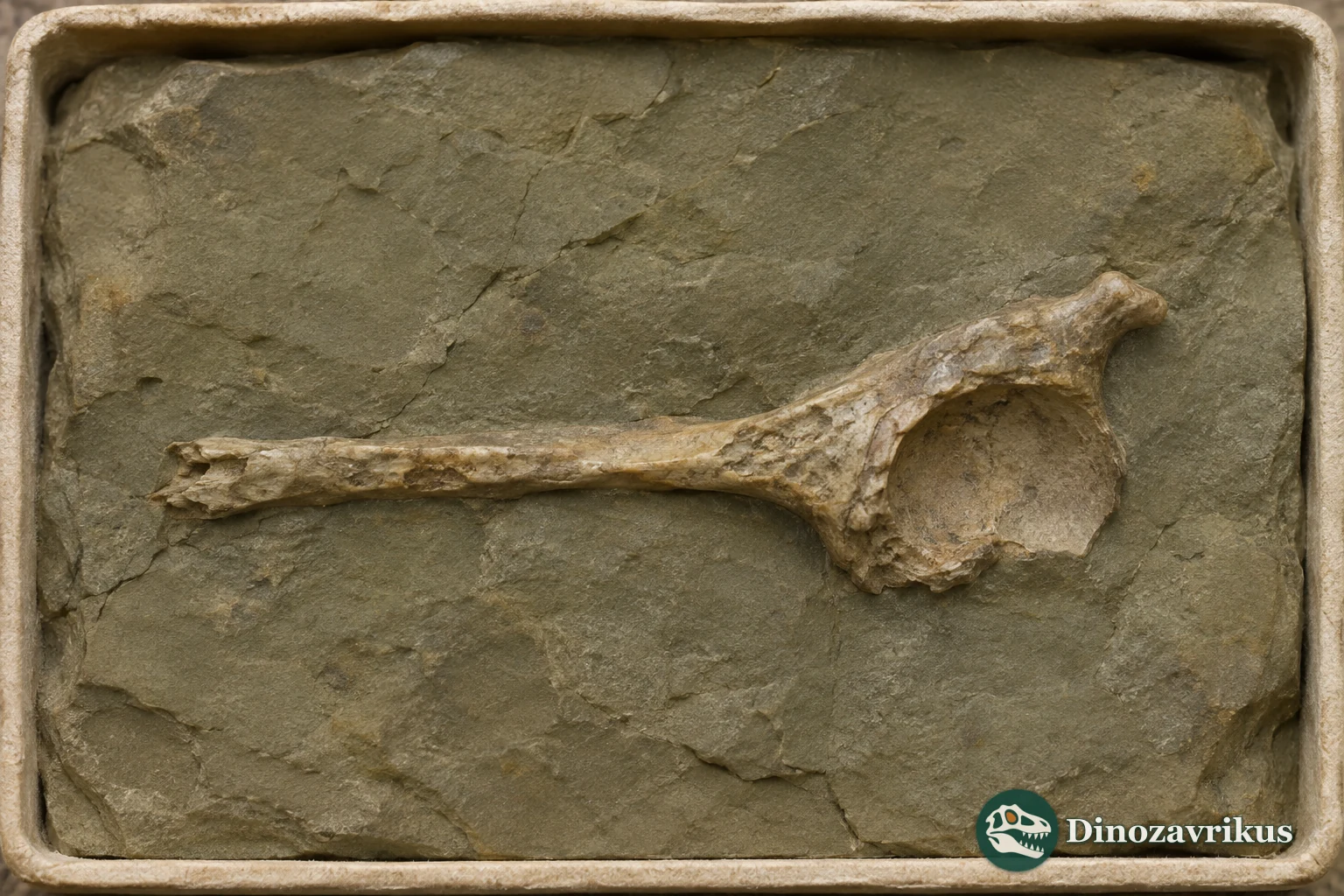
Holotype LPB(FGGUB) v. 433 retains the hip socket region and part of the shaft. The latter has a rounded cross-section and lacks a tall dorsal crest.
The additional joints on the referred vertebrae, together with a pronounced interiliac tubercle on the pelvis, support assignment to the fire-bellied toad family.
The original estimate of body length came from one bone. A whole skeleton has yet to establish the proportions of this frog.
A bone from Vălioara-Fântânele
Márton Venczel and Zoltán Csiki named Hatzegobatrachus grigorescui in 2003 from Vălioara-Fântânele 1. The site samples Maastrichtian beds of the Densuș-Ciula Formation. The species name honours palaeontologist Dan Grigorescu. The size of the hip bone led the authors to estimate a length from snout to vent of about 30 millimetres.
Tell-tale features of the hip bone
The side of the holotype preserves a hip socket shaped like a rounded, inverted triangle. Part of the bone directly above it thickens and protrudes. Evidence of a large interiliac tubercle is preserved on the inner surface. The combination helps distinguish this bone from ilia of Paralatonia in the same deposits.
What the 2016 study added
Venczel and colleagues documented two trunk vertebrae and a right ilium from the type locality. They also described two further ilia and an incomplete urostyle from Oarda de Jos in Transylvania. Additional joints on the vertebrae, details of the pelvis and the articulation between the sacrum and the urostyle supported a position in Bombinatoridae, the fire-bellied toad family.
Frequently asked questions
When did Hatzegobatrachus live?
Its fossils date to the Maastrichtian, the last stage of the Cretaceous.
What was the species named from?
An incomplete left ilium from the Densuș-Ciula Formation in the Hațeg Basin.
What does the estimate of 30 millimetres measure?
It is the approximate length from snout to vent, inferred by the original authors from the size of the hip bone.
Has it been found outside the Hațeg Basin?
Yes. Bones from Oarda de Jos in the neighbouring Transylvanian Basin were also assigned to the species.