

Heosminthus was a small fossil rodent among early dipodoids, the group that includes living jumping mice and jerboas. Its record consists mostly of isolated cheek teeth from late Eocene and early Oligocene deposits in Asia. Teeth assigned to H. primiveris also occur in early Oligocene southeastern Serbia.
The genus belongs in the ancient mammal catalogue. Older studies usually placed it in Dipodidae or Zapodidae; a 2022 phylogenetic study treated it within Sminthidae. Family placement and the grouping of named species depend on taxonomic treatment.
Quick facts
| Scientific name | Heosminthus Wang, 1985 |
|---|---|
| Type species | H. primiveris Wang, 1985 |
| Group | Dipodoidea; placed in Sminthidae in a 2022 analysis |
| Age | Late Eocene to early Oligocene |
| Range | China, Mongolia, Caucasus and Serbia |
| Main evidence | Isolated upper and lower cheek teeth |
| Body and behaviour | Not directly known |
| Caveat | Dental traits and genus boundaries overlap |
What can the fossils tell us?
Researchers compare tooth position and enamel ridges. These traits vary within samples and overlap among related forms.
Chinese, Mongolian, Caucasian and Serbian records do not represent one population living everywhere at once.
Similar teeth may indicate close species, variation within one species, or genera split too finely.
Dipodoid relationships inform comparison, but the known material does not establish the hind limbs or behaviour of living jerboas.
The name and its type material
Xiaowen Wang established Heosminthus in 1985. Its type species is H. primiveris from the Caijiachong Formation of Yunnan, China. The type level was originally assigned to the Early Oligocene, although a Late Eocene age has also been discussed.
Named Mongolian forms include H. borrae and H. chimidae; H. nomogenesis was described from the Late Eocene of China. These assignments do not prove that each name is a separate lineage. Teeth of H. primiveris, H. nomogenesis and nearby forms such as Bohlinosminthus parvulus have been judged similar enough to warrant caution.
What the teeth preserve
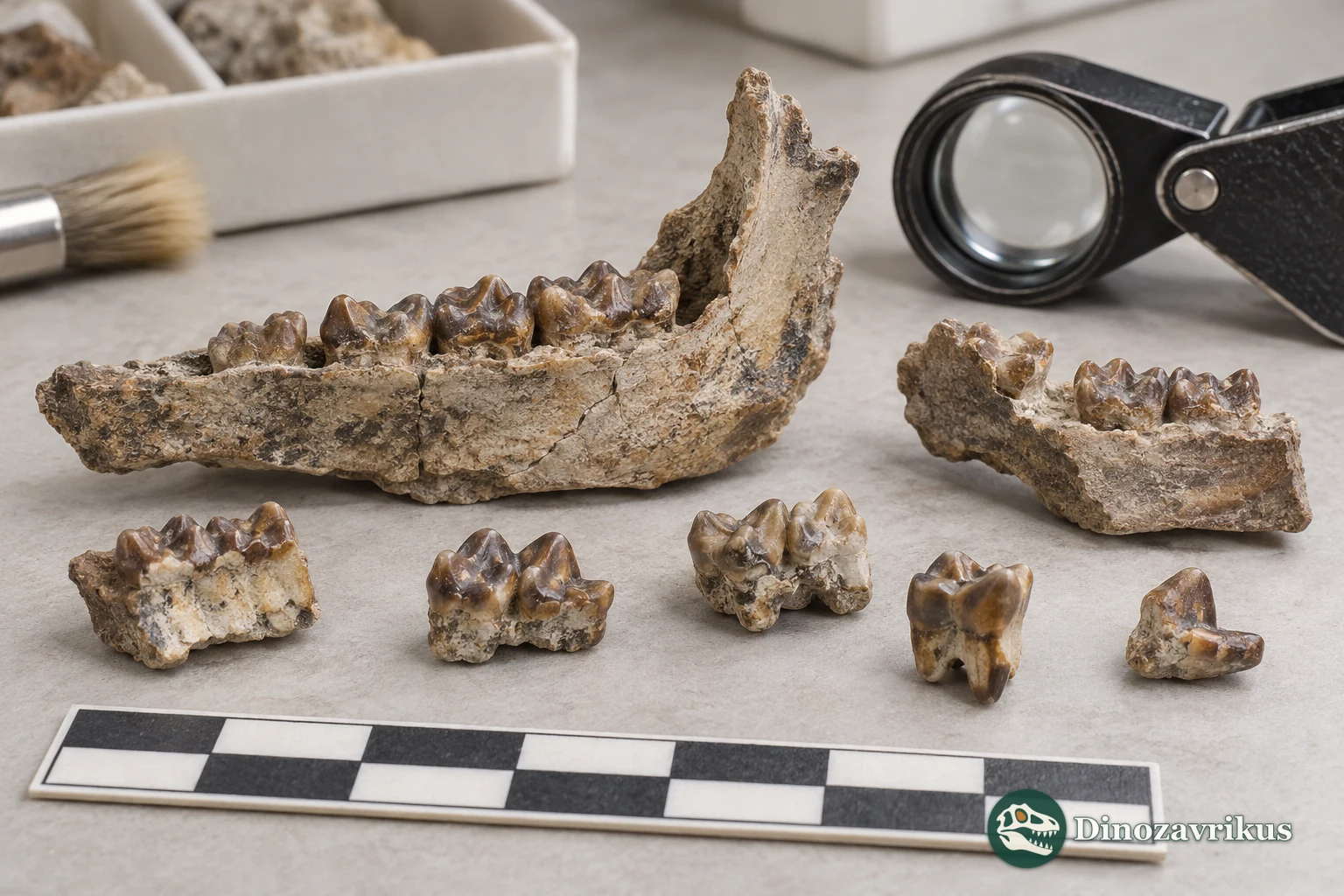
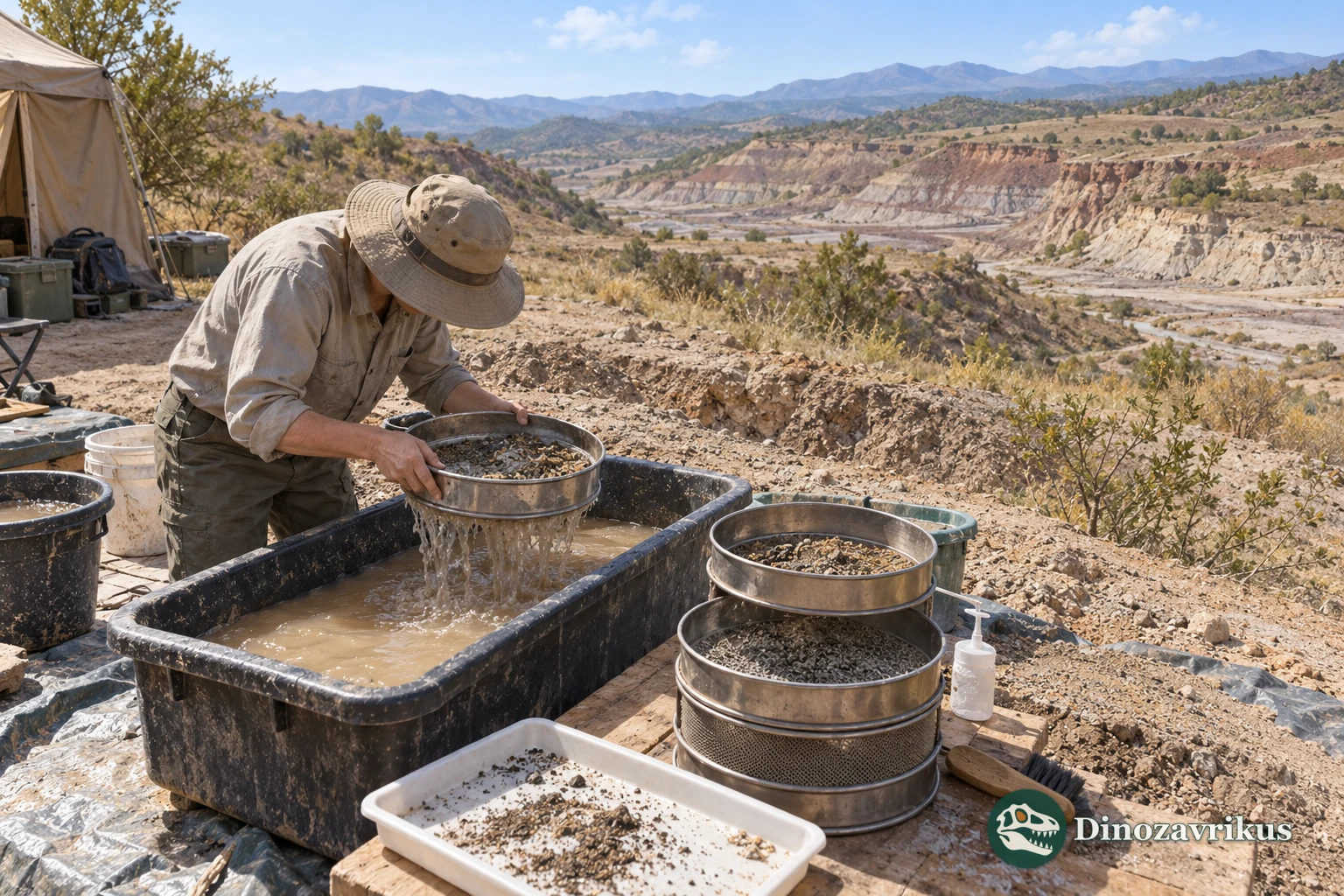
Much of the material was recovered by washing sediment and sorting its fine fraction under a microscope. Researchers measure teeth, establish their positions in the jaw, and compare ridges and cusps on the chewing surface. Such samples are useful for population comparisons but seldom preserve a skull, skeleton and teeth in one individual.
A Serbian sample assigned to H. primiveris showed variation in ridge length and cusp connections. The authors noted that some tooth positions were too rare to establish whether differences between localities were consistent. A single molar may therefore fail to diagnose a species securely.
Age, geography and dispersal
Records from China and Mongolia place the genus in late Eocene and early Oligocene faunas, although some ages remain under discussion. A study of four localities in Serbia’s Koritnica–Babušnica Basin described early Oligocene teeth as H. primiveris. The report extended the known European record of these early dipodoids.
The Serbian authors inferred that Asian dipodoids reached southeastern Europe before Plesiosminthus entered central and western Europe. This compares fossils from dated localities; it does not reveal a continuous route or its precise mechanism.
Taxonomy and limits of reconstruction
A 2019 review warned that Asian Paleogene dipodoids may have been split into too many genera, because size and small differences in enamel ridges can vary within species. A 2022 description of North American H. teredens suggested that future evidence might support a separate genus for some forms, potentially including H. borrae. This is a proposal for future testing, not a synonymy adopted here.
Teeth support identification as a small dipodoid, but do not directly measure body length, mass, hind-limb proportions or tail length. They also cannot identify exact foods, colour, reproduction or activity. A jerboa-like reconstruction would overstate what is known: no complete limb skeleton establishes specialised hopping in Heosminthus. The nearly complete skeleton of Paramys provides a useful contrast in how much postcranial evidence can contribute to early-rodent studies; this is a comparison of fossil record, not a claim of close relationship.
Frequently asked questions
When did Heosminthus live?
Well-discussed records are Late Eocene to Early Oligocene, while the age of some Chinese type-level deposits remains debated.
Where have its fossils been found?
Published records come from China, Mongolia, the Caucasus and early Oligocene southeastern Serbia.
What fossils identify the genus?
Mostly isolated upper and lower cheek teeth, especially their enamel-ridge patterns.
Was Heosminthus a jerboa?
It was an early dipodoid, but teeth alone do not demonstrate the specialised jumping or body form of living jerboas.