

Hoplocetus is a historical name for extinct relatives of sperm whales. Pierre Gervais erected it for large fossil teeth, while a later German discovery brought together teeth, vertebrae and other fragments from one animal. That association gives the 2006 species H. ritzi a firmer anatomical basis than a loose tooth alone. The whale on the cover is an artistic reconstruction; its precise head shape, body length and color are unknown.
A tooth can record real anatomy yet fail to identify a genus. That distinction matters especially for nineteenth-century names applied across different fossil localities.
Quick facts
| Genus | Hoplocetus Gervais, 1848 |
|---|---|
| Type species | H. crassidens |
| Well-described species | H. ritzi Hampe, 2006 |
| H. ritzi fossils | 13 teeth, eight vertebrae and bone fragments |
| Locality | Groß Pampau, northern Germany |
| Age | Near the Middle–Late Miocene boundary |
What can the fossils tell us?
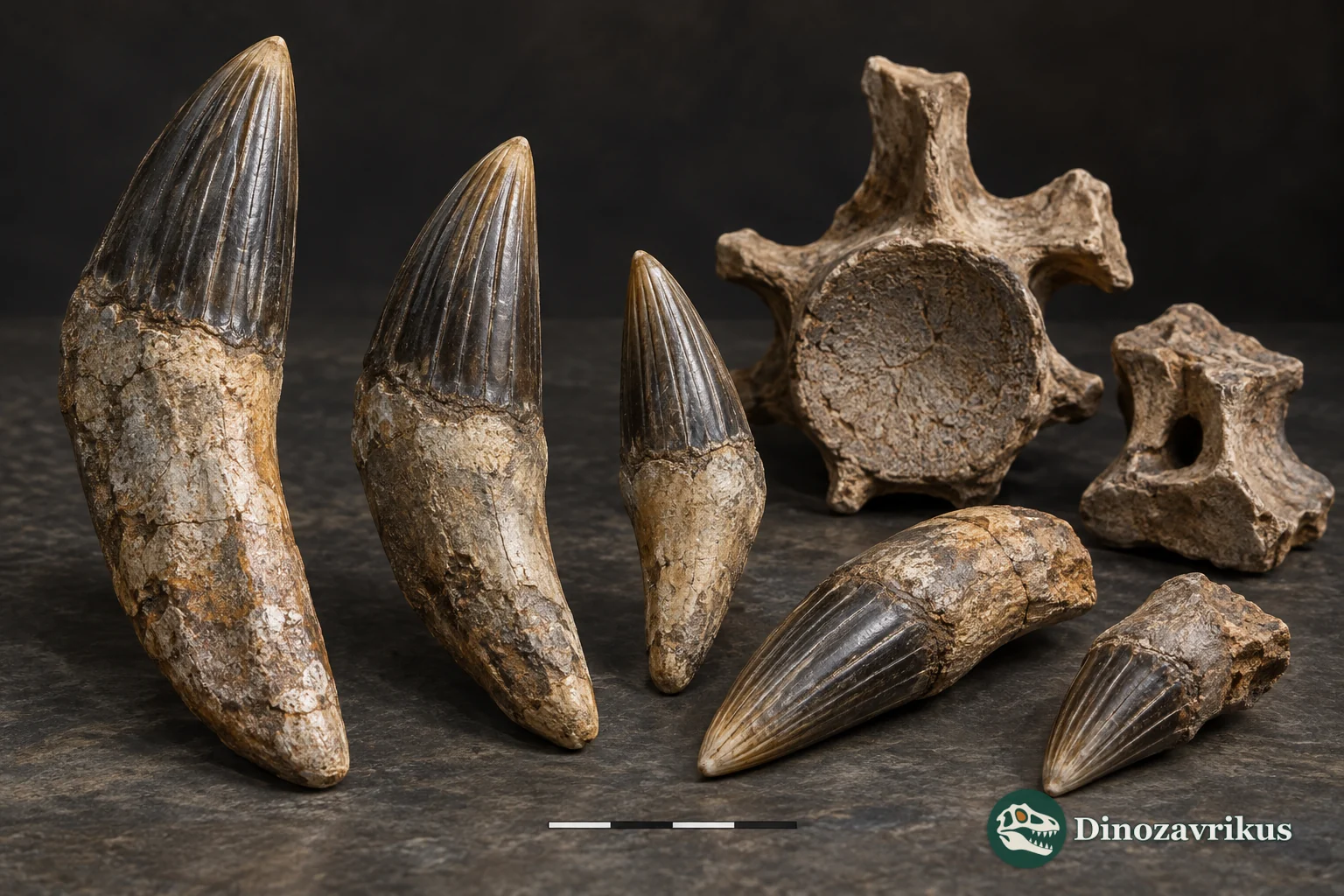
The H. ritzi series contains 13 robust teeth, some with enamel caps and opposing wear facets. A similar isolated tooth from elsewhere need not belong to the same genus.
Eight vertebrae and fragments belong to the same disarticulated skeleton as the teeth. No complete skull or vertebral column was found.
The Groß Pampau marine horizon lies near the Middle–Late Miocene boundary. It cannot date every old museum tooth labelled Hoplocetus.
From Gervais's teeth to Groß Pampau
Gervais named the type species H. crassidens in 1848 from tooth material in the Drôme region of France. His diagnosis relied on dental form, including a narrowing beneath the enamel cap. Other ancient physeteroids can have similarly massive teeth, so an old label on a single tooth is not evidence that the whole animal is known.
Reiner Ritz discovered fossil whale material at Groß Pampau, Schleswig-Holstein, in 1997. Oliver Hampe described it in 2006 as H. ritzi, honoring the finder. The holotype MB.Ma. 50479.1–26 contains 13 teeth, eight vertebrae and bone fragments from a disarticulated skeleton. It does not contain a skull. Scaldicetus is another historical tooth-based physeteroid name, which makes comparisons between old specimens particularly delicate.
What tooth wear actually demonstrates
The H. ritzi teeth are robust and often heavily worn. Some retain a small enamel cap; matching contact surfaces on opposing teeth show that teeth met during jaw closure. This is direct evidence about tooth function. It does not reveal an exact prey list, a measured bite force or a reconstructed head outline.
Hampe compared several tooth characters across hoplocetine sperm whales. A 2024 study of a Dutch physeteroid tooth again highlighted how isolated teeth can resemble named tooth-based taxa without diagnosing them securely. Consequently, some records historically assigned to Hoplocetus may warrant reassessment. Livyatan preserves a different and much richer cranial sample, so its size should not simply be transferred to Hoplocetus.
A Miocene marine horizon, not a Pleistocene date
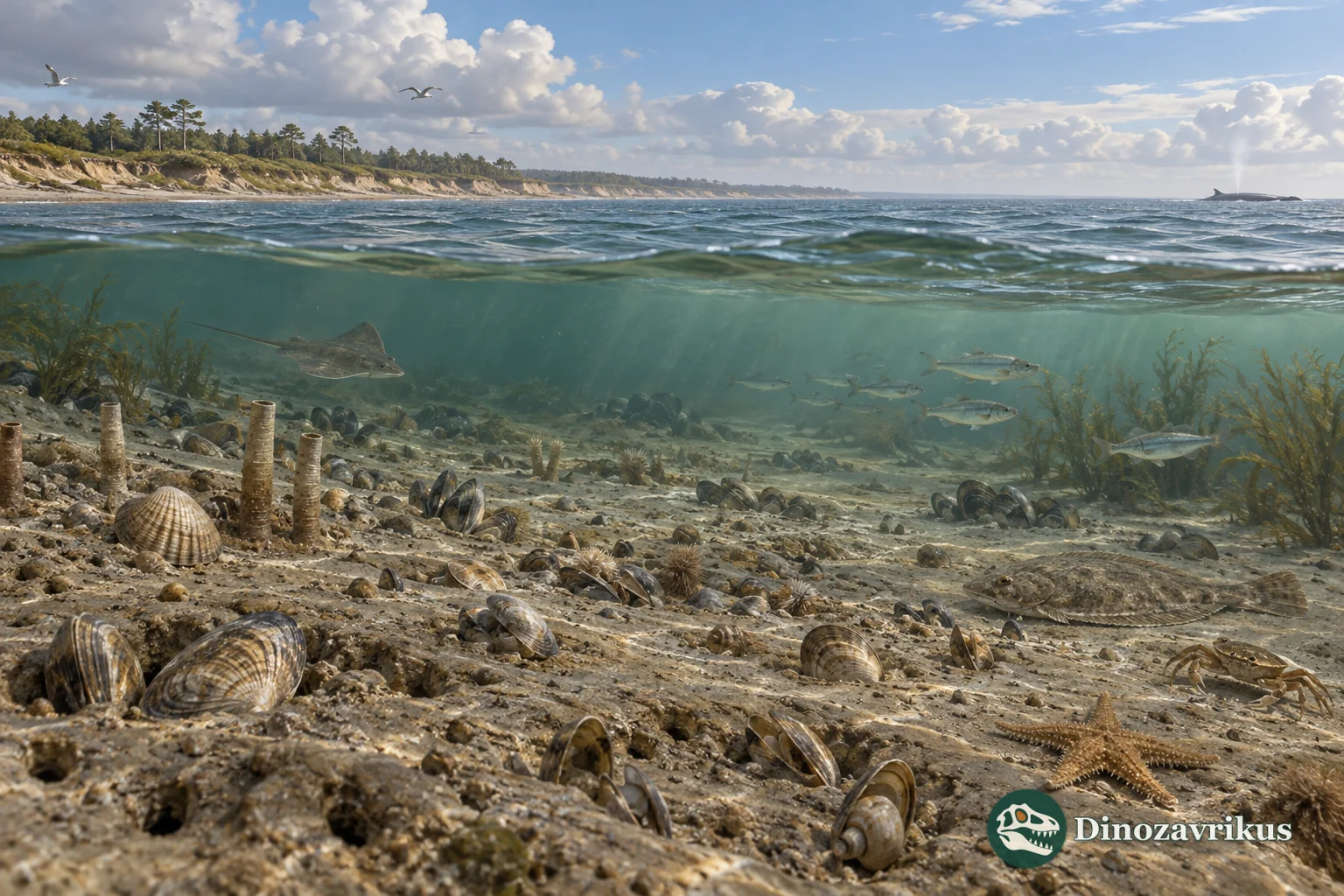
The Groß Pampau mica-clay represents a marine basin in northern Europe. Its fossil horizon is placed in the Bolboforma fragori/subfragoris zone near the boundary of the Middle and Late Miocene. Other marine fossils help establish that geological context. The date applies to this associated H. ritzi specimen; it does not validate a Pleistocene range for the genus from isolated disputed teeth.
The animal was a fully marine toothed whale, but its exact food, movement, social behavior and body dimensions remain unmeasured. A tooth-bearing jaw could have handled substantial prey, yet no stomach contents or unequivocal bite-marked prey are documented for H. ritzi. The broader transition of whale ancestors into marine life is covered in the evolution of whales; the scenic illustration here depicts an inferred environment, not an excavated view.
Frequently asked questions
What fossils are known for H. ritzi?
Its holotype consists of 13 teeth, eight vertebrae and other bone fragments from one disarticulated skeleton, without a skull.
When did the Groß Pampau whale live?
The fossil-bearing marine clay lies near the boundary of the Middle and Late Miocene.
Does every giant fossil sperm-whale tooth belong to Hoplocetus?
No. Several ancient physeteroids had similar teeth, and genus-level identification of an isolated specimen can remain uncertain.
How long was Hoplocetus?
No reliable whole-body length has been established from the incomplete H. ritzi skeleton.