

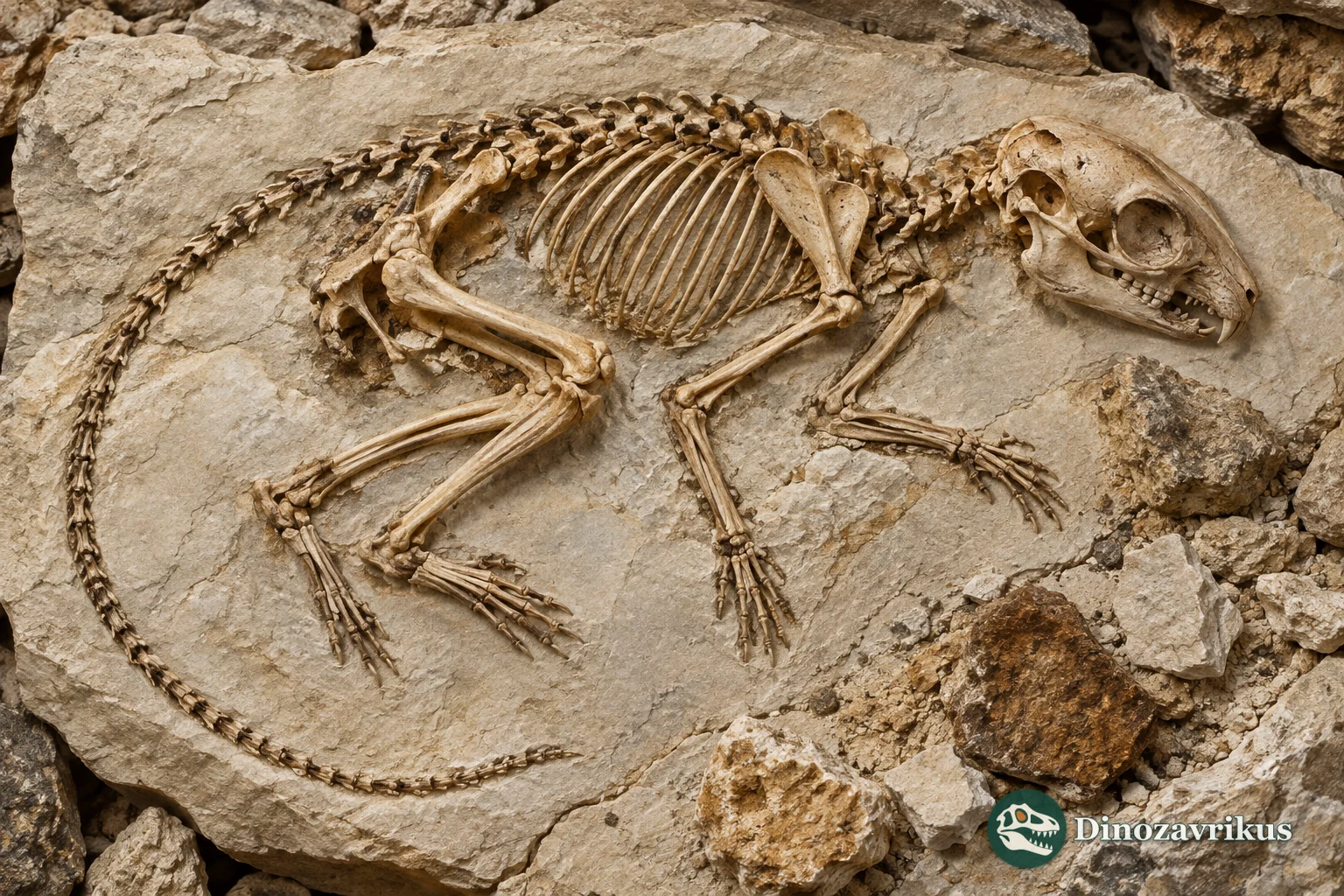
Hypnomys is an extinct dormouse lineage from the Balearic Islands. Its late species H. morpheus was larger than the living garden dormouse. The fossil record includes much more than scattered molars: caves on Mallorca yielded associated bones and an almost complete skeleton. These finds allow measurements of the limbs, but the fur, color and behavior in the cover art remain reconstruction.
The Balearic lineage persisted through much of the Pleistocene and into the Holocene. Species names and locomotor interpretations have been revised as better skeletons and molecular evidence became available.
Quick facts
| Genus | Hypnomys Bate, 1918 |
|---|---|
| Family | Gliridae, dormice |
| Islands | Mallorca and Menorca |
| Late species | H. morpheus, Late Pleistocene to Holocene |
| Evidence | Teeth, jaws and associated skeletons |
| Living comparison | Garden dormouse Eliomys quercinus |
What can the fossils tell us?
An almost complete H. morpheus skeleton from Cova des Coral·loides allows comparisons with living dormice. Limb shape does not preserve behavior directly.
Associated material in Cova des Pas de Vallgornera has been compared with H. onicensis; the label cf. preserves uncertainty in the species assignment.
Mitochondrial DNA from H. morpheus supports a sister relationship with living Eliomys. It does not identify an exact mainland ancestor or reconstruct daily activity.
An island lineage named by Dorothea Bate
Dorothea Bate introduced Hypnomys in 1918 for fossil Balearic dormice. Late Pleistocene and Holocene H. morpheus occurs on Mallorca and Menorca. Older forms testify to a longer island history, although fragmentary records and boundaries between named species have been debated.
Island isolation can change body size and limb proportions. Hypnomys is large compared with the garden dormouse Eliomys quercinus, yet it remained a rodent, not a beaver-sized animal. Prolagus provides a separate example of a Mediterranean island mammal lineage; it is not a close relative of the dormouse.
What the cave skeletons reveal
An almost complete H. morpheus skeleton was found at Cova des Coral·loides on Mallorca. Associated material from Cova des Pas de Vallgornera has been compared with the earlier H. onicensis, but the cautious label cf. records uncertainty. Particularly fragile skeletons in a difficult cave passage were documented in place rather than completely removed.
A 2010 comparison of limb indexes inferred more terrestrial movement and greater digging ability than in the living garden dormouse. Later allometric work questioned how strongly that conclusion follows: the bones also resemble those of climbing and jumping mammals. The disagreement concerns interpretation of measured proportions. No fossil records the fraction of each day spent on branches, ground or in a burrow.
Teeth, DNA and the end of the lineage
Dental anatomy helps distinguish Balearic forms, but similar crowns alone cannot settle the full family tree. A 2020 ancient-mitochondrial-DNA study of H. morpheus supported a sister relationship with living Eliomys. It also discussed a deeper origin for the island lineage than late fossils alone suggest; the exact mainland ancestor remains unconfirmed.
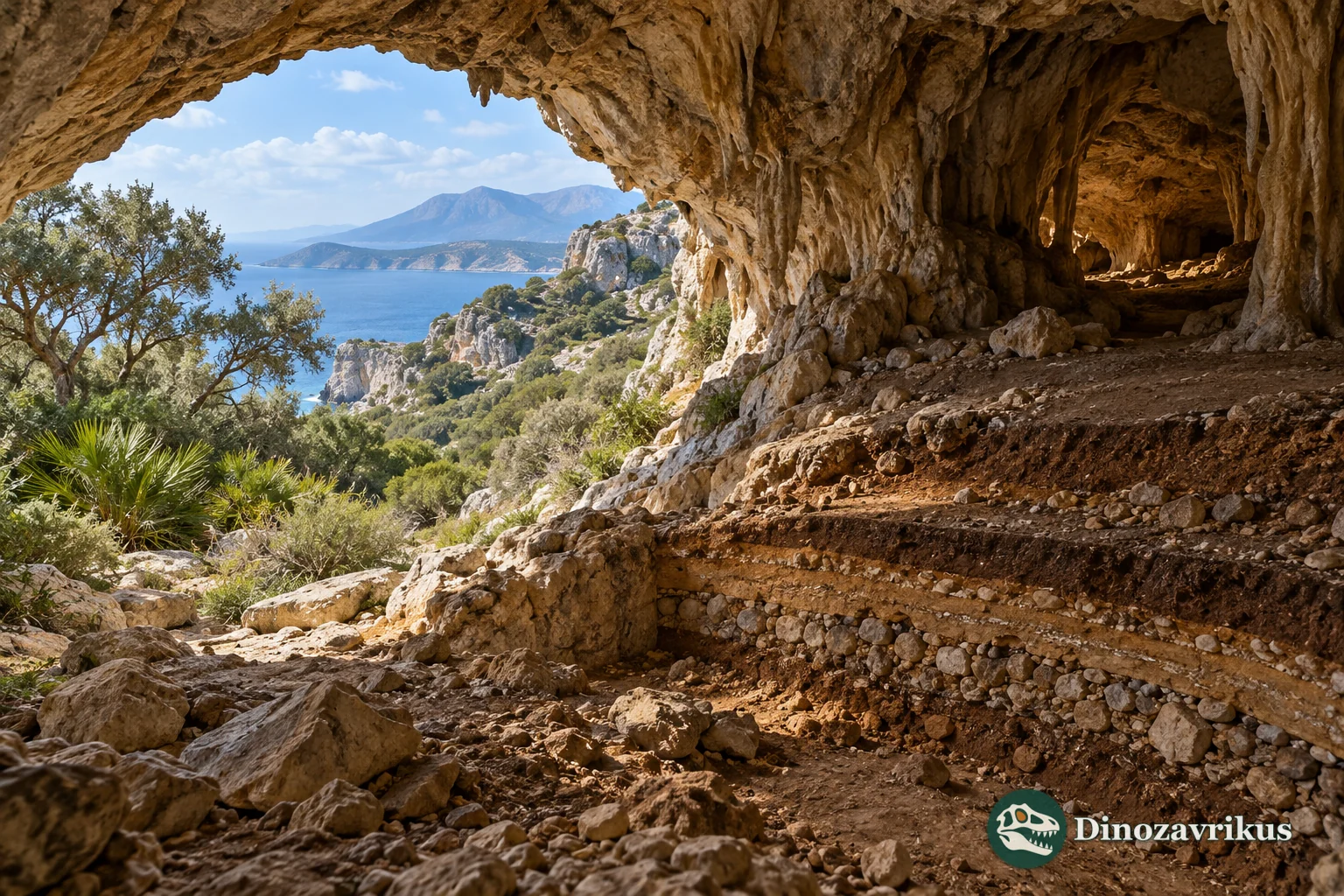
The youngest Hypnomys belongs to the Holocene. Human arrival and environmental change have been discussed in relation to Balearic extinctions, but proximity in time does not establish one cause. Cave sediment context and direct dating matter for each fossil. The broader geological setting is described in the Quaternary period profile. Our cave image is an illustrative landscape rather than a record of a named excavation.
Frequently asked questions
Where was an almost complete H. morpheus skeleton found?
It was recovered from Cova des Coral·loides on Mallorca, allowing comparison of body proportions with living dormice.
Was Hypnomys exclusively ground-dwelling?
That is not established. Studies differ over how terrestrial its measured limbs were, and climbing remains plausible.
What did ancient DNA show?
Mitochondrial DNA supports a close sister relationship between H. morpheus and living Eliomys, without naming an exact mainland ancestor.
Why did Hypnomys disappear?
It vanished by the Holocene, but a single proven cause has not been established from the current fossil evidence.