

Kamacops acervalis was a Permian temnospondyl from the western foothills of the Urals. Its type skull is missing the part in front of the orbits. The rear of the skull is informative nonetheless, with bones that document the braincase and the region of the inner ear.
Quick facts
| Group | Temnospondyls, dissorophids |
|---|---|
| Age | Permian, Ocher assemblage |
| Region | Europe, Perm Krai, Russia |
| Type species | Kamacops acervalis |
| Scientific name | Kamacops |
| Diet | Exact prey is unknown |
What can the fossils tell us?
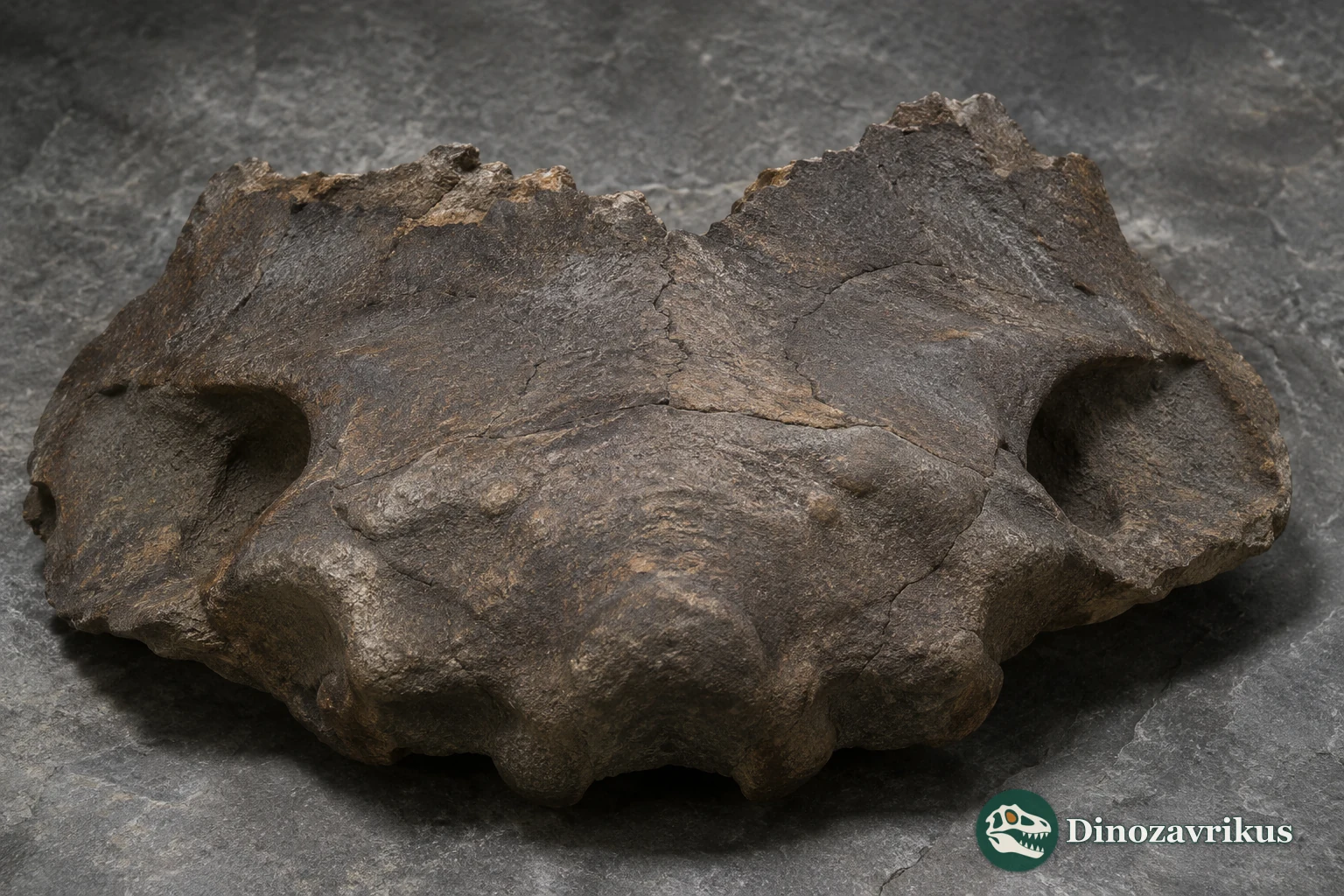
PIN 3817/1 from Erzovka preserves the back of the skull. It was used to study the otic capsule and the position of the stapes.
Cranial comparisons place Kamacops in Dissorophidae. One analysis groups it with Cacops and Zygosaurus.
The snout and possible osteoderms come from another locality. The fossil parts overlap too little to match them securely to the type.
The Erzovka skull and the material from Ezhovo
Yuri Gubin named Kamacops in 1980 from PIN 3817/1 at Erzovka, in what is now Perm Krai. The specimen belongs to the Paleontological Institute of the Russian Academy of Sciences. A snout fragment, PIN 1758/332, and possible osteoderms, PIN 1758/333, were referred from nearby Ezhovo. The sites both belong to the Ocher assemblage, but the specimens do not preserve enough of the same bones for a confident match.
Inside the back of the skull
Rainer Schoch restudied the braincase in 1999, including the oval window of the otic capsule and the form and articulation of the stapes. That small bone lay beside the inner ear. Its position helps researchers compare the skull architecture of distantly related temnospondyls. The fossil leaves the soft tissues of the ear and its hearing range unknown.
A dissorophid with uncertain armour
Schoch’s 2012 study grouped Kamacops with Cacops and Zygosaurus. Dissorophus, from another branch of the same family, preserves a series of bony plates along its back. Isolated bones from Ezhovo may have served as such plates. Their association with the snout and with the type specimen is too weak to establish the arrangement of Kamacops body armour.
An amphibian of the Cis-Urals
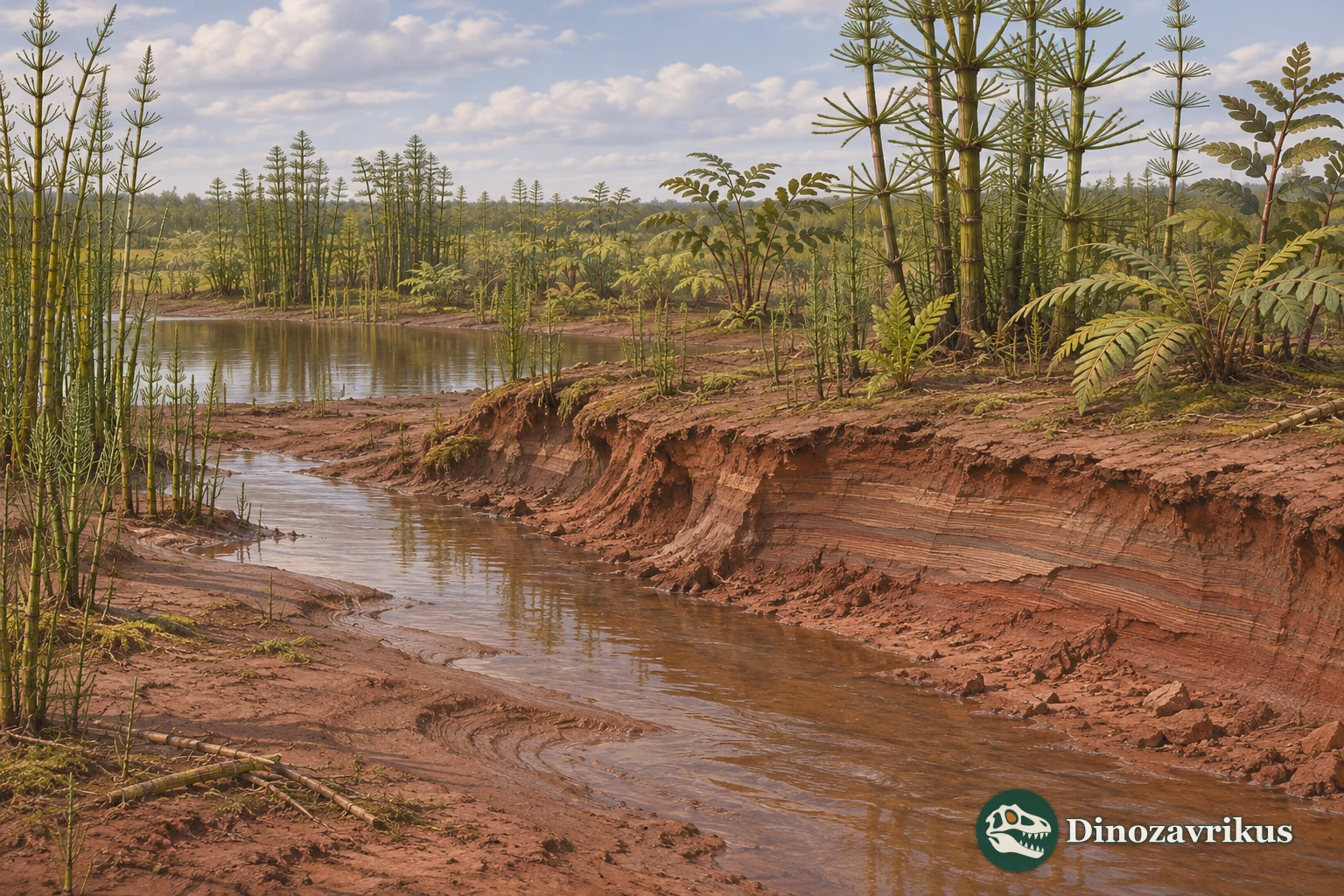
Gubin proposed a semiaquatic interpretation based on his anatomical comparisons. The type skull offers little direct evidence for locomotion, how much time the animal spent in water or what it ate. The sedimentary setting and other animals of the Ocher assemblage provide a broader picture of the region.
Frequently asked questions
Where was the type skull found?
PIN 3817/1 came from Erzovka in Perm Krai. Some referred material came from the separate site of Ezhovo.
Which part of the skull is best documented?
The rear contains the braincase. Researchers have closely examined the bones around the otic capsule and stapes.
Did Kamacops have an armoured back?
Ezhovo yielded possible osteoderms. There is no articulated skull and trunk that can securely tie them to Kamacops.
When did it live?
It belongs to the Permian. Regional geological studies associate the finds with the Ocher vertebrate assemblage.