

Karongasaurus was an Early Cretaceous titanosaur known chiefly from a left dentary found in northern Malawi. The teeth were concentrated near the front of the lower jaw. Their shape and wear distinguish the material from another sauropod in the same deposits.
Quick facts
| Group | Sauropods (Titanosauria) |
|---|---|
| Age | Early Cretaceous (possibly Aptian) |
| Region | Africa (Karonga District, northern Malawi) |
| Diet | Herbivorous sauropod |
| Type species | Karongasaurus gittelmani |
| Holotype | Mal-175, left dentary |
| Locality | Mwakasyunguti |
| Tooth row length | About 80 mm in the holotype |
What can the fossils tell us?
The type dentary preserves twelve tooth positions and three unerupted teeth. A ridge follows the tooth row farther back.
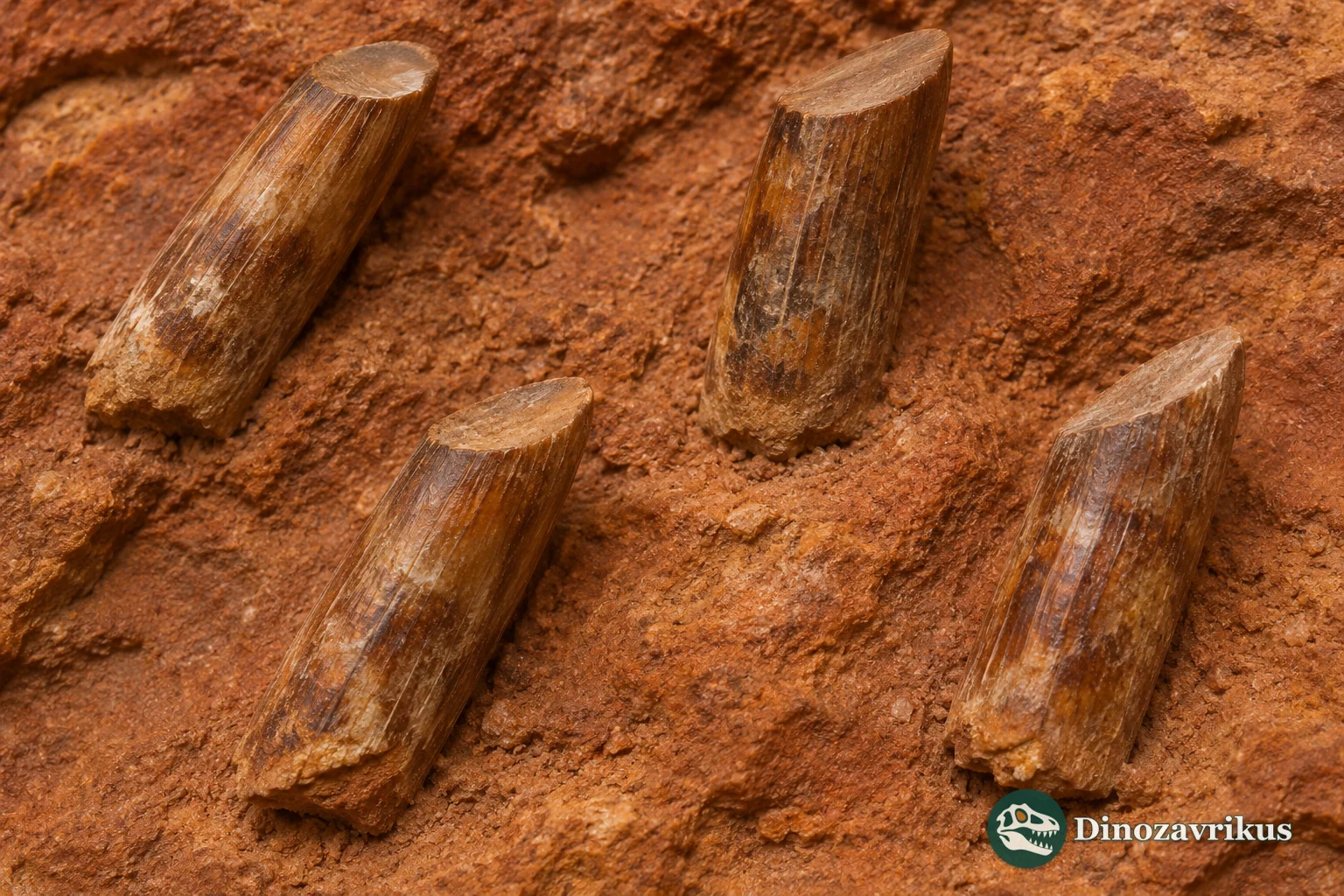
The teeth were referred to Karongasaurus through their resemblance to those in the dentary. The facets give a record of tooth contact and wear.
Karongasaurus had a shorter tooth row and narrower teeth than Malawisaurus. Differences in the plants they collected are possible.
The lower jaw from Karonga District
Elizabeth Gomani named Karongasaurus in 2005 using material from the Malawi Dinosaur Project. The genus takes its name from Karonga District. The species honours Steve Gittelman, who served as president of the Dinosaur Society. The Department of Antiquities in Malawi holds the type specimen Mal-175.
The dentary measures about 138 mm from the region where both halves of the jaw meet to a notch at the back. Twelve tooth positions remain visible despite damage to the front end. Three teeth still inside the bone had yet to erupt. The tooth row occupies about 80 mm and the upper edge of the bone forms a ridge behind it.
The teeth and the question of diet
Gomani referred several isolated teeth to Karongasaurus because they resemble the teeth in the type dentary. Some preserve steep wear facets. The teeth are more cylindrical than those in Malawisaurus, another sauropod from northern Malawi. The different shapes led Gomani to suggest that the two animals may have collected their plant food in different ways.
The dentary also led to the suggestion of a relatively low, elongated skull. A complete skull and an associated postcranial skeleton are unknown. Some isolated vertebrae from the same deposits remain uncertain in their identification, leaving the size of Karongasaurus open.
Frequently asked questions
Where were the fossils found?
They came from the Early Cretaceous Dinosaur Beds near Mwakasyunguti in northern Malawi.
Which bone defines the species?
The type is a left dentary, Mal-175, preserving twelve tooth positions and three unerupted teeth.
How do its teeth differ from those of Malawisaurus?
The teeth are narrower and more cylindrical, and they occupy a shorter part of the jaw.
How long was Karongasaurus?
The known lower jaw can be measured directly. A reliable estimate of the animal's total length would require other bones belonging to the same animal.