

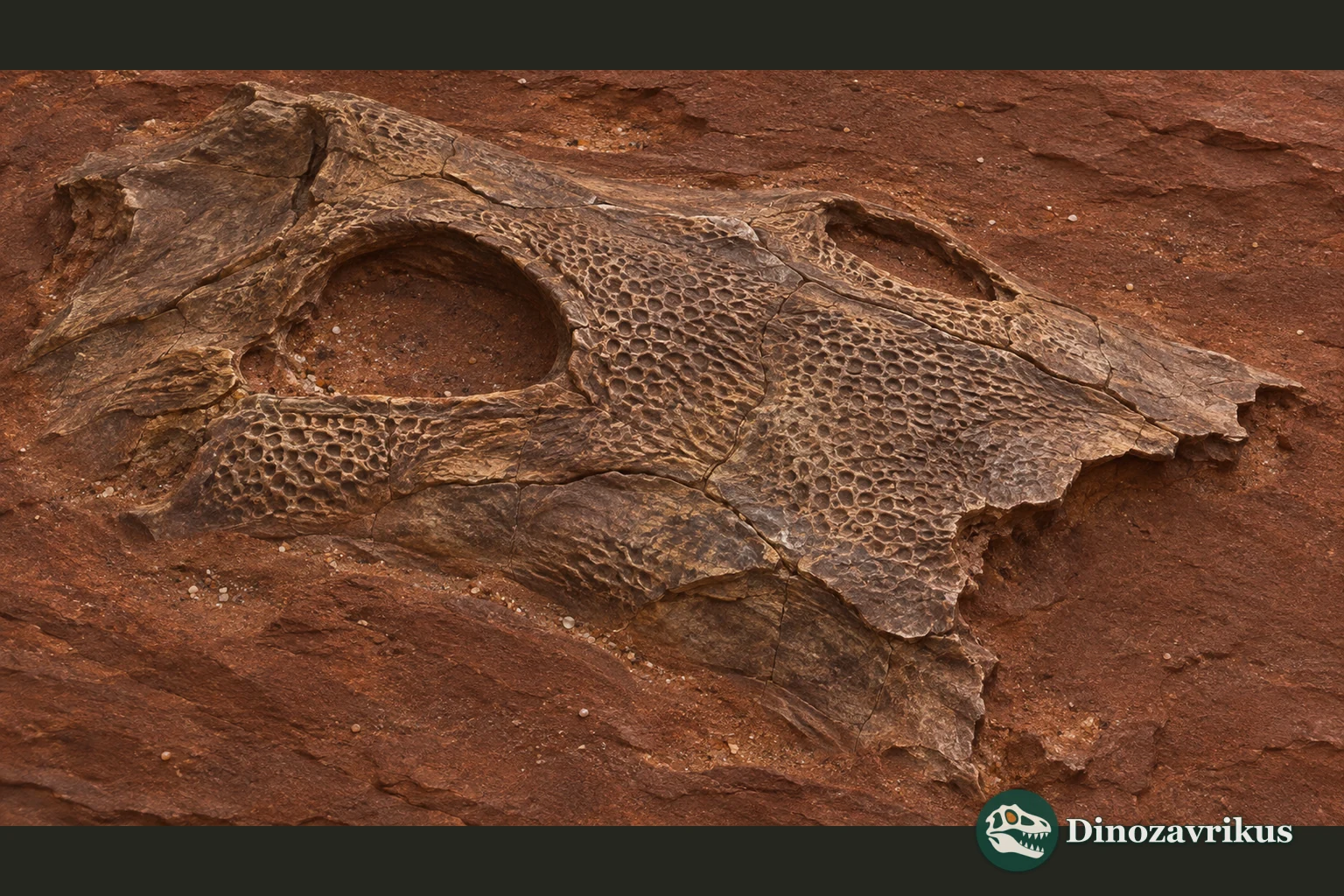
Kashmirosaurus was a temnospondyl amphibian from the Permian rocks of Kashmir. Researchers know it from skull remains. When they compared the Kashmiri fossils with other Permian amphibians, they recognized a distinct genus. The front of the snout is missing from the specimen first described, leaving its full length uncertain.
Quick facts
| Group | Temnospondyls, archegosauroids |
|---|---|
| Age | Permian |
| Region | Asia, Kashmir (India) |
| Type species | Kashmirosaurus ornatus |
| Scientific name | Kashmirosaurus |
| Diet | Exact prey is unknown |
What can the fossils tell us?
The Kashmiri material includes skull remains. The specimen Woodward described lacks the front end of the snout.
Werneburg and Schneider assigned the Kashmir specimens to a distinct archegosauroid genus after comparing them with other amphibians.
The Mamal material is Permian. A more precise age for the bone-bearing beds depends on how they are correlated with other rock sequences.
Why the name changed
Arthur Smith Woodward described Archegosaurus ornatus in 1905. In their 1996 revision of Indian Permian amphibians, Ralf Werneburg and Jörg Schneider placed it in the new genus Kashmirosaurus. They assigned material previously called Archegosaurus kashmiriensis to the same species. The original genus, Archegosaurus, is known from a much larger sample from Germany, including skulls of different sizes. The fossils from Kashmir offer fewer points of comparison.
Dating the fossil-bearing beds
The skulls come from the Mamal Formation in Kashmir. In 1996 the revisers correlated the Vihi beds with the Ufimian or Tatarian intervals used in the regional scheme of the time. A direct match to a single modern stage is uncertain, so the broad Permian assignment is the clearest way to state the age.
Frequently asked questions
What does the name Kashmirosaurus refer to?
It refers to Kashmir, where the fossil skulls were found.
Which parts of the animal are known?
Skull remains form the basis of the description. The specimen described by Woodward is missing the front of the snout.
What was its first scientific name?
Woodward named it Archegosaurus ornatus in 1905. The later revision gave it the combination Kashmirosaurus ornatus.
When did Kashmirosaurus live?
It lived during the Permian. A narrower estimate for the fossil beds depends on regional stratigraphic correlations.