

Khanazeem was described in 2022 from bones collected on a slope at Lower Bor in Balochistan, Pakistan. The material includes part of a toothed lower jaw, two tail vertebrae and limb fragments. The author associated them on the basis of their location and compatible sizes.
Quick facts
| Group | Sauropods (Titanosauria) |
|---|---|
| Age | Late Cretaceous (Maastrichtian) |
| Region | South Asia (Balochistan, Pakistan) |
| Diet | Herbivorous sauropod |
| Type species | Khanazeem saraikistani |
| Locality | Lower Bor, Barkhan District |
| Deposits | Vitakri Formation |
| Type material | A series of bones including dentary GSP/MSM-143-2 |
What can the fossils tell us?
The original comparison uses tooth shape and spacing. The rest of the skull is unknown.
The proportions and joint shapes contribute to the published diagnosis. The bones give little evidence for total tail length.
Their dimensions, proximity and the lack of clear duplicates led the author to group them. The bones were found disarticulated.
Material collected at Lower Bor
Muhammad Sadiq Malkani described Khanazeem using finds from the Vitakri area. The type series includes dentary GSP/MSM-143-2, tail vertebrae GSP/MSM-16-2 and GSP/MSM-793-2, and parts of the humeri, femora and tibiae. The material is held by the Geological Survey of Pakistan in Quetta.
The bones were collected from roughly fifteen metres across the slope and fifteen metres down it. Similar size, proximity and the absence of obvious duplication were the reasons for treating them as one individual. A smaller set of bones collected at Top Kinwa was also referred to the species on anatomical grounds.
Features used in the description
The preserved teeth are slender and spaced apart. Malkani compared the tail vertebrae and the upper end of the tibia with those of Pakisaurus and other local titanosaurs. The teeth are consistent with plant eating. The fossil material gives little evidence for particular foods.
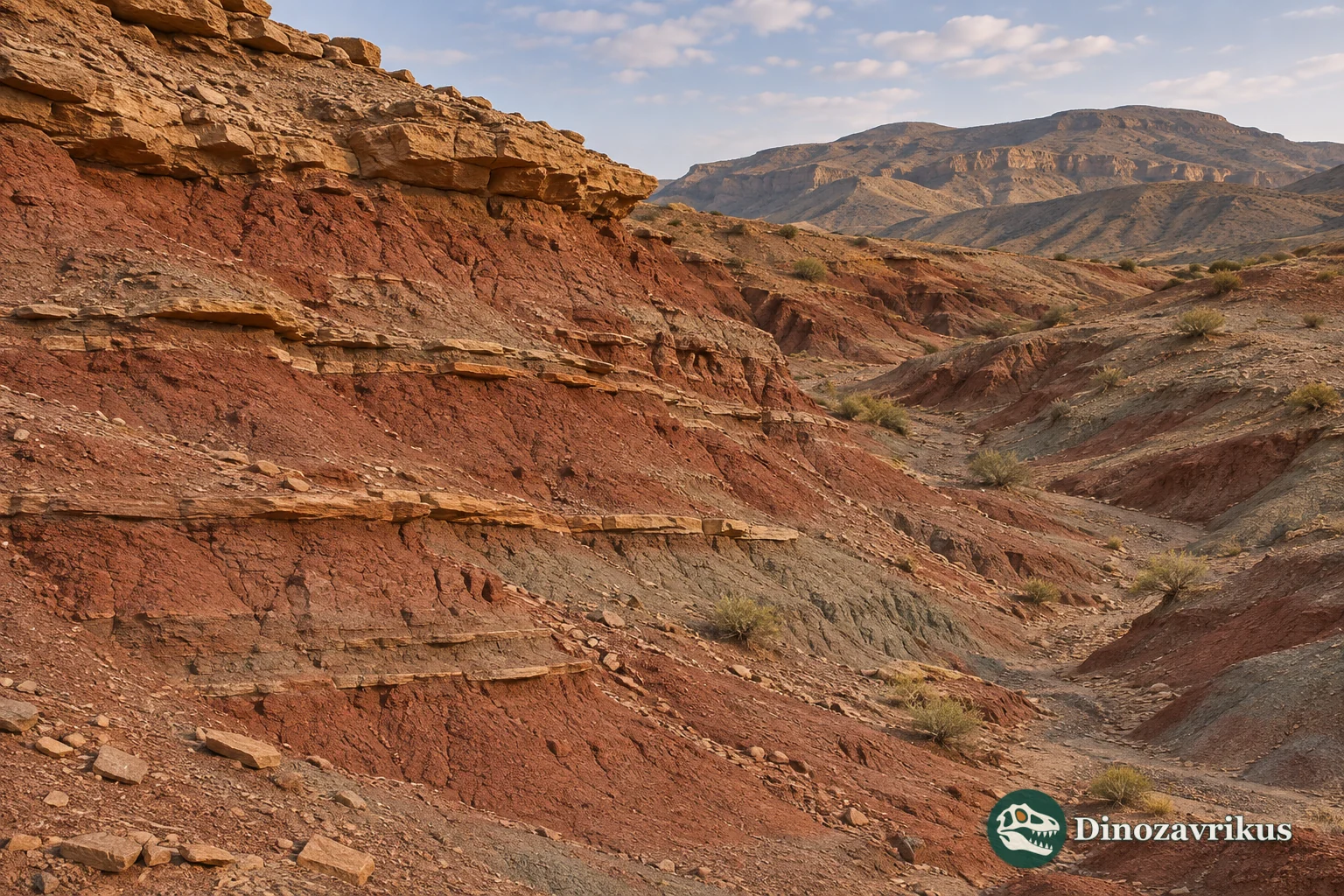
The Lower Bor remains came from a mudstone interval beneath sandstone in the upper Vitakri Formation. The fossil-bearing interval was assigned to the latest Maastrichtian. The type material leaves the full length and proportions of the neck, body and tail open.
Frequently asked questions
Where was Khanazeem found?
The type material came from Lower Bor in the Vitakri area of Barkhan District, western Pakistan.
Which fossils form the type series?
The published series includes part of the lower jaw, two tail vertebrae and fragments of the limbs.
Why were the bones associated with one animal?
They were collected close to one another, had compatible sizes and showed no obvious duplicate elements.
How old is the material?
The beds containing the type material were assigned to the latest Maastrichtian, near the end of the Cretaceous.