

Khankhuuluu mongoliensis was a carnivorous theropod that lived in what is now Mongolia early in the Late Cretaceous. Its skull was relatively long and shallow. The preserved bones show how traits common among later tyrannosaurs began to appear in their earlier relatives.
Quick facts
| Group | Theropods (Tyrannosauroidea) |
|---|---|
| Age | Late Cretaceous |
| Region | Asia (Mongolia) |
| Diet | Carnivorous theropod |
| Type species | Khankhuuluu mongoliensis |
| Holotype | MPC-D 100/50, a partial skeleton |
| Locality | Baishin Tsav, Bayanshiree Formation |
| Referred specimen | MPC-D 100/51, a partial skeleton |
What can the fossils tell us?
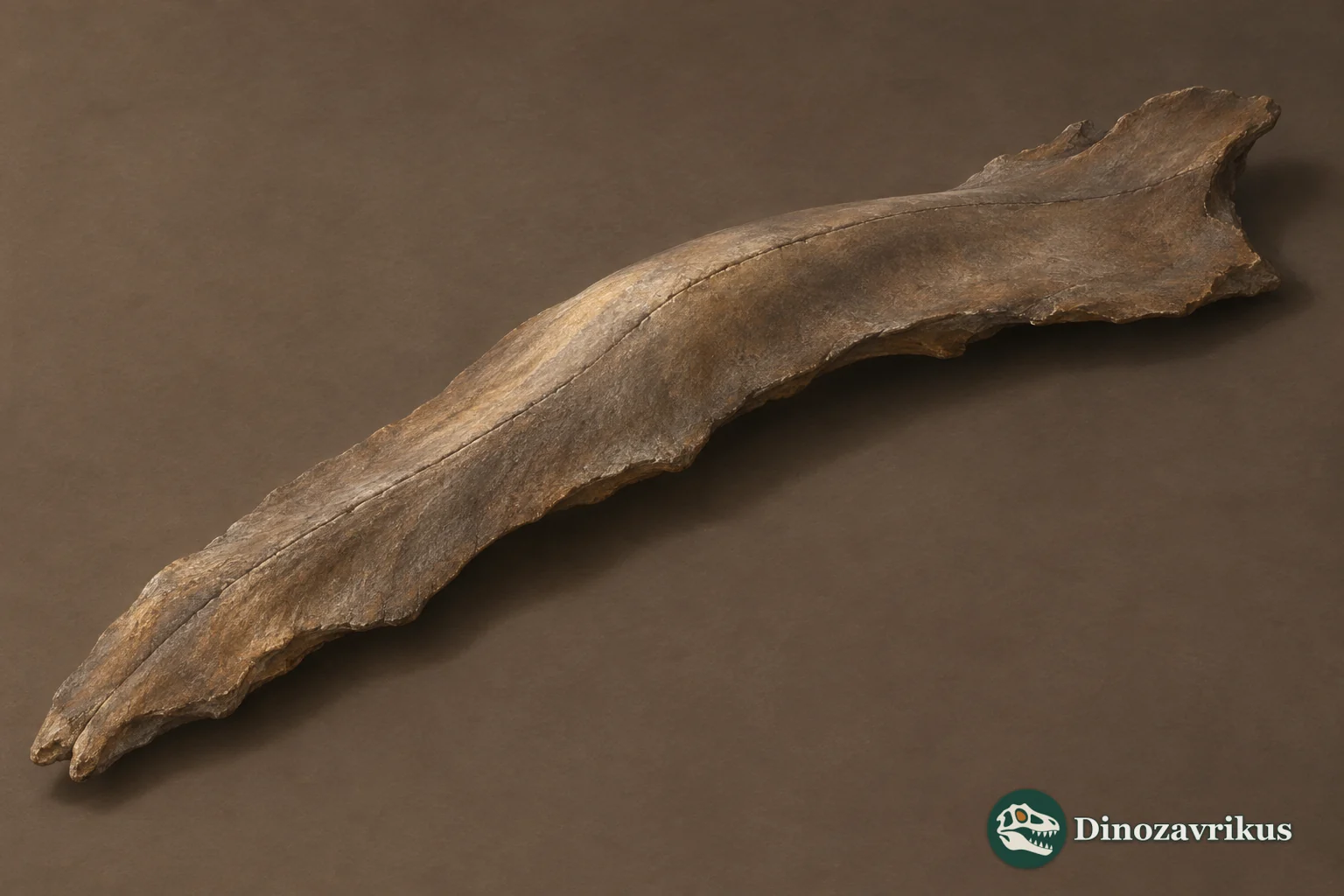
Their outline and the small recess on the underside can be compared with corresponding surfaces in later tyrannosaurs. Several skull bones inform the estimated skull depth.
Sutures in the back vertebrae of the holotype are closed. The second specimen has a deeply interlocking joint between the postorbital and frontal. A precise age in years remains unknown.
The 2025 study compared features of the skull, shoulder and hind limb. The tree represents a hypothesis about relationships between these branches.
Two partial skeletons from Baishin Tsav
The bones were discovered in the Bayanshiree Formation during the 1970s. Altangerel Perle originally attributed them to Alectrosaurus. Jared Voris and colleagues named the new genus in 2025. The name combines the Mongolian words for prince and dragon.
MPC-D 100/50, the name-bearing specimen, belongs to the palaeontological collection of the Mongolian Academy of Sciences. It preserves the nasals and other skull bones, part of the backbone including a series of tail vertebrae, a wishbone, parts of the shoulder girdle and a metatarsal. MPC-D 100/51 adds more information about the skull, pelvis and hind limb.
A shallow skull in mature individuals
A small recess on the underside of the fused nasals recalls the more developed recess in Gorgosaurus. The shapes of the quadrate near the jaw joint and of the shin where the ankle attaches provided additional points of comparison with later tyrannosaurs.
The researchers used bone surfaces and joints to assess maturity. The nasal and lacrimal of the holotype bear pronounced rough textures. In the other specimen, the postorbital interlocks strongly with the frontal. These observations support a relatively shallow skull in mature animals. The team did not cut the bones for histology.
The branch beside Eutyrannosauria
The 2025 analysis placed Khankhuuluu next to Eutyrannosauria, which includes the large tyrannosaurids and their closest relatives. This position helps distinguish characteristics already present in earlier tyrannosauroids from those that evolved within the later branch.
Using the evolutionary tree together with fossil dates and locations, the authors inferred that the ancestral eutyrannosaur lineage may have moved from Asia to North America. The Mongolian skeletons record a relative living in Asia. The route and timing are estimates from the model.
Frequently asked questions
What does the name Khankhuuluu mean?
The generic name means dragon prince, from Mongolian words for prince and dragon. The species name refers to Mongolia.
Why were the fossils once called Alectrosaurus?
The Mongolian material was initially assigned to a known tyrannosauroid. Reassessment of the skull, shoulder and leg supported a distinct genus.
Which skull bones help establish its identity?
The holotype preserves the fused nasals with a small recess underneath. The quadrates that form part of the jaw joint supply further comparisons.
Where did the type skeleton come from?
It came from Baishin Tsav in the Bayanshiree Formation, Mongolia. Its specimen number is MPC-D 100/50.