

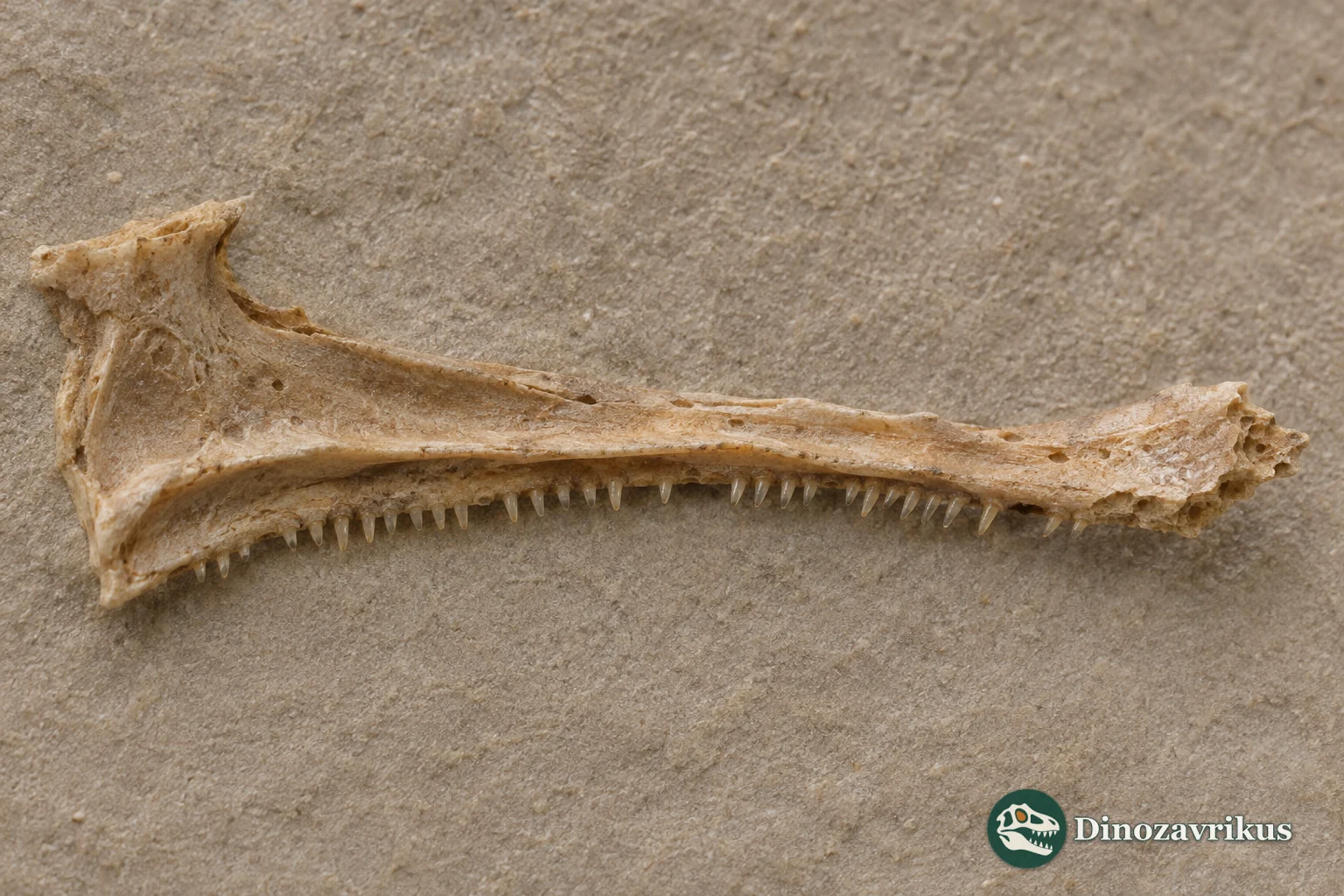
Kizylkuma was a Late Cretaceous frog from Uzbekistan. Its type specimen is a left upper jaw. The shelf on the inside and the spacing of the teeth distinguish it from several other frogs found at Dzharakuduk, while its overall appearance remains unknown.
Quick facts
| Group | Frogs, Anura |
|---|---|
| Age | Late Cretaceous |
| Region | Asia: Uzbekistan, Kyzylkum Desert |
| Type species | Kizylkuma antiqua |
| Scientific name | Kizylkuma |
| Diet | Unknown |
What can the fossils tell us?
The holotype, ZIN PHA K77-10, is a maxilla with a smooth outer face and a projecting palate shelf on the inner side.
The shelf stops abruptly toward the rear. Its shape and the tooth row help researchers compare isolated maxillae.
The jaw alone provides no reliable body length, skin colour or diet.
A name from the Kyzylkum Desert
Lev Nessov named Kizylkuma antiqua in 1981. The genus name comes from the Kyzylkum Desert. The Latin antiqua means ancient. He designated left maxilla ZIN PHA K77-10 from Dzharakuduk as the holotype and described three maxillae in the original account.
Reading the upper jaw
The maxilla is low and elongated with a smooth outer surface. Its inner palate shelf ends abruptly at the rear, near the end of the tooth row. Nessov estimated about 20–25 teeth per 5 mm of jaw. Aralobatrachus, also found in the region, has more widely spaced teeth and lengthwise sculpture on the external surface.
Both names rely mainly on details of isolated bones. Subsequent comparisons refined the diagnosis of Kizylkuma, leaving its type maxilla as the principal reference for identifying new material.
Frogs in the Dzharakuduk deposits
Roček’s later review places the Dzharakuduk records in a Turonian to Santonian interval of the Late Cretaceous. The Bissekty Formation in the region includes river deposits that preserve several types of frog remains. This setting provides context for how the bones accumulated and leaves the animal’s daily habitat unresolved.
Frequently asked questions
Where was Kizylkuma found?
Its fossils came from Dzharakuduk in the central Kyzylkum Desert of present-day Uzbekistan.
What does the holotype preserve?
Specimen ZIN PHA K77-10 is a left upper jaw, the bone on which the type species was based.
How does its jaw differ from that of Aralobatrachus?
Kizylkuma has a smooth outer surface and closely spaced teeth. Aralobatrachus has lengthwise sculpture and a more widely spaced tooth row.
How large was the entire frog?
There is no reliable total body length. Published comparisons are based on individual bones.