

Konzhukovia is a Permian temnospondyl amphibian named from cranial fossils in the southern Urals. A later Brazilian skull was assigned to a third species, extending the proposed range across the ancient southern continents. The broad head is well supported by fossil anatomy; a complete body and exact body size are not.
The name sits in the ancient amphibian catalogue, but the genus boundary is an active taxonomic question. A 2019 analysis did not recover every named species together, so the Brazilian referral should be treated as a proposal rather than a settled extension of the Russian record.
Quick facts
| Scientific name | Konzhukovia vetusta; K. tarda; proposed K. sangabrielensis |
|---|---|
| Group | Temnospondyl amphibian |
| Age | Middle to Late Permian, depending on locality |
| Range | Southern Urals, Russia; proposed record in southern Brazil |
| Type material | Skull and associated cranial material; PIN 520/1 for K. vetusta |
| Key issue | Whether the Brazilian species belongs in the genus |
What can the fossils tell us?
The original species record and later descriptions document skulls from Permian deposits of the southern Urals. Their bones support a large-headed temnospondyl, but they do not preserve a complete skeleton for direct length or mass measurement.
UNIPAMPA PV 00137 preserves parts of the skull roof and palate from the Rio do Rasto Formation. The 2016 authors referred it to a new species, K. sangabrielensis; the specimen is partial, so the assignment must be tested against the Russian type material.
A 2019 phylogenetic analysis found K. tarda outside a grouping of K. vetusta and Tryphosuchus, while K. sangabrielensis also fell outside the grouping containing the other named forms. This challenges a simple single-genus story, but does not by itself settle formal taxonomy.
The Ural records and the Brazilian Rio do Rasto material come from separate basins. Their environments can be reconstructed from associated sediment and fauna, while a shared genus or identical habitat cannot be inferred from the animal's broad skull alone.
Two Ural species and their skull material
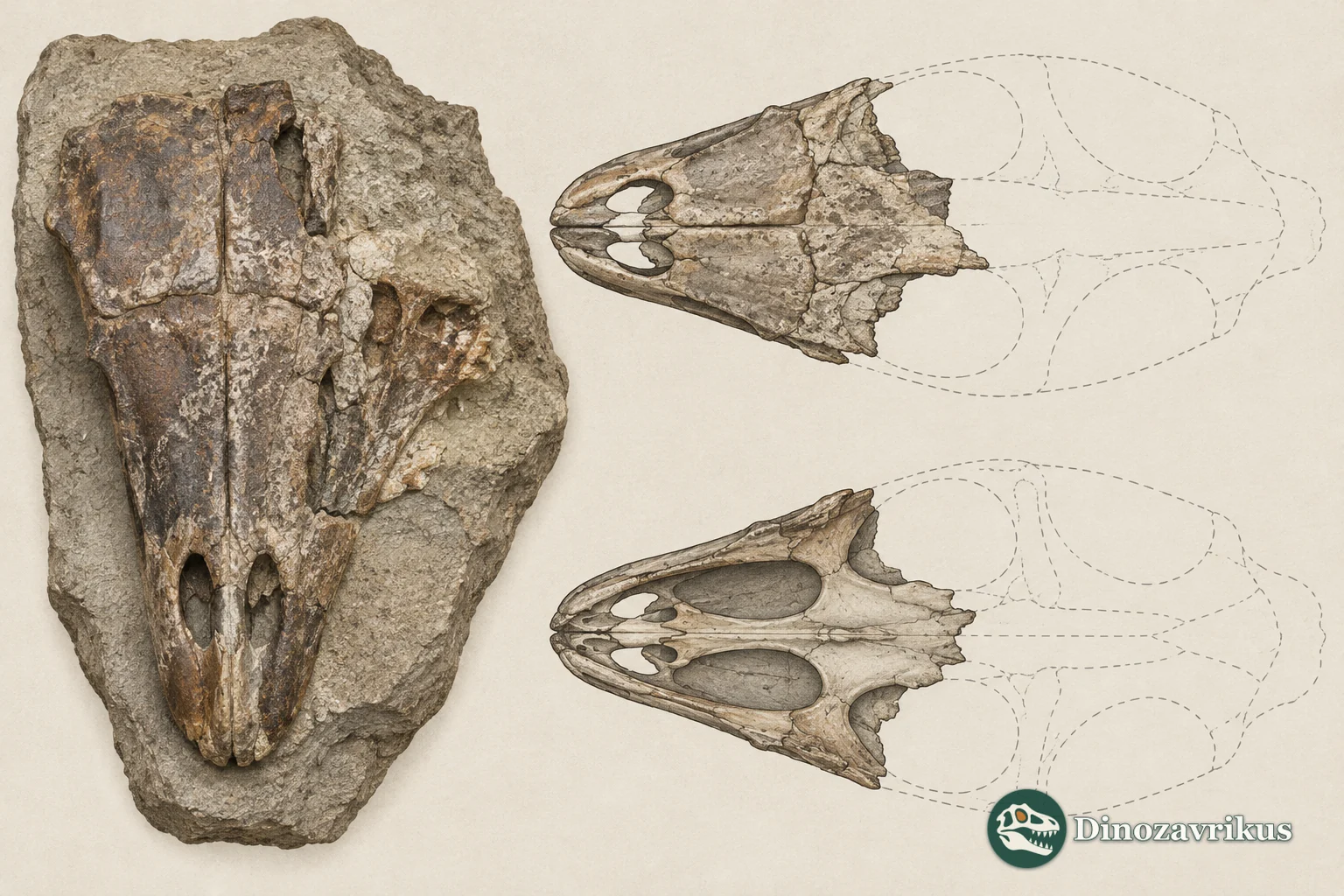
Konzhukovia vetusta was established from Permian temnospondyl material in the southern Urals. Its type, PIN 520/1, is cranial rather than a complete articulated skeleton. The later named K. tarda is also based on skull material, including specimen PIN 1758/253. The fossils record the roofing bones, palate and teeth more directly than they record the animal's trunk or limbs.
Vladimir Gubin's 1991 work placed the animals among large Russian temnospondyls and supplied the framework for later comparisons. The skulls are broad and robust, with bony proportions that can be compared across specimens. But fragmentary preservation means that missing margins and the rest of the skeleton cannot simply be filled from one species and attributed to another.
A Brazilian skull and a proposed third species
In 2008, fieldwork at Posto Queimado in Rio Grande do Sul, Brazil, recovered specimen UNIPAMPA PV 00137 from the Morro Pelado Member of the Rio do Rasto Formation. The material preserves a partial skull roof and palate. Pacheco and colleagues described it in 2016 as Konzhukovia sangabrielensis and used it to propose a South American member of the group.
This discovery is important even if the generic placement changes. The specimen documents a large temnospondyl in a Brazilian Permian fauna and gives researchers anatomical features to compare with the Ural fossils. It does not preserve every part needed to demonstrate that all similarities are unique to Konzhukovia, rather than shared with a close relative.
Why the genus assignment remains debated
A phylogenetic analysis by Marjanović and Laurin in 2019 did not place the three named species in one simple cluster. K. tarda fell outside a grouping of K. vetusta and Tryphosuchus, and the Brazilian K. sangabrielensis also fell outside the group containing the other named forms. This result questions whether all three should remain in the same genus.
A tree is a hypothesis based on coded characters and available specimens. It is not, by itself, a formal renaming of the species. The cautious conclusion is that the Brazilian referral and the limits of Konzhukovia need further comparison with type material and better-preserved fossils. The family-level label Konzhukoviidae has also been used differently across studies.
What can be said about its life
Skull shape and teeth support a large predatory amphibian, but no gut contents identify a particular meal. The Permian basins preserve aquatic and shoreline settings, and a temnospondyl body plan makes life near water plausible. Fossils do not show the exact proportion of time spent in water, its colour, or its calls.
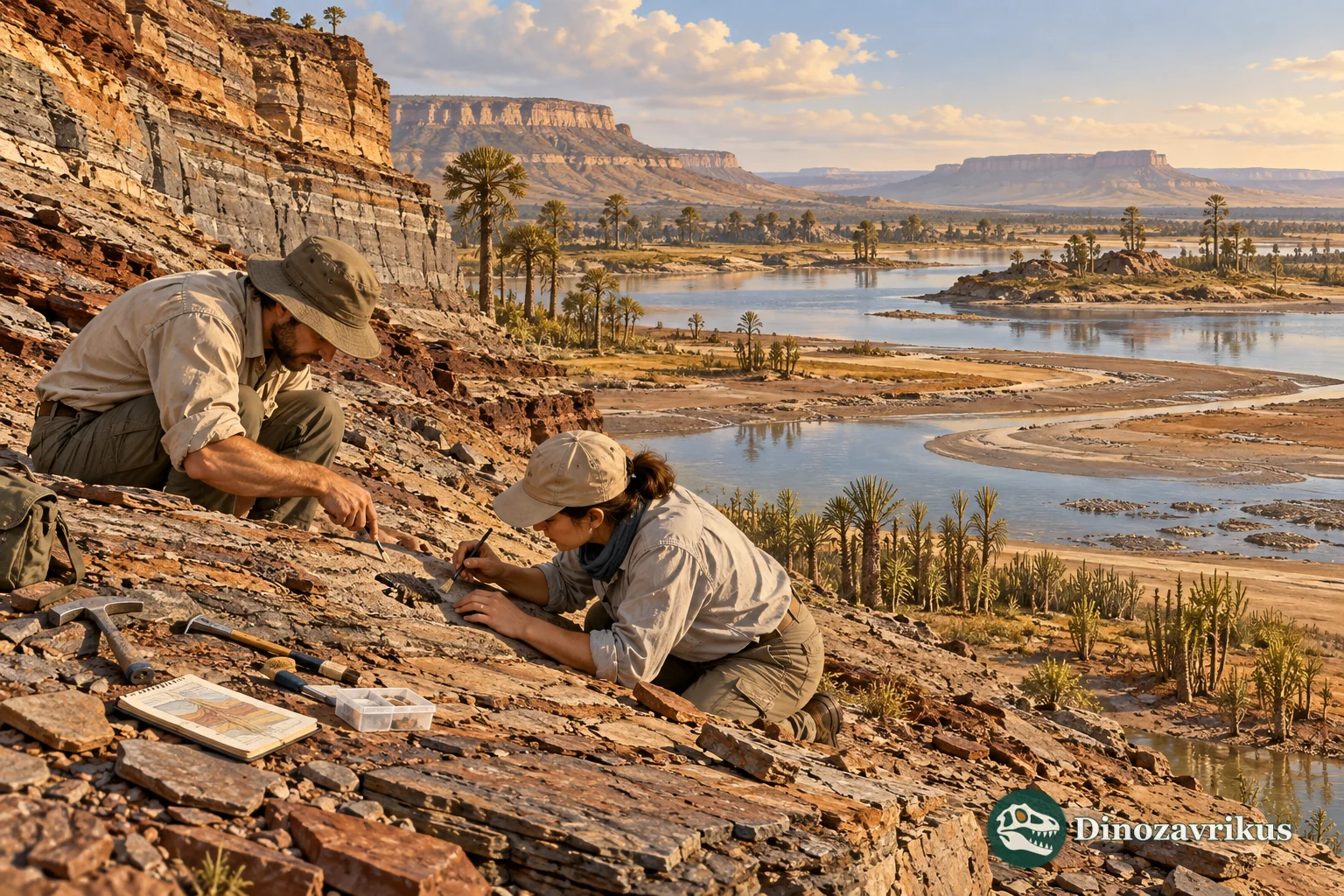
The setting was the Permian Period, when the Ural and South American basins were part of distinct regional ecosystems. A wide geographic range should therefore be read through the taxonomic debate, not assumed from an unquestioned species identification.
Frequently asked questions
How many Konzhukovia species have been named?
Three names are relevant: K. vetusta, K. tarda and the proposed Brazilian K. sangabrielensis. Their placement in one genus is debated.
Was Konzhukovia found in Brazil?
A partial skull roof and palate from the Rio do Rasto Formation were named K. sangabrielensis in 2016. Later analysis questioned whether it belongs in the same genus.
Is a complete skeleton known?
The key published material is mainly cranial. It does not provide a complete skeleton for directly measuring total body length or mass.
What did the 2019 analysis change?
It did not recover all three named species together in a simple clade, highlighting the need to recheck the genus boundary against the fossils.