

Labocania anomala was a large Late Cretaceous theropod found near El Rosario, Baja California. Its type skeleton is represented by scattered fragments. A thick frontal bone and part of the pelvis have been particularly important in comparisons with several groups of predatory dinosaurs.
Quick facts
| Group | Theropods |
|---|---|
| Age | Late Cretaceous |
| Region | North America (Baja California, Mexico) |
| Diet | Carnivorous theropod |
| Type species | Labocania anomala |
| Holotype | IGM 5307, formerly LACM 20877 |
| Locality | Near El Rosario |
| Reported formation | La Bocana Roja Formation in the original description |
What can the fossils tell us?
The frontal is thickened. Parts of the quadrate and jaws also remain. Together they preserve specific points of comparison across theropods.
These features have been compared with those of tyrannosauroids. The outcome of a broader analysis also depends on how it scores the skull material.
The grains can be older than the sediment containing them. The measurements give an upper limit on the age of the sampled deposit.
A collection of bones from Baja California
Ralph Molnar described Labocania in 1974 using fossils from the El Rosario area. The name refers to the La Bocana Roja Formation. The National Palaeontological Collection at the National Autonomous University of Mexico lists the type specimen as IGM 5307. The original publication used the earlier number LACM 20877.
The material includes a frontal, fragments of the quadrate and upper and lower jaws, and parts of the pelvis and foot. Molnar drew attention to a combination of features he recognised in different theropods and left the family unresolved. The known material gives little control over the overall shape of the skull.
The age of the deposit
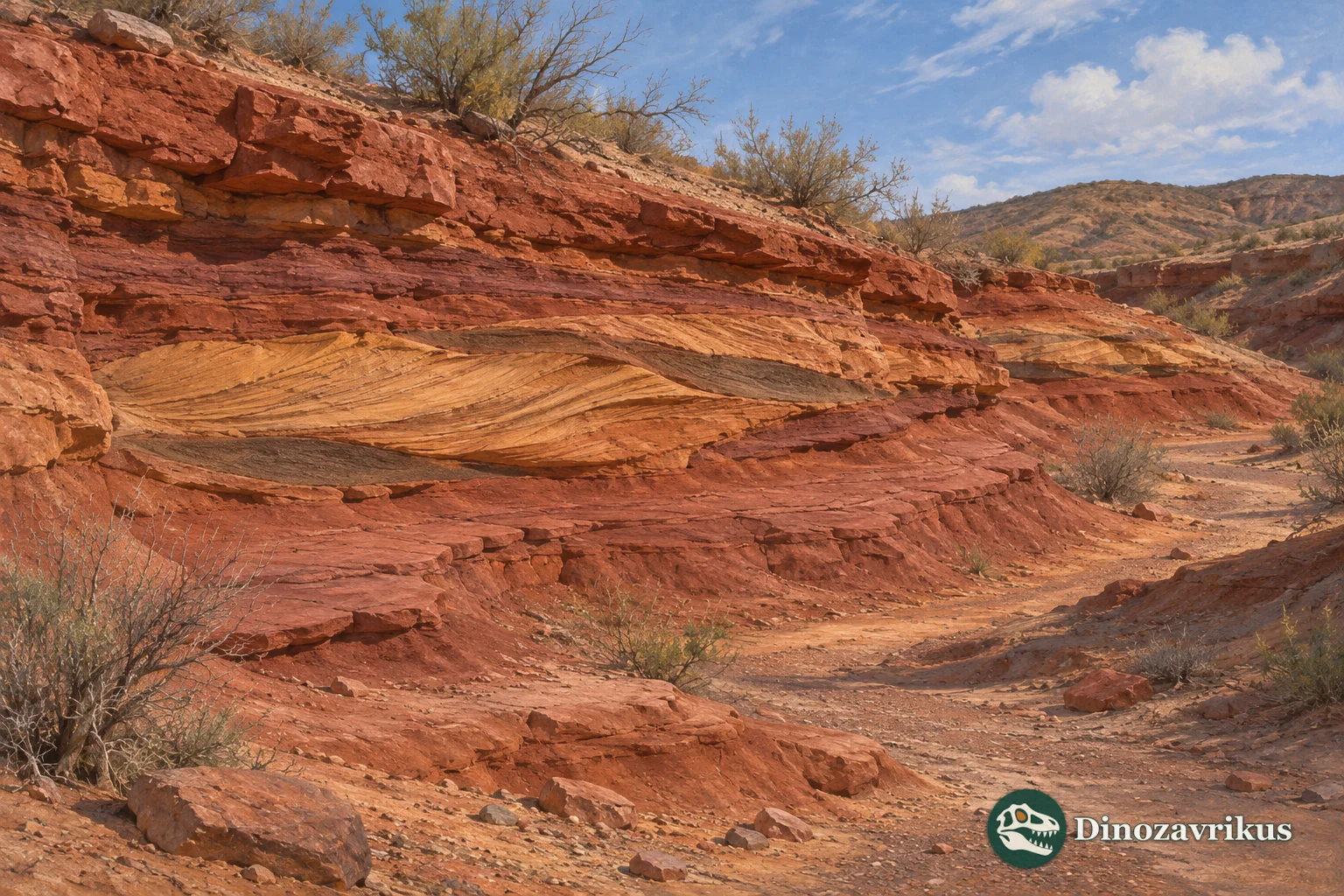
The original description placed the fossil in the La Bocana Roja Formation, a succession of river-deposited sandstone, siltstone and conglomerate that older studies assigned to the Campanian. Dating of zircon grains from the upper part of that formation yielded a maximum depositional age of about 93.6 million years. The grains may have come from older rocks. The measurement therefore sets an upper limit on the age of the sampled sediment.
A later study noted inconsistencies between the collection record and the formation named in the original paper. The Late Cretaceous age stands, while a precise geological stage for the specimen remains uncertain.
The proposed relative from Coahuila
The ischium has a triangular projection and a lateral scar resembling features seen in tyrannosauroids. The thick skull roof has also been compared with that of other large theropods. One analysis grouped the type species with the carcharodontosaurid Shaochilong. A separate analysis in 2024 recovered it among tyrannosaurids.
Héctor Rivera-Sylva and Nicholas Longrich named Labocania aguillonae in 2024 for CPC 2974 from the Cerro del Pueblo Formation in Coahuila. In 2025, Jared Voris and colleagues questioned the species because the proposed diagnostic features also occur in other tyrannosaurids or vary among them. The Coahuila material is a separate discovery and cannot supply missing details in the Baja California type.
Frequently asked questions
Which Mexican state yielded the type specimen?
Baja California, near El Rosario. The specimen discussed from Coahuila came from a separate locality.
Why does the type specimen have two numbers?
LACM 20877 is the number used by Molnar. The National Palaeontological Collection now records it as IGM 5307.
Which family did Labocania belong to?
The material establishes that it was a theropod. Different studies place the type species in Tyrannosauridae or Carcharodontosauridae.
What does the date of 93.6 million years refer to?
It is a maximum age for deposition obtained from zircon grains in part of the La Bocana Roja Formation. The exact age of the bones remains debated.