

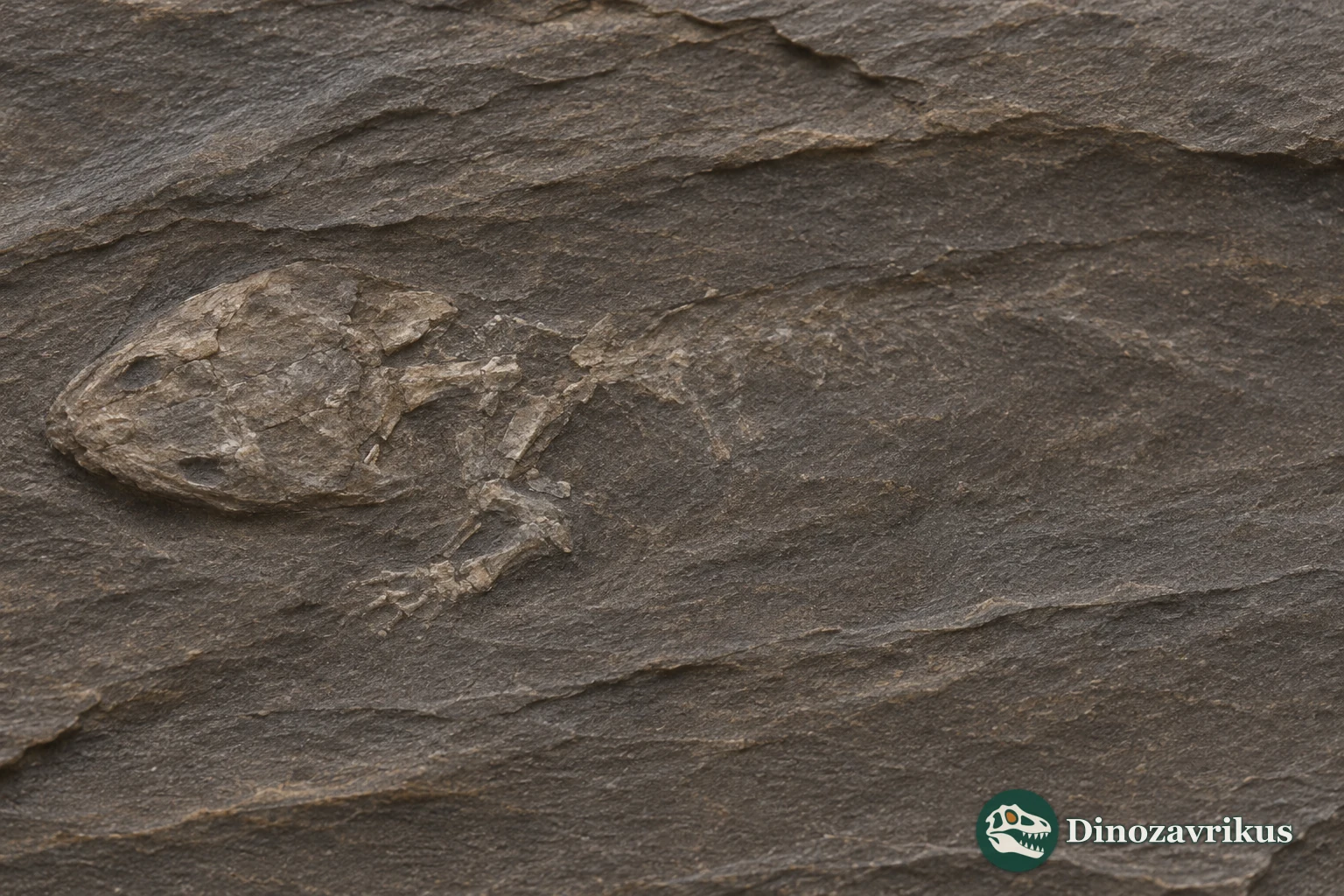
The beds at Kinney Quarry yielded a skeleton of Lafonius lehmani, a Late Carboniferous temnospondyl. Features of the cheeks and lower jaw distinguish it as a separate genus. The fossil captures one stage in its development, near the end of larval life.
Quick facts
| Group | Temnospondyls, trimerorhachids |
|---|---|
| Age | Late Carboniferous, Pennsylvanian |
| Region | North America, New Mexico, USA |
| Skull length | About 18 mm in the larva |
| Type species | Lafonius lehmani |
| Scientific name | Lafonius |
| Diet | Exact diet unknown |
What can the fossils tell us?
The skeleton CM 25474 preserves a skull about 18 mm long and bones from the limbs.
Teeth inside the lower jaw and the cheek bones link Lafonius to other trimerorhachids.
No known adult specimen shows how the animal's size or proportions changed later in life.
A single skeleton from New Mexico
David Berman described the species in 1973. The Carnegie Museum of Natural History holds the holotype under the number CM 25474. The quarry lies east of Albuquerque in central New Mexico. Fossils from its fine-grained beds date to the Pennsylvanian, the later part of the Carboniferous Period.
A distinctive combination of teeth and skull bones
In Lafonius the jugal, a bone in the cheek, shares a broad margin with the eye socket. One of the bones along the inner surface of the lower jaw carries two rows of teeth. The adjacent bones bear individual enlarged teeth. Comparison with Trimerorhachis helped establish that this particular arrangement belonged to a separate genus.
A late larva in a fish-rich deposit
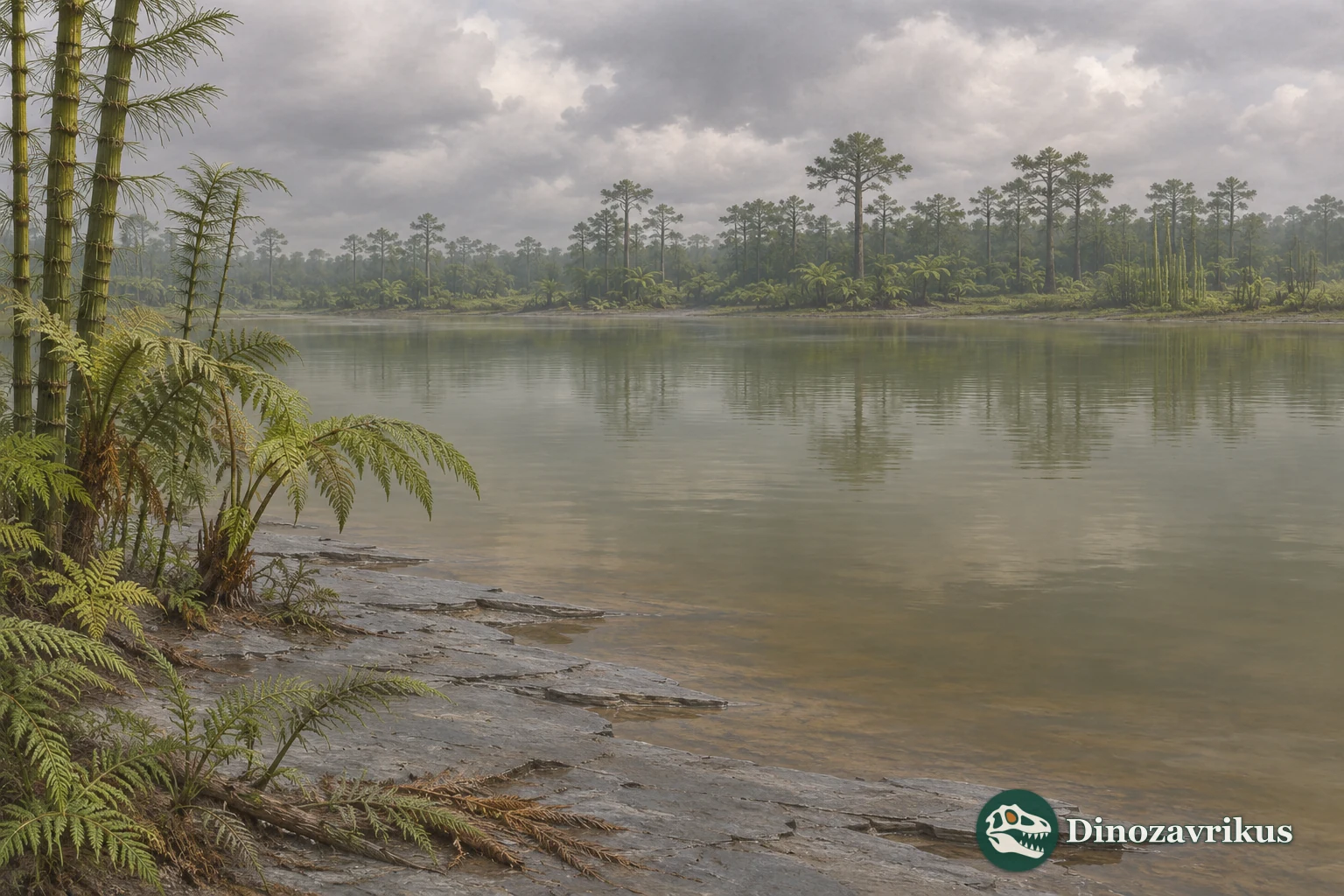
The preserved skull measures about 18 mm in length. The stage of bone development indicates that the individual was a late larva. Kinney Quarry is rich in fish fossils, whereas amphibian remains are uncommon. One explanation is that currents sometimes carried amphibians from nearby waters into the more saline lagoon where their remains were buried.
Frequently asked questions
Where was Lafonius discovered?
It was found at Kinney Quarry in central New Mexico.
How many specimens belong to the genus with confidence?
Only one, the holotype CM 25474.
What part of Lafonius measured about 18 mm?
That measurement refers to the skull of the larva. The total length of an adult is unknown.
What did Lafonius eat?
The jaws preserve teeth of different sizes, but they do not identify the animals it fed on.