

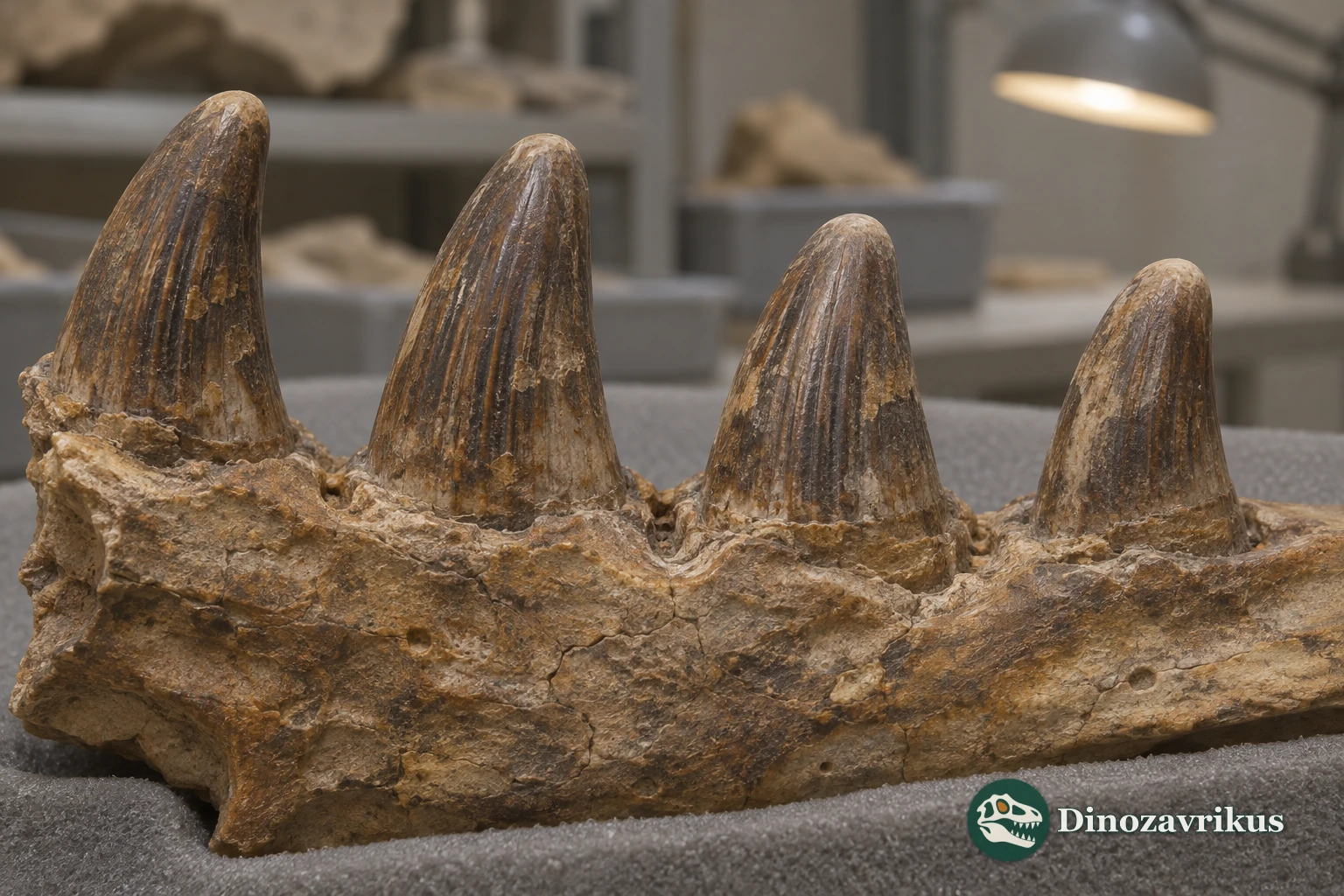
Lemmysuchus obtusidens was a marine crocodyliform from the Middle Jurassic. Its thick teeth have rounded tips and prominent ridges in the enamel. A skull and much of the skeleton from the Oxford Clay distinguish it from related marine reptiles and put the length of the type individual at about 5.8 metres.
Quick facts
| Type species | Lemmysuchus obtusidens |
|---|---|
| Group | Machimosauridae, within Thalattosuchia |
| Age | Middle Jurassic, Callovian |
| Localities | Peterborough area, England, and Migné-les-Lourdines, France |
| Holotype | NHMUK PV R 3168, skull, jaw and much of the skeleton |
| Estimated type length | About 5.8 m from the femur |
What can the fossils tell us?
The Leeds Collection specimen preserves vertebrae, limb bones and scutes along with the skull. It supports comparisons of both relationships and body proportions.
Long ridges run down the enamel. Tooth shape and deep reception pits for opposing teeth are consistent with feeding on large or hard prey.
Scaling from the skull gives around 5.6 m. Scaling from the femur gives around 5.8 m for the same individual.
From Steneosaurus to a genus of its own
Charles Andrews named the Peterborough specimen Steneosaurus obtusidens in 1909. The Natural History Museum in London holds it as NHMUK PV R 3168, part of the Leeds Collection. Along with the head and jaws, the skeleton preserves part of the backbone, limb girdles, limbs and many osteoderms.
Michela Johnson and colleagues re-examined the skeleton and erected Lemmysuchus in 2017. They named it after Lemmy Kilmister, the founder of Motörhead. The older name placed it in Steneosaurus, a historical grouping then used for many different marine crocodyliforms.
A robust snout, blunt teeth and an estimated length
The snout has a strongly convex upper surface. The vertical teeth closed into deep pits in the opposing jaw. Their rounded tips and pronounced enamel ridges are among the traits that link Lemmysuchus with the machimosaurids. The combination is consistent with feeding on large or hard prey. It cannot identify the particular animals Lemmysuchus ate.
Features of the pelvis also distinguish the type, including a short forward process of the ilium and a shallow hip socket. The femur gives a length estimate of about 5.8 m, while the skull gives about 5.6 m. A larger skeleton once referred to the species, NHMUK PV R 3898, was reassigned and no longer provides a size record for Lemmysuchus.
Shallow seas on both sides of the Channel
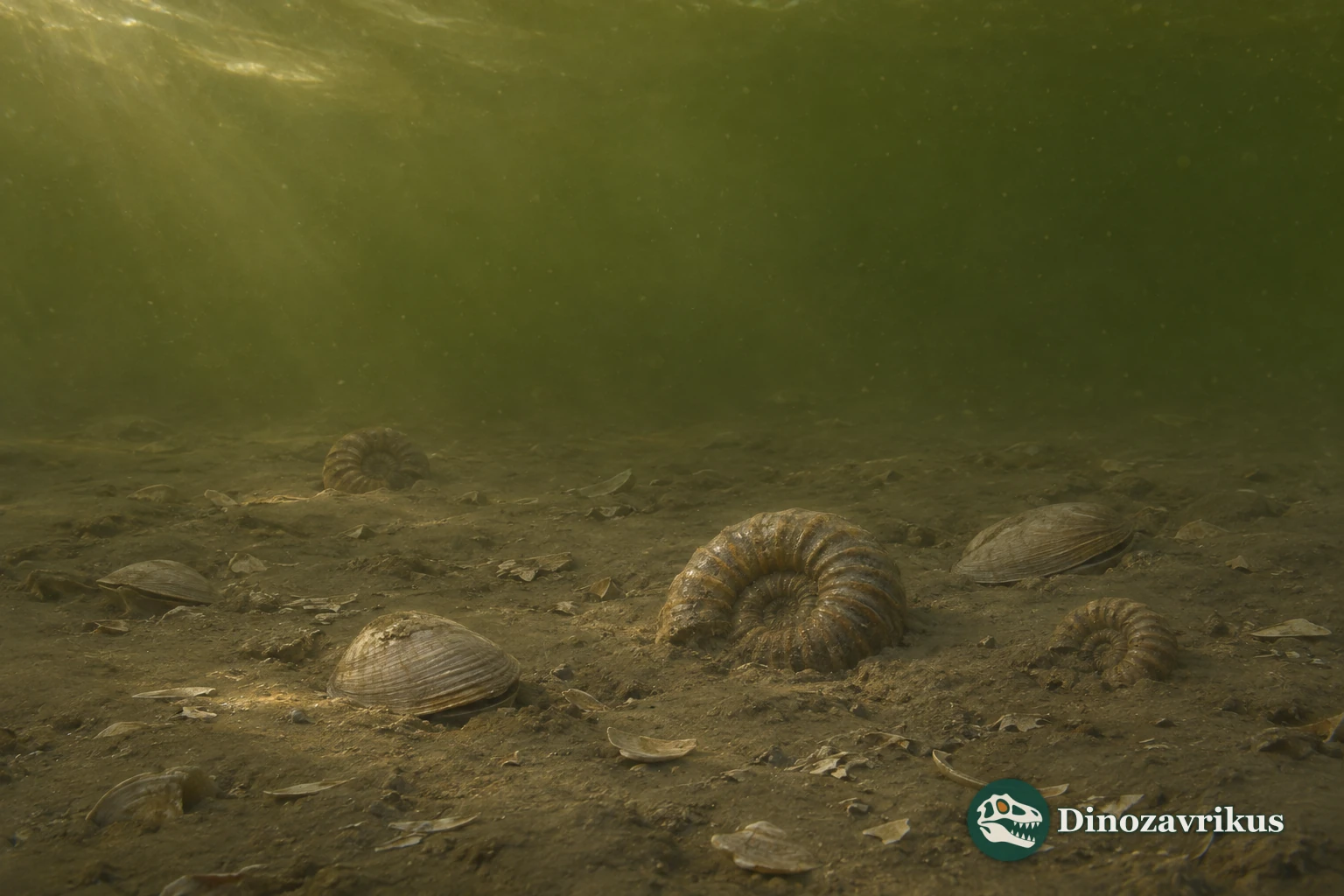
The English fossils came from the Peterborough Member of the Oxford Clay Formation, deposited in shallow marine waters. The French skull and jaw LPP.M.21 came from limestone at Migné-les-Lourdines. Its ammonite zone allows a correlation with the Middle Callovian deposits in England.
The revision retained several referred pieces of skull or skeleton. Isolated blunt teeth can belong to different machimosaurids. A combination of characters in the skull and limb girdles provides a firmer basis for identification than a single crown.
Frequently asked questions
Why does it have a different genus name in older papers?
The species was named in Steneosaurus. The 2017 review found consistent differences in its type skeleton and named Lemmysuchus.
How was the 5.8 m estimate obtained?
It was calculated from the length of the femur using comparative equations. The skull-based estimate for the same animal was slightly shorter.
Did Lemmysuchus eat turtles?
Its thick, blunt teeth are consistent with hard prey. They do not identify turtles or any other individual prey group.
What does obtusidens mean?
It combines Latin words for blunt and tooth, referring to the rounded crown tips.