

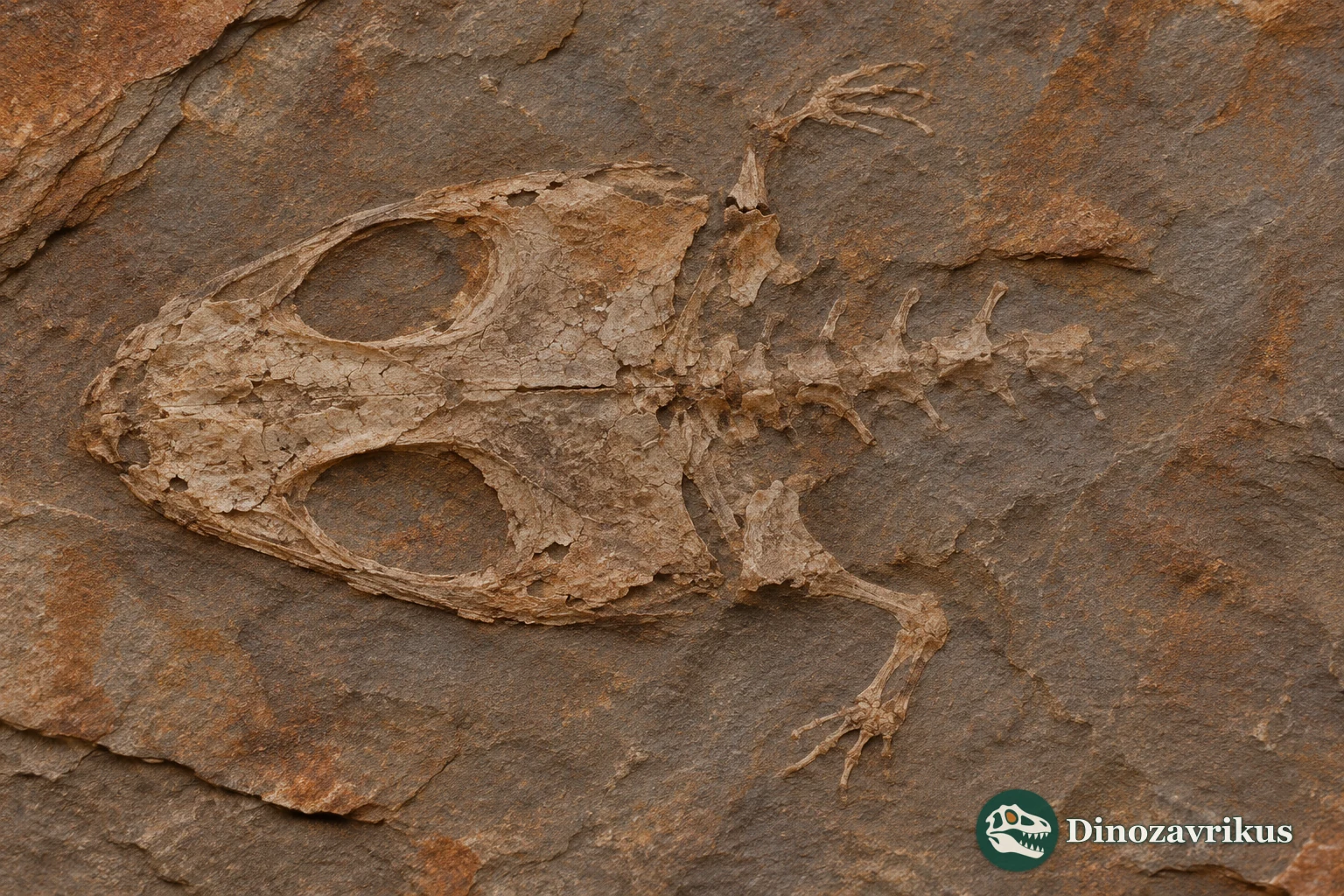
Leptorophus tener is known from fossils found in Saxony. The front of its triangular skull was unusually long for a branchiosaurid. The underside of the skull has another clue to its identity: paired bones in the palate extend into long projections.
Quick facts
| Group | Temnospondyls, branchiosaurids |
|---|---|
| Age | Early Permian |
| Region | Europe, Saxony, Germany |
| Type species | Leptorophus tener |
| Scientific name | Leptorophus |
| Diet | Exact prey is unknown |
What can the fossils tell us?
The Saxon fossils preserve a long, triangular skull and bones of the palate.
Long projections from the vomers make the skull distinguishable from those of other branchiosaurids.
The available fossils do not establish its diet or whether it underwent a full metamorphosis.
From Branchiosaurus to a genus of its own
Early in the twentieth century G. Schönfeld assigned the species to Branchiosaurus as Branchiosaurus tener. Oliver Bulman and William Whittard established the genus Leptorophus in 1926. In 1986 Jürgen Boy redescribed the species and selected a northern Saxon specimen as the lectotype, the specimen that anchors the name.
The long snout and unusual palate
The elongated nasal bones are visible from above. On the palate, the paired vomers reach towards the rear and the midline of the skull in long projections. This feature sets Leptorophus apart from other members of its family. The skull of Melanerpeton, another branchiosaurid, provides a comparison for the different head proportions that developed within the group.
Dating the fossils from Clennen
At Clennen the bones came from pebbles eroded out of older beds and deposited again by water. The age of the original rock in those pebbles is what matters for dating the animal. Its source rock is regarded as probably Early Permian. Reworking makes it difficult to tie the fossils to a more precise horizon.

Frequently asked questions
Where was Leptorophus found?
In Saxony, in what is now Germany.
Which group did it belong to?
It was a member of the branchiosaurids, a family of temnospondyl amphibians.
Why did the species need a lectotype?
Choosing one specimen from the original material gives the species name a single reference specimen.
What is distinctive about its skull?
It has an elongated snout and unusually long projections on the paired vomers in the palate.