

Liaoningopterus gui is represented by an incomplete skull, lower jaw, teeth and a few other bones from China's Early Cretaceous Jiufotang Formation. Its front teeth were unusually large, with one upper tooth described as about 81 mm long. The roughly five-metre wingspan in the original paper is an estimate from incomplete material, not a measurement of a complete wing.
Quick facts
| Scientific name | Liaoningopterus gui, Wang and Zhou, 2003 |
|---|---|
| Holotype | IVPP V13291, incomplete skull and jaws with isolated postcranial bones |
| Locality | Western Liaoning, northeastern China |
| Rock unit | Jiufotang Formation, Lower Cretaceous |
| Age | Aptian |
| Skull | Estimated complete length about 610 mm |
| Wingspan | About 5 m estimated; no complete wing preserved |
What can the fossils tell us?
IVPP V13291 includes parts of the skull and lower jaw, teeth, one cervical vertebra and a first wing-finger phalanx.
Teeth occupy the front half of the jaws. The fourth upper tooth was estimated at about 81 mm; teeth farther back are smaller.
The 610 mm skull length and roughly 5 m wingspan are reconstructions from incomplete bones. The first wing-finger phalanx measures about 500 mm.
The holotype came from the Lower Cretaceous Jiufotang Formation in western Liaoning, assigned an Aptian age in the original study.
Discovery in the Jiufotang Formation
Xiaolin Wang and Zhonghe Zhou named Liaoningopterus gui in 2003 alongside Chaoyangopterus from the same rock unit. They designated IVPP V13291 as the holotype. The genus name refers to Liaoning Province; the species honours Gu Xun.
The Jiufotang Formation belongs to the Early Cretaceous and was assigned an Aptian age by the authors. Guidraco also comes from this regional fossil record, but shared geography does not imply identical jaws or food. These fossils are much younger than Jurassic Liaodactylus.
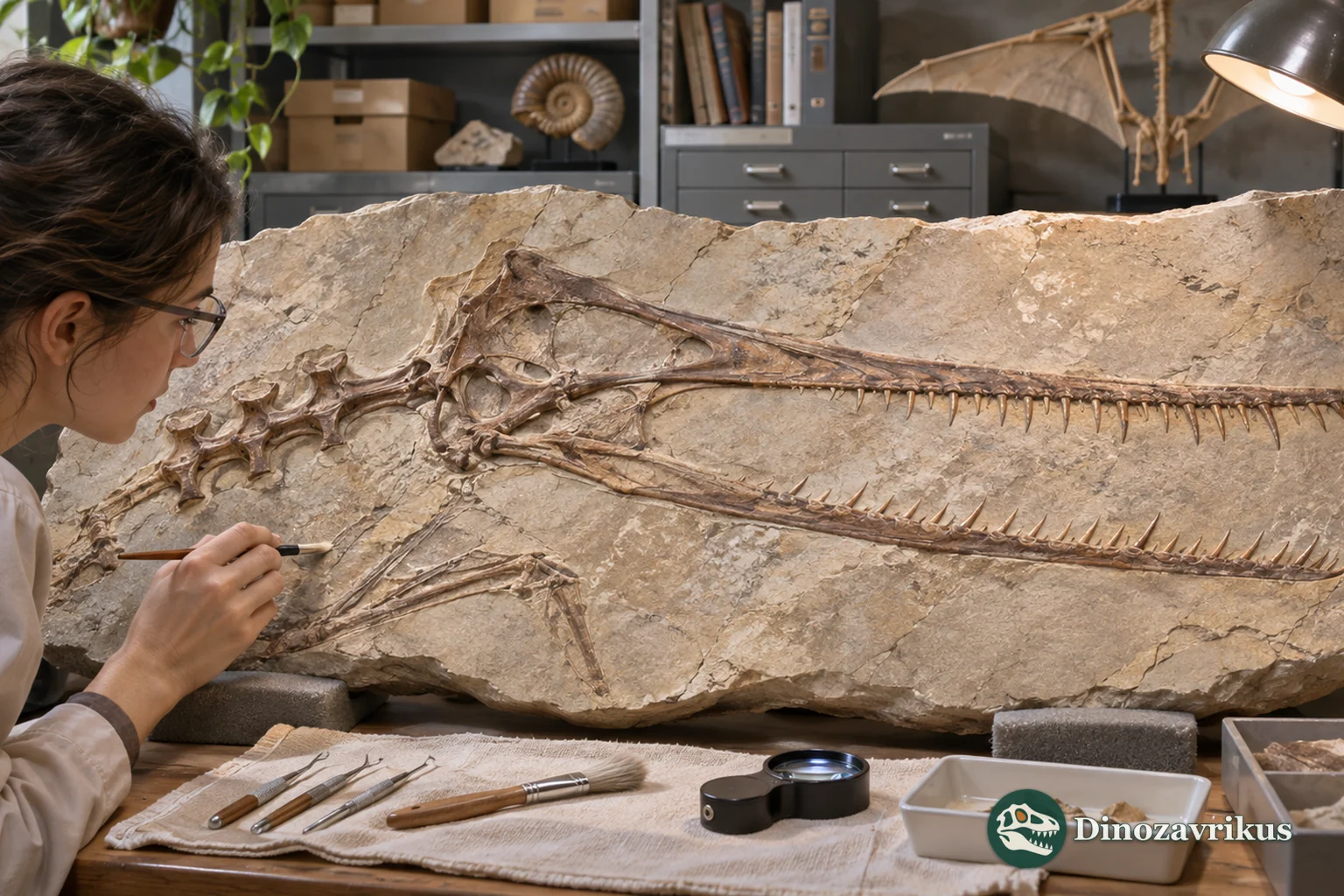
The skull and its large front teeth
The holotype includes premaxillary and maxillary bones, part of the cheek region, a lower jaw and most of the teeth. One cervical vertebra and the first phalanx of a wing finger were described. The skull is low and long but incomplete; its total length was estimated at about 610 mm. Midline crests occur on the upper and lower jaws.
Teeth are concentrated in the front half of the jaws. The original authors counted around twenty upper teeth, with the fourth approximately 81 mm long. Teeth farther back are smaller, and replacement teeth indicate renewal of the dentition. Later work revisited the specimen's detailed tooth comparisons with other toothed pterosaurs.
Diet and dimensions
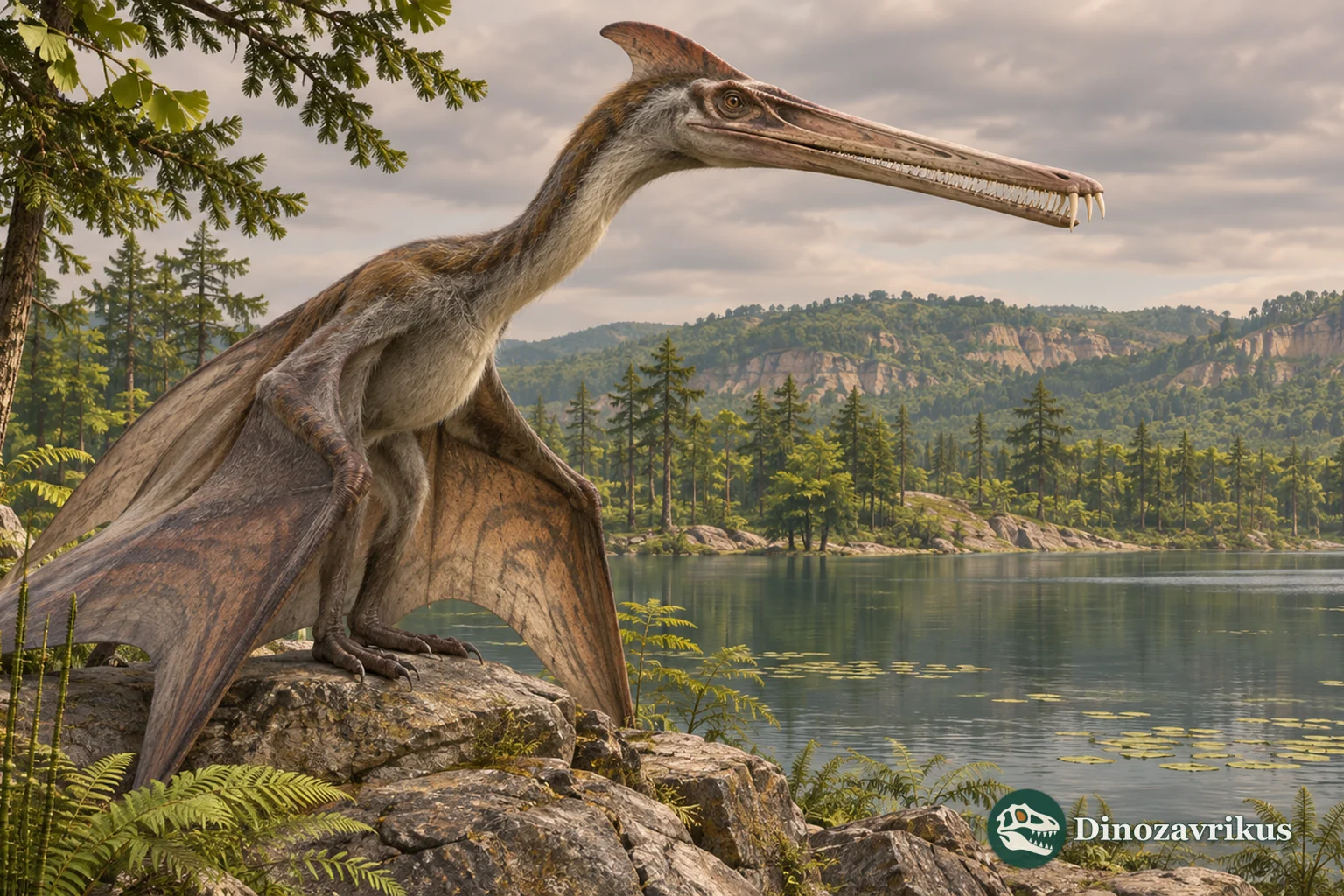
The authors proposed fish capture from the large teeth and elongated jaws. No stomach contents or identifiable prey are associated with IVPP V13291, so particular prey and hunting frequency remain unknown. Ikrandraco provides another regional comparison, but not proof of a shared diet.
The first wing-finger phalanx is about 500 mm long. The original paper estimated a wingspan around five metres from incomplete bones. With the rest of the wing missing, the figure is approximate, and neither body mass nor an exact flight profile can be measured.
Relationships and missing features
Wang and Zhou placed Liaoningopterus among anhanguerids, toothed pterosaurs with jaw crests. Later studies compared it with other toothed pteranodontoids and reconsidered character states in the damaged specimen. Soft crest tissue, colour and behaviour are not preserved.
Frequently asked questions
What remains of Liaoningopterus?
The holotype includes an incomplete skull and jaw, teeth, one cervical vertebra and a first wing-finger phalanx.
When did it live?
Its fossil came from the Aptian Jiufotang Formation of western Liaoning in China.
Was its wingspan exactly five metres?
No. That number was estimated from incomplete bones; a complete wing is not preserved.
Did it eat fish?
Fish eating was suggested from its long toothed jaws, but no direct prey or gut contents confirm a particular diet.