

Linhenykus monodactylus was a tiny alvarezsaurid from the Late Cretaceous of China. One finger retained phalanges, including a claw, while its neighbour was reduced to a small metacarpal. The combination shows that different parts of the hand could evolve independently.
Quick facts
| Group | Theropods (Alvarezsauridae, Parvicursorinae) |
|---|---|
| Age | Late Cretaceous (Campanian) |
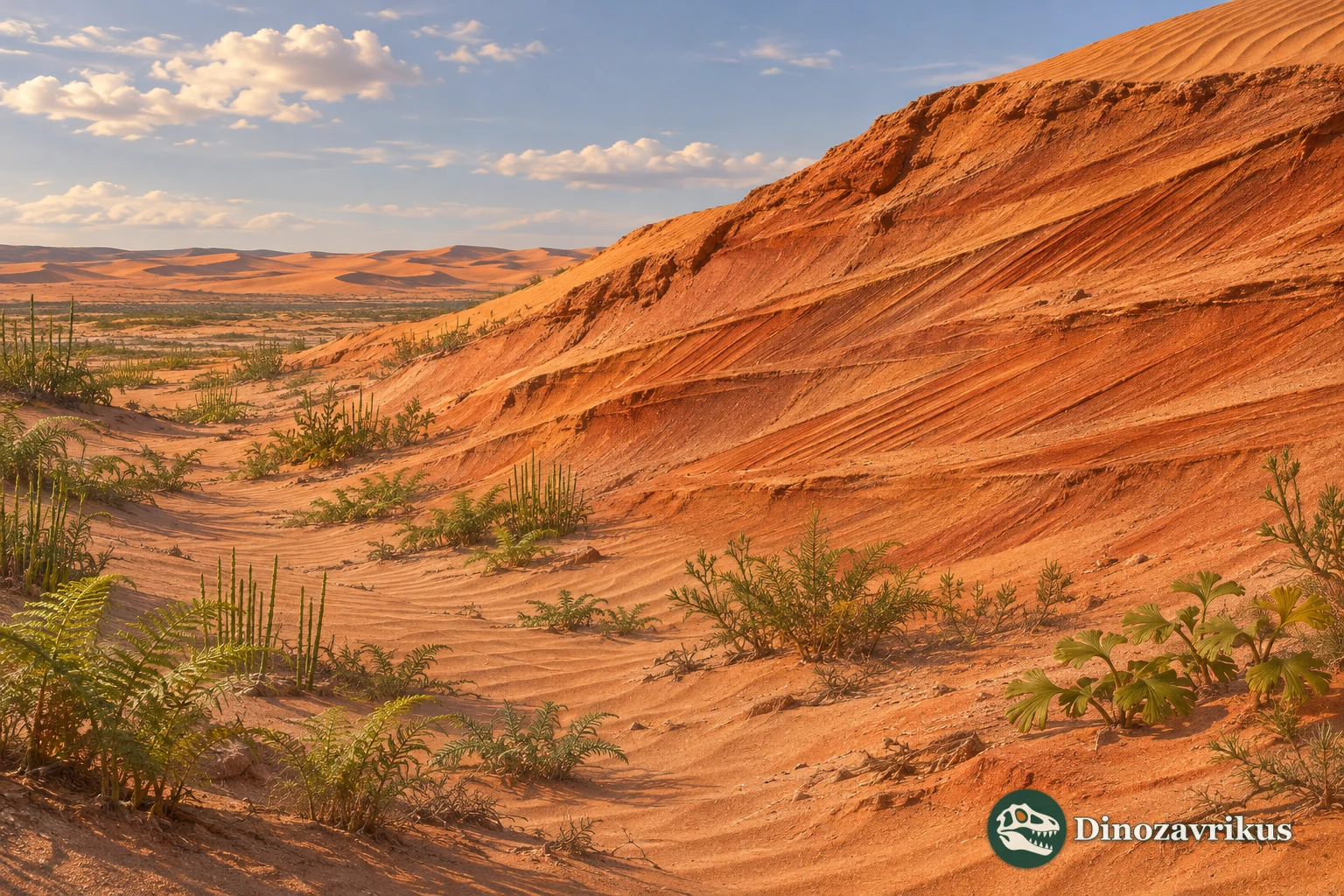
| Region | Asia (Inner Mongolia, China) |
| Diet | No direct evidence |
| Type species | Linhenykus monodactylus |
| Holotype | IVPP V17608, a partial skeleton lacking the skull |
| Locality | Bayan Mandahu, Wulansuhai Formation |
| Estimated holotype mass | About 450 g from estimated femur length |
What can the fossils tell us?
The adjacent metacarpal lacks an articular surface for a phalanx. The structure supports reduction of the outer digit during life.
The middle metatarsal narrows and ends short of the upper end of the metatarsus. These proportions suggest a lightly built runner.
The vertebral arches had fused to their centra, while sacral and metacarpal sutures remained. The combination suggests an individual approaching maturity.
The skeleton from Bayan Mandahu
Michael Pittman and Jonah Choiniere found the specimen in fine sandstone north of Linhe, in Inner Mongolia. Xu Xing and colleagues described it in 2011. The genus name combines Linhe with the Greek word for claw, and the species name refers to the hand's single phalanx-bearing digit.
The Institute of Vertebrate Paleontology and Paleoanthropology in Beijing holds the holotype, IVPP V17608. It contains vertebrae, a nearly complete sternum and hind limbs, and parts of the shoulder, arms and pelvis. Vertebral sutures had closed, while some other bones were still separate. The authors interpreted that combination as evidence of a probable subadult.
A reduced hand with a slender working digit
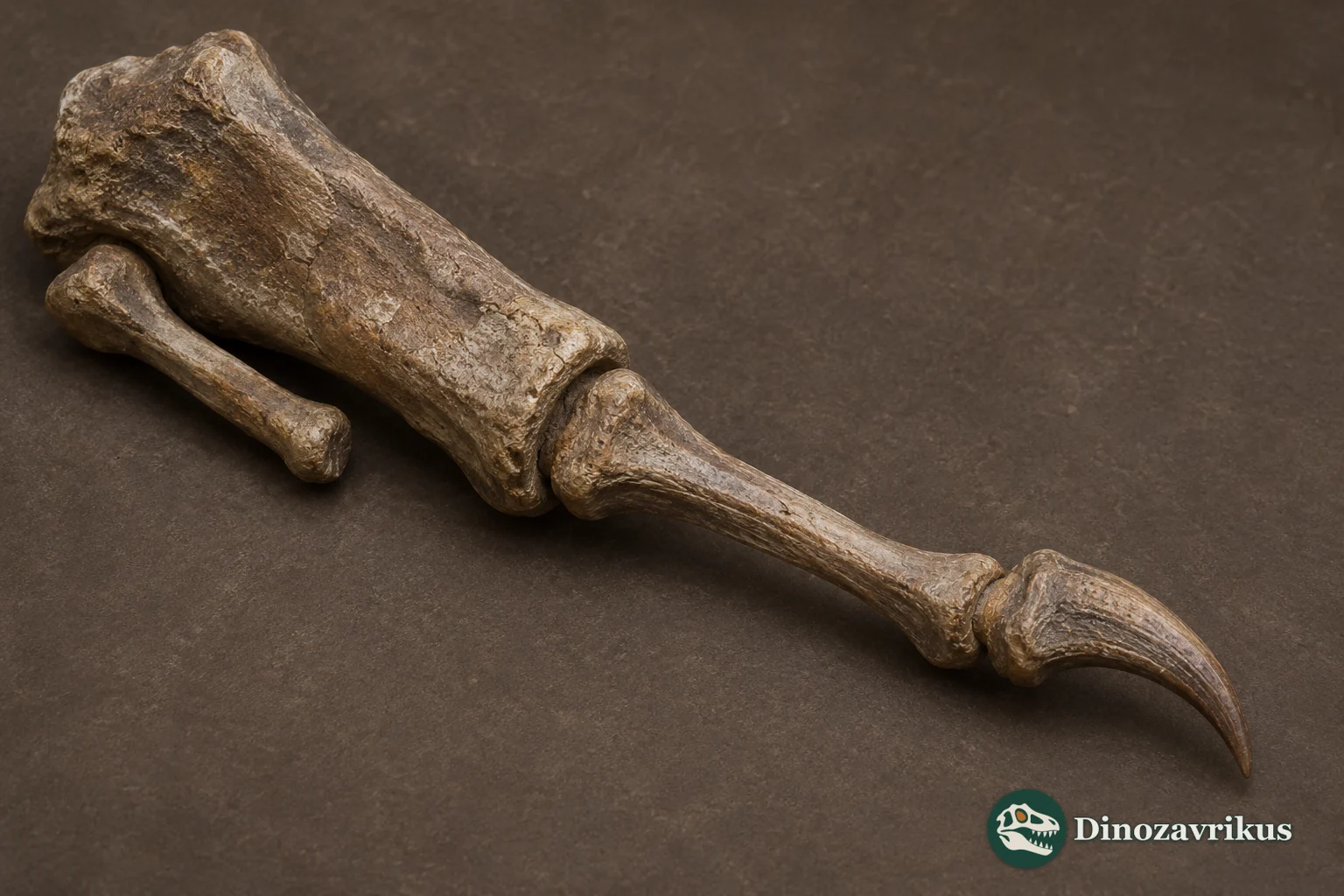
In the numbering used for the description, the innermost preserved finger is digit II. It has two phalanges, including a claw, and is relatively slender compared with the corresponding digit of Shuvuuia. Digit III retains a metacarpal without a joint surface at its tip. The fourth ray of the hand was probably lost altogether.
The 2011 analysis placed Linhenykus near the base of Parvicursorinae. Some later-branching parvicursorines retained tiny outer fingers with phalanges despite having a much stronger main digit. This pattern shows how the reduction of outer fingers and enlargement of the main claw could proceed at different rates.
Size, movement and diet
The authors estimated that the femur was about 70 mm long and used this figure to calculate a mass near 450 g for the holotype. The shin was roughly 1.4 times the length of the femur. The leg bones carry direct information about proportions, while the full-grown body mass is harder to estimate.
The reduced arms of alvarezsaurids have prompted suggestions that they opened the nests of social insects. Linhenykus contributes unusually clear evidence about the hand. Its known skeleton preserves neither a skull nor food remains that would identify what it ate.
Frequently asked questions
Which limbs had just one working digit?
Each hand had one digit with phalanges. The feet retained multiple toes.
How can scientists tell the outer finger bones were reduced?
The preserved outer metacarpal lacks the joint surface that would have connected it to a phalanx.
How much did the known animal weigh?
The authors estimated about 450 g using an estimated femur length of 70 mm.
Do fossils reveal the appearance of the body covering?
The bones preserve proportions. The covering shown in artistic reconstructions is inferred because none survived with the specimen.