

Lonchognathosaurus acutirostris was named from the front of a skull found in Xinjiang, China. Wing bones recovered less than three metres away were described later and assigned to the same individual by the researchers. The snout has a toothless pointed tip, but the fossil does not preserve actual teeth or a complete wing.
Quick facts
| Scientific name | Lonchognathosaurus acutirostris, Maisch and colleagues, 2004 |
|---|---|
| Holotype | SGP 2001/19, anterior part of a skull |
| Associated material | SGP 2001/19/A, disarticulated wing bones |
| Locality | Liuhonggou Valley, Xinjiang, China |
| Age | Early Cretaceous, tentatively Aptian–Albian |
| Wingspan | Not securely established |
What can the fossils tell us?
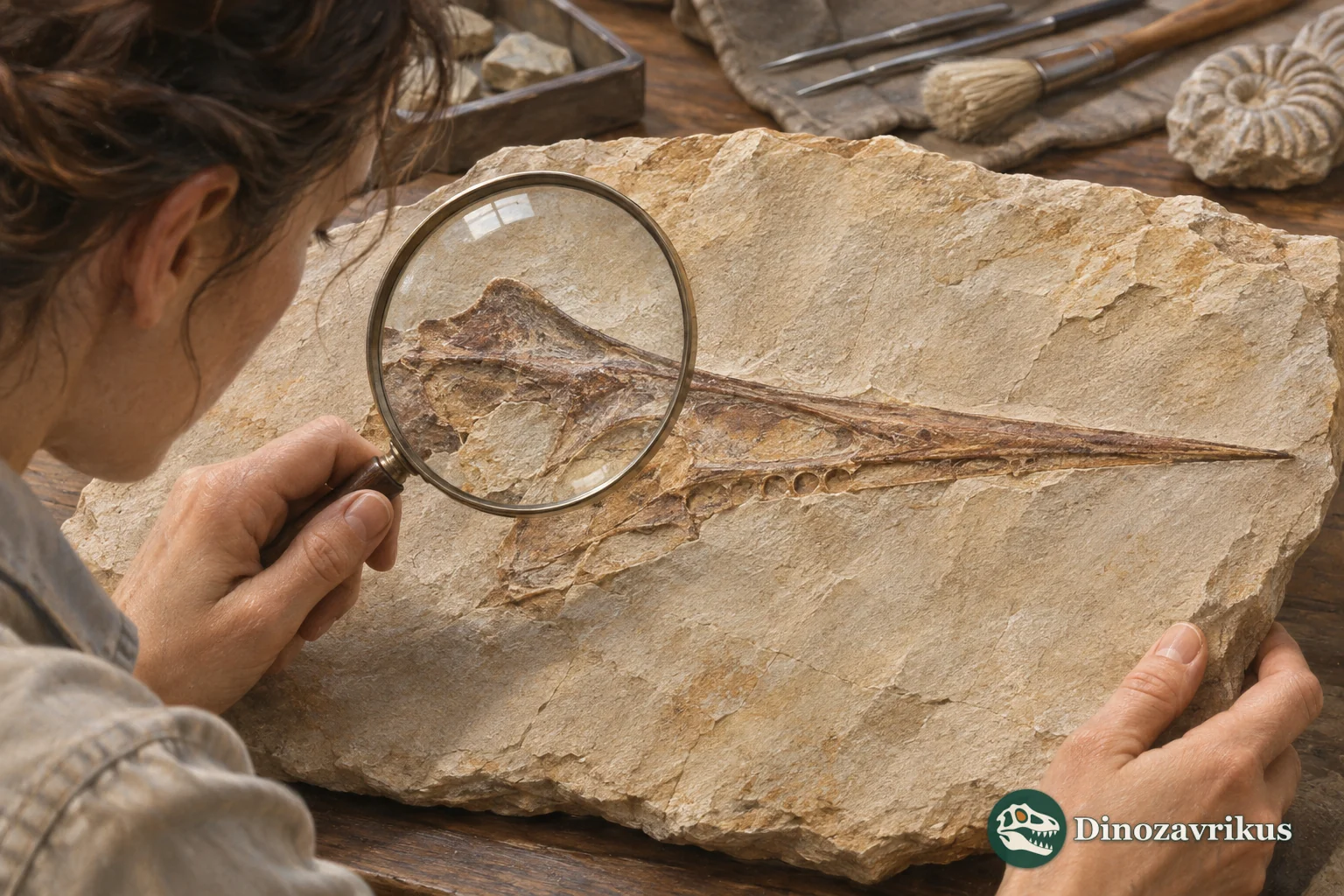
The holotype preserves a pointed snout, cranial crest and upper tooth sockets; the teeth themselves are missing.
Wing material was found less than three metres from the skull in the same layer. Assigning it to one individual is an inference, as the bones were not articulated.
Skull and wing characters have been compared with dsungaripterids, and the later wing description strengthened the diagnosis of the genus.
Neither a precise wingspan nor diet, colour or behaviour is directly preserved.
A find in Xinjiang
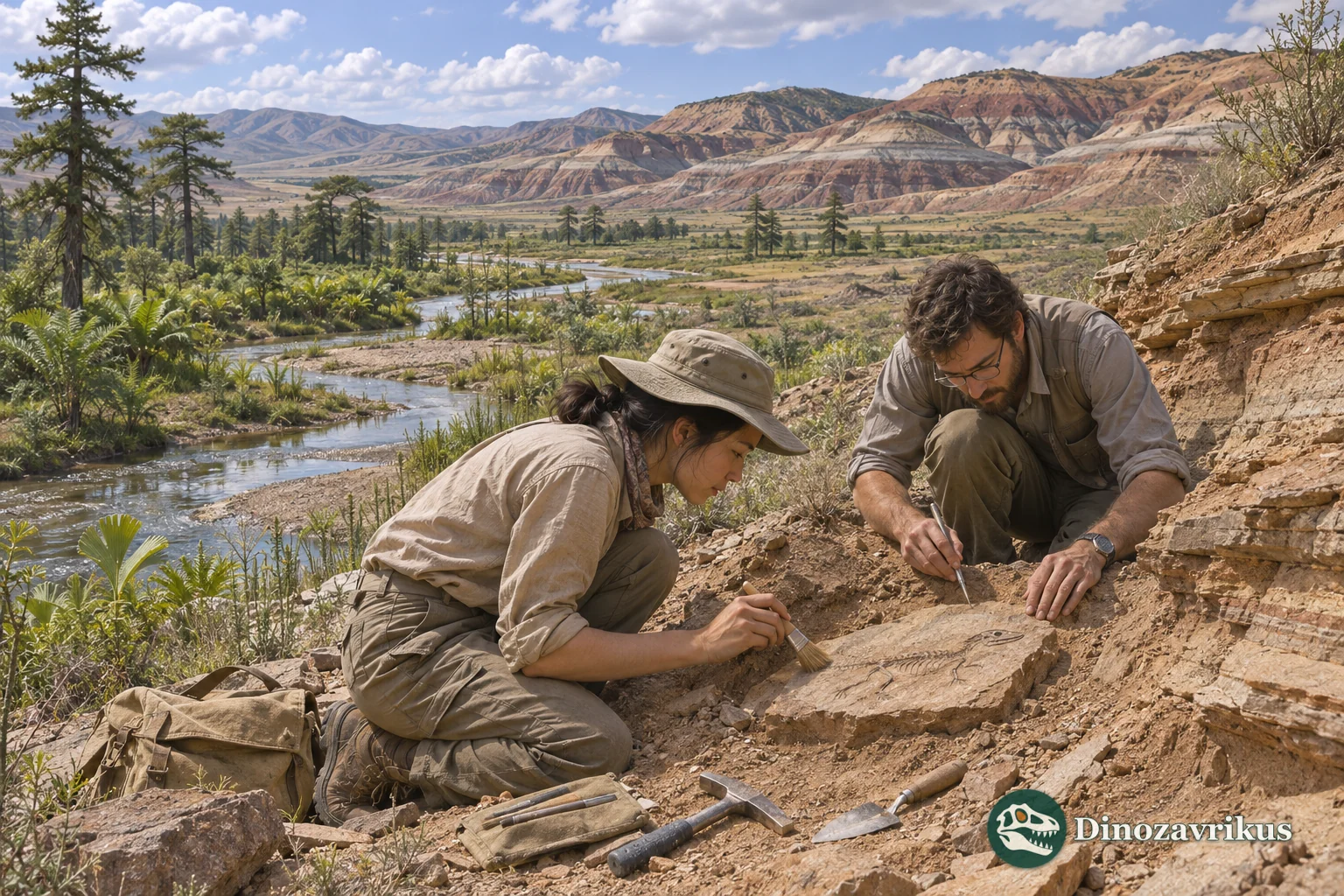
The skull was recovered during a Chinese–German field project in 2001 near Liuhonggou, southwest of Urumqi. Maisch, Matzke and Sun published the holotype SGP 2001/19 in 2004. It came from the lower Lianmuxin Formation of the Tugulu Group, assigned tentatively to the Aptian or Albian stages of the Early Cretaceous.
The original paper recorded temporary custody in Tübingen and an intended return to a Chinese collection. That historical note does not establish the specimen's present repository. The name remains tied to the actual skull material, wherever it is now housed.
What the skull preserves
The front of the upper jaw is unusually slender, straight and pointed. Its very tip is toothless; farther back the researchers counted eight upper-jaw tooth sockets per side. No actual teeth remain, so their exact shape or wear cannot be observed in this specimen.
A grooved midline crest is present. Because the specimen is laterally compressed and lacks the back of the skull, the roughly 40-centimetre complete-skull length proposed in 2004 was a comparison-based estimate rather than a direct measurement. Noripterus offers another dsungaripterid comparison.
Adding wing bones to the diagnosis
A 2021 study described SGP 2001/19/A, including a distal carpal, fourth metacarpal and portions of wing-finger phalanges. The bones were recovered less than three metres from the skull in the same bed. Their association with one animal is supported by proximity and anatomy, but they were not found joined together.
The fourth metacarpal is shorter than the second wing-finger phalanx, an unusual combination used in the revised diagnosis. Earlier authors had questioned the genus because the skull was incomplete; the additional material supported its distinctiveness. These pieces still cannot directly measure the full wingspan.
Reconstructing a living pterosaur
The fossils support a narrow snout and a pterosaur wing skeleton. Soft tissues, colour, preferred prey and flight behaviour remain unknown. Nurhachius illustrates another Early Cretaceous Chinese pterosaur, but a broad overlap in time does not demonstrate an identical diet.
Frequently asked questions
Where was Lonchognathosaurus found?
Its skull and associated wing material came from the Liuhonggou area of Xinjiang, China.
Were its teeth preserved?
No. Tooth sockets lie behind the toothless tip, but actual teeth are absent from the holotype.
How were the wing bones linked to the skull?
They lay less than three metres away in the same layer; researchers also considered their anatomy. Their attribution to one animal is inferred, not shown by articulation.
Is its wingspan known?
No complete wing is known from which to measure a secure total span.