

Ludodactylus sibbicki is known chiefly from a nearly complete skull and articulated lower jaw in Early Cretaceous limestone from northeastern Brazil. It carries teeth and a crest projecting backward from the head. A plant leaf lies between the lower-jaw branches, but the fossil alone cannot prove that the leaf killed the animal.
Quick facts
| Scientific name | Ludodactylus sibbicki, Frey, Martill and Buchy, 2003 |
|---|---|
| Holotype | SMNK PAL 3828, skull and articulated mandible |
| Region | Araripe Basin, northeastern Brazil |
| Rock unit | Crato Formation; exact bed unknown |
| Age | Early Cretaceous, Aptian |
| Wingspan | Not directly measurable from the known skull |
What can the fossils tell us?
The holotype preserves almost the entire skull and attached lower jaw. Its parieto-occipital crest points backward; there is no crest on the front of the upper jaw.
The tooth row reaches near the midpoint of the combined opening ahead of the eye. This does not identify a particular prey species.
A plant remnant lies between the lower-jaw branches. Its possible role in the animal's death remains a hypothesis.
The holotype lacks wings and trunk. Exact wingspan, soft tissue, colour and flight behaviour are unobserved.
A skull from the Crato limestone
Eberhard Frey, David Martill and Marie-Céline Buchy named the species in 2003 from specimen SMNK PAL 3828. The skull and lower jaw are nearly complete, although the back of the crest is missing. Its laminated limestone comes from the Crato Formation in the Araripe Basin. The precise quarry and stratigraphic level were not recorded, so the specimen cannot be assigned to an exact bed.
The species name honours palaeoartist John Sibbick. The genus name refers to play: the original authors noted that toy pterosaurs had combined teeth and a rearward crest before a real fossil with that combination was described. This naming story says nothing about the animal's behaviour.
Crest, teeth and disputed characters
The parieto-occipital crest is compressed and directed backward, whereas the premaxillary snout lacks a crest. The teeth extend to approximately the middle of the large combined opening ahead of the orbit. Features of the lacrimal also entered the original diagnosis. Cearadactylus supplies a Brazilian toothed-pterosaur comparison, though the species need not share identical crests.
The 2003 description reported a low crest on the lower jaw. A 2025 reassessment could not confirm it on the holotype, so it is unsafe to present that character as certain. The reassessment placed Ludodactylus within Anhanguerinae and tentatively referred fragmentary jaws MN 4797-V to it. Those jaws had previously been assigned to Brasileodactylus; flattened preservation complicates the distinction. The Chinese Guidraco is another toothed pterosaur compared with this Brazilian form.
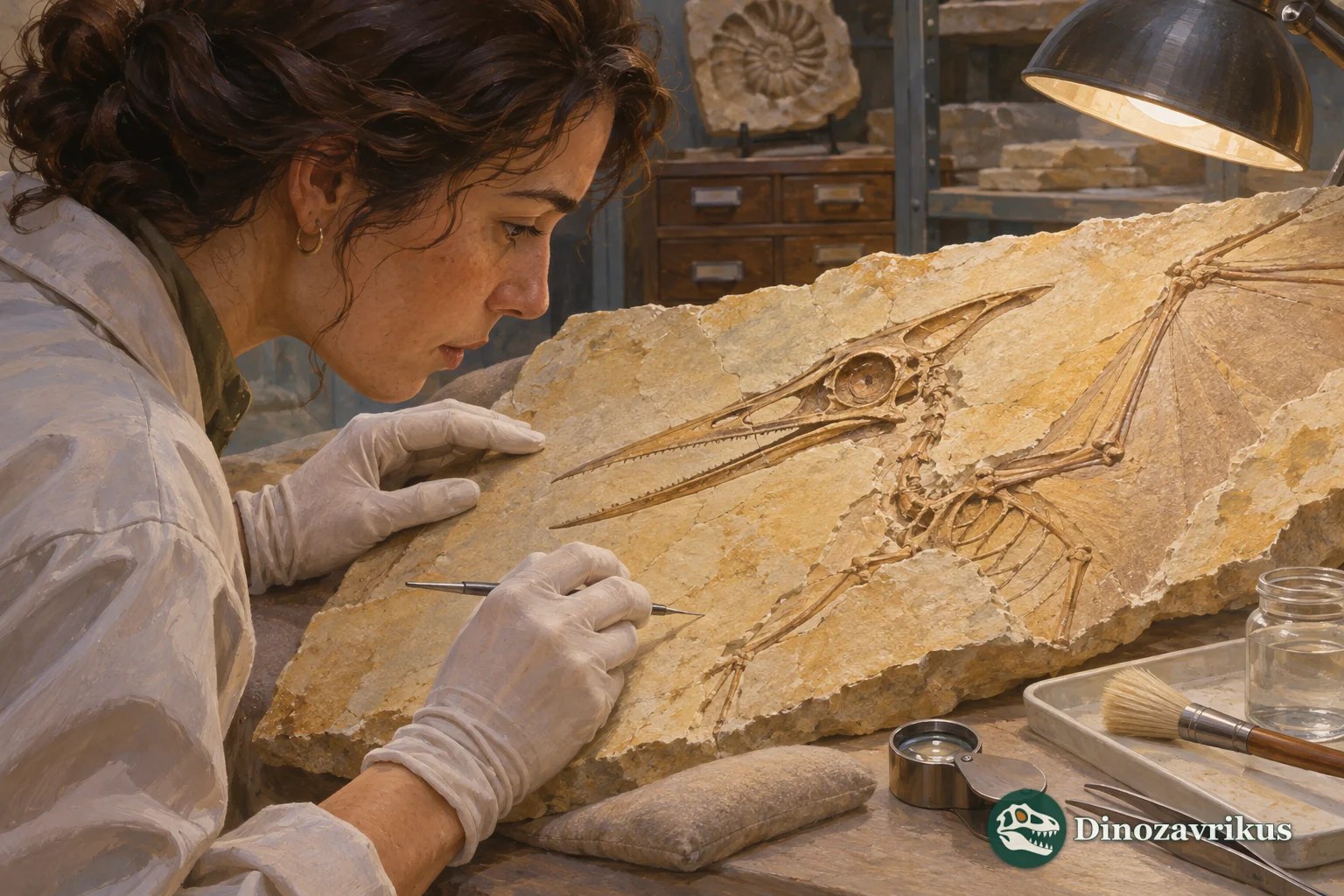
The leaf between the jaws
A leaf-like plant remnant is preserved between the mandibular rami. The original authors suggested it might have lodged there during life and interfered with feeding. Its position is an observation; the sequence leading to death is an interpretation. The fossil cannot establish starvation or exactly how the leaf entered the mouth.
The Crato limestone accumulated in a large lake system affected by fluctuating salinity and marine input. That geological reconstruction describes the setting in which fossils were preserved, not the precise shoreline visited by this individual.
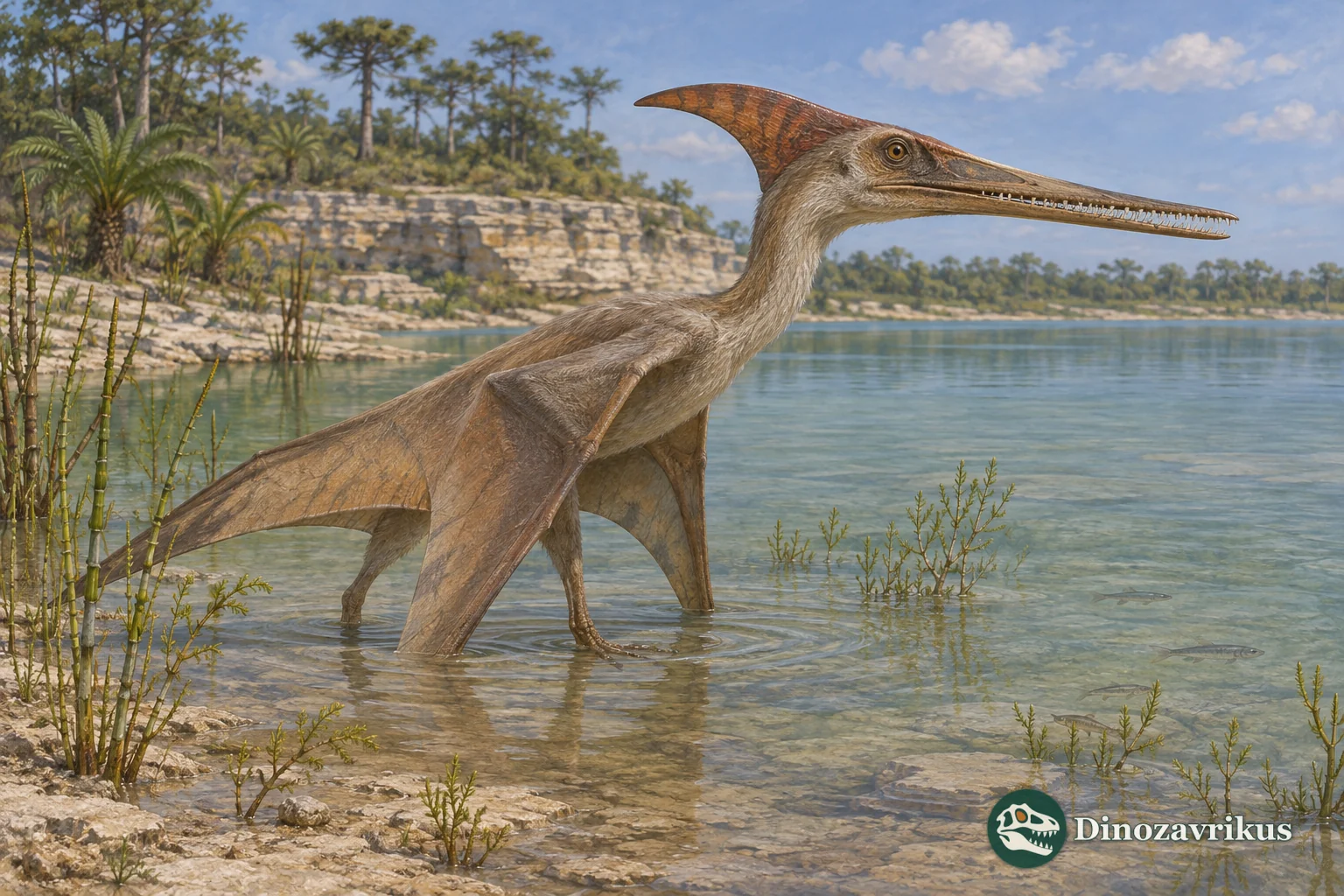
Limits of a living reconstruction
No complete wings, stomach contents or preserved colour are known from the holotype. Its wingspan, exact diet and everyday behaviour are consequently not direct measurements. An illustration can show the supported skull shape and general pterosaur wings while treating the rest as a plausible reconstruction.
Frequently asked questions
Where was Ludodactylus found?
Its skull comes from the Crato Formation of the Araripe Basin in northeastern Brazil. The exact quarry and bed are unknown.
Where is the crest?
It projects backward from the rear of the skull; the front of the upper jaw lacks a premaxillary crest.
Did the leaf cause its death?
That is a proposed scenario, not an established fact. The leaf's position between the jaws is preserved, but the cause of death is unknown.
Is the wingspan known?
Not directly from the holotype, which is a skull and jaw rather than a complete skeleton or wing.