

The Early Ordovician trilobite Lutesvillia had two spines at the rear corners of its tail shield. In some fossils the spines are almost straight continuations of the sides. Others have shorter spines with a marked corner where they begin. A large Oklahoma sample shows how much they varied.
Quick facts
| Family | Bathyuridae |
|---|---|
| Age | Early Ordovician |
| Named by | Cullison, 1944 |
| Type species | Lutesvillia bispinosa |
| Localities | Missouri and Oklahoma, USA |
| Tail shield | Up to 16 mm along the midline |
What can the fossils tell us?
They project almost in the plane of the tail shield or tilt slightly upward.
The central part of the head widens slightly towards the front. Free cheeks preserve spines of their own.
The same collection of isolated shell parts includes 31 cranidia and 25 free cheeks.
The first fossils in Missouri
Cullison described Lutesvillia bispinosa in 1944 from southeastern Missouri and designated it as the type species. The beds he assigned to the Theodosia Formation are now included in the upper Jefferson City Formation.
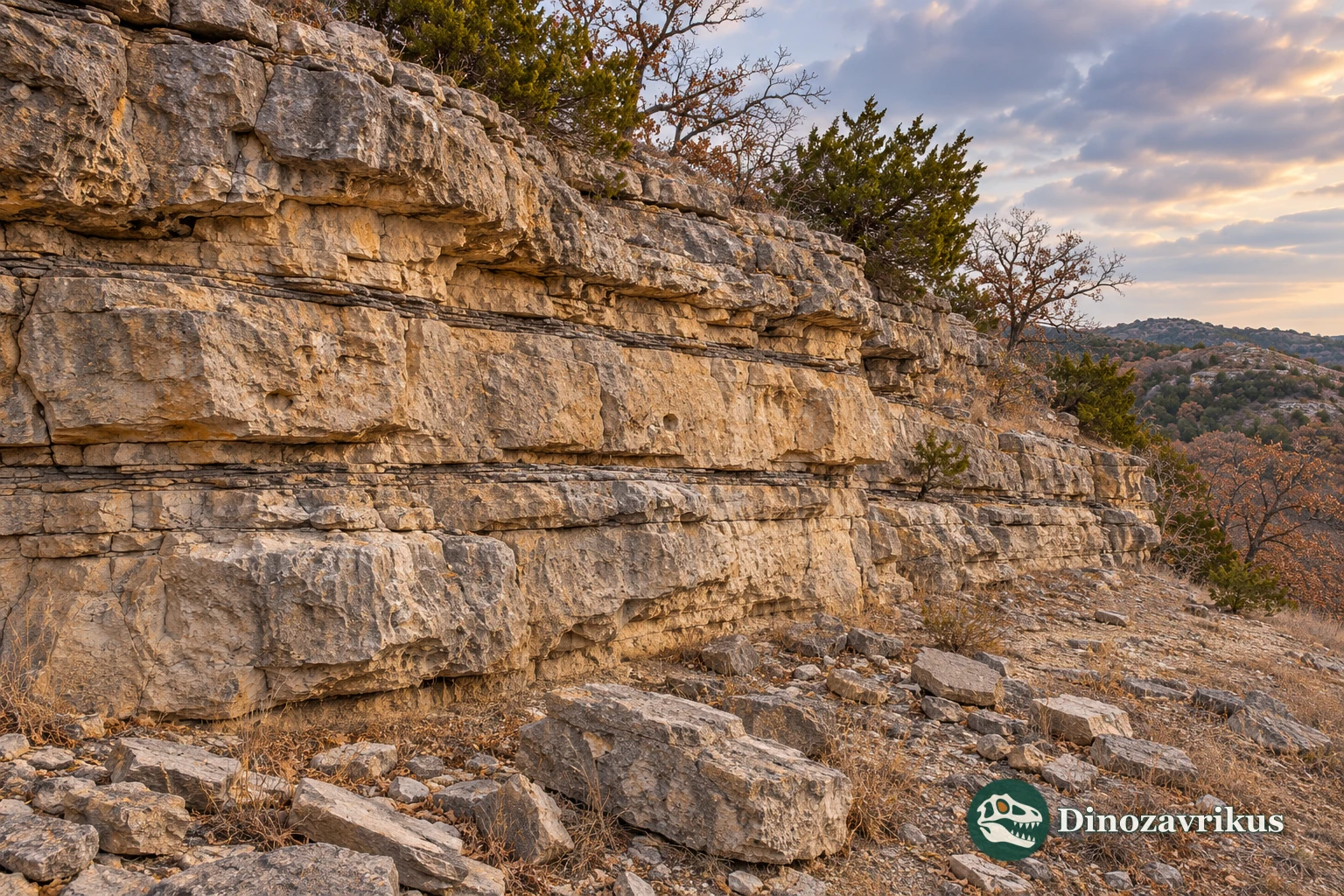
The Kindblade Formation in Oklahoma yielded many more specimens. Along Interstate 35 the species occurs from 77 to 198 m above the base of the measured section. At Kindblade Ranch the equivalent measured interval with fossils is 95 to 174 m above the base of that section. These positions locate the fossils within the rock succession.
Head and tail shields
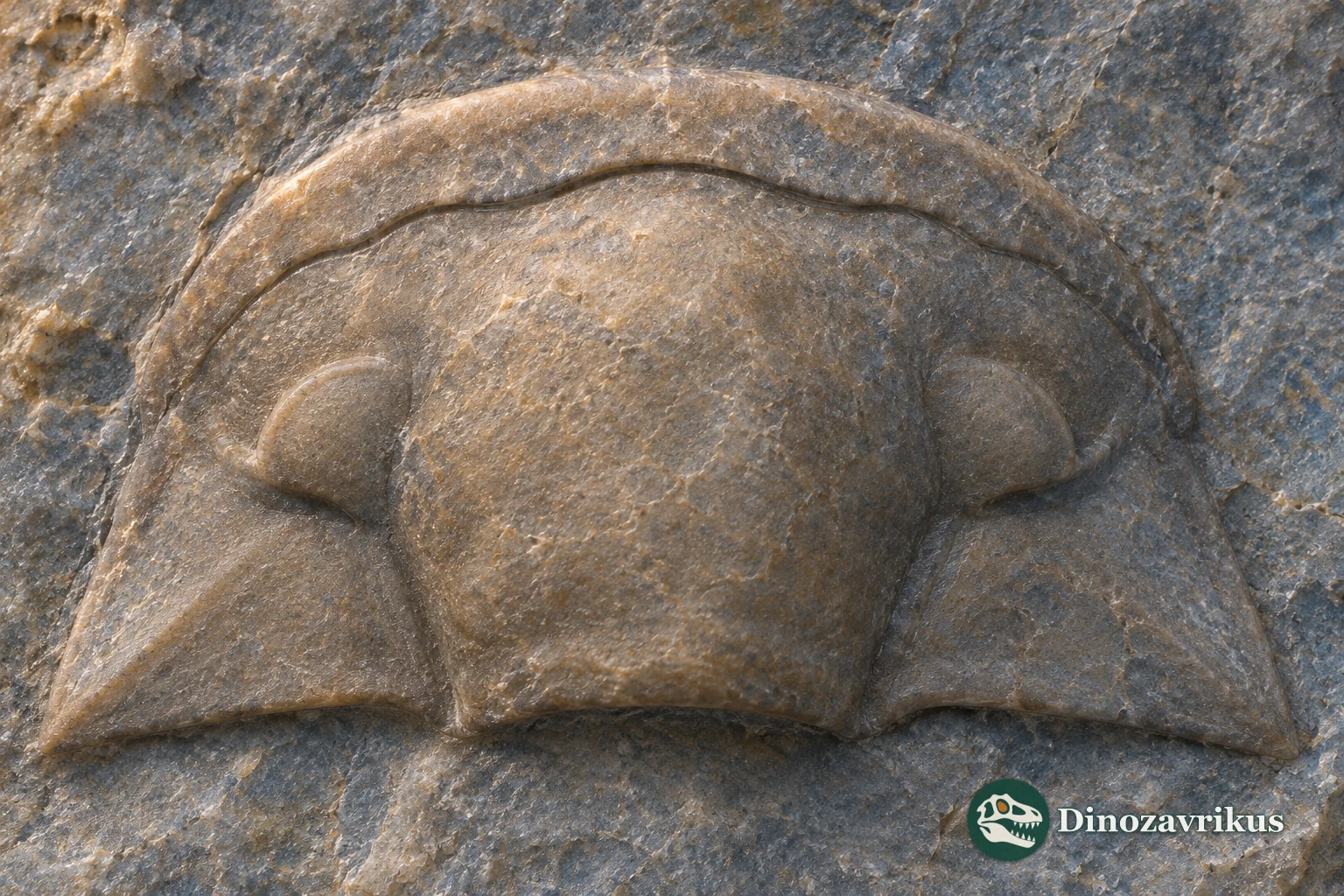
In L. bispinosa, the elongate glabella broadens slightly towards the front. The eye lobes are centred behind its midpoint, and the free cheeks each end in a distinct spine. The shields of Asaphellus offer a comparison with a different trilobite.
Oklahoma tail shields reach 16 mm along the midline. Three rings cross the broad axis, though on larger shields some rear grooves survive only as lateral notches. The paired spines extend from the broad rim. They project behind the middle of the rear margin by roughly one-third to one-half of the shield’s midline length.
What varies between specimens
The Oklahoma material includes 31 cranidia, 80 tail shields and 25 free cheeks. Small specimens have relatively deeper grooves and a more strongly expanded front of the glabella. The length and angle of the tail spines also vary, independently of size in this sample.
Another cranidium from higher in the Kindblade Ranch section was assigned to Lutesvillia without a species name. It has a longer front rim and a narrower glabella than L. bispinosa. No tail shield was found with it.
Frequently asked questions
How can a Lutesvillia tail shield be recognised?
The type species has one spine at each rear corner and typically shows three rings on the broad axis.
Where was Lutesvillia first found?
The type species was described from southeastern Missouri. Later finds came from the Kindblade Formation in southern Oklahoma.
Do all the tail spines point in the same direction?
Some lie nearly in the plane of the shield, whereas others tilt slightly upward. They also vary in relative length.
How large are the Oklahoma fossils?
Well-preserved cranidia reach 10 mm and tail shields reach 16 mm along the midline. These measurements are for separate parts of the shell.