

Maclurites is a genus of large Ordovician gastropods with coiled shells. Especially informative fossils preserve an operculum, the hard plate that closed the aperture, beside the shell. Such associations show how the parts fitted together, but they do not reveal every aspect of the animal’s life.
Jean-Pierre Le Sueur established the name in 1818, and Maclurites magna is the type species. The form magnus appears in some later identifications such as M. cf. magnus; names should be cited in the context of the source rather than treated as automatically interchangeable. The wider setting is described in the Ordovician Period guide.
Quick facts
| Scientific name | Maclurites Le Sueur, 1818 |
|---|---|
| Type species | Maclurites magna Le Sueur, 1818 |
| Group | Gastropoda, family Macluritidae |
| Age | Ordovician; associated shell and operculum records are Middle Ordovician |
| Main fossil | Large coiled shell; operculum is less commonly associated |
| Associated material | Two shell–operculum associations described in 1999 |
| Ecology | A benthic life is plausible; exact diet is unresolved |
| Limit | Isolated shells do not preserve soft anatomy or behaviour |
What can the fossils tell us?
Researchers compare whorls, sutures, surface features, dimensions and the aperture. Similarity to another large Palaeozoic gastropod does not establish identity; deformation can also change the apparent shell profile.
Rohr and Yochelson described the only two known shell–operculum associations available to them. In a Middle Ordovician Alaskan specimen, the operculum fitted slightly inside the aperture and extended below the shell when closed. Acting as an anchor is a functional interpretation, not observed behaviour.
The ICZN supplement records Maclurites Le Sueur, 1818 and type species M. magna. Older usage included a broader range of forms; revisions separated Maclurina and other taxa. The giant size of Maclurina manitobensis should not be assigned to Maclurites.
A robust shell and operculum position are compatible with life on the seabed. They do not identify a precise diet, burrowing behaviour or preferred sediment. Those claims require evidence from wear, traces, associated fauna and the rock matrix.
Name and limits of the genus
Le Sueur introduced Maclurites in 1818. The ICZN supplement lists M. magna Le Sueur, 1818 as the type species. This nomenclatural anchor stabilises the name, but does not settle which historically described shells belong in the genus.
Early literature applied the name broadly to large and varied shells. Later revisions distinguished Maclurites from Maclurina and other macluritids. This matters for size: the largest known Palaeozoic gastropod is associated with Maclurina manitobensis, not automatically with Maclurites.
Shell form and diagnostic features
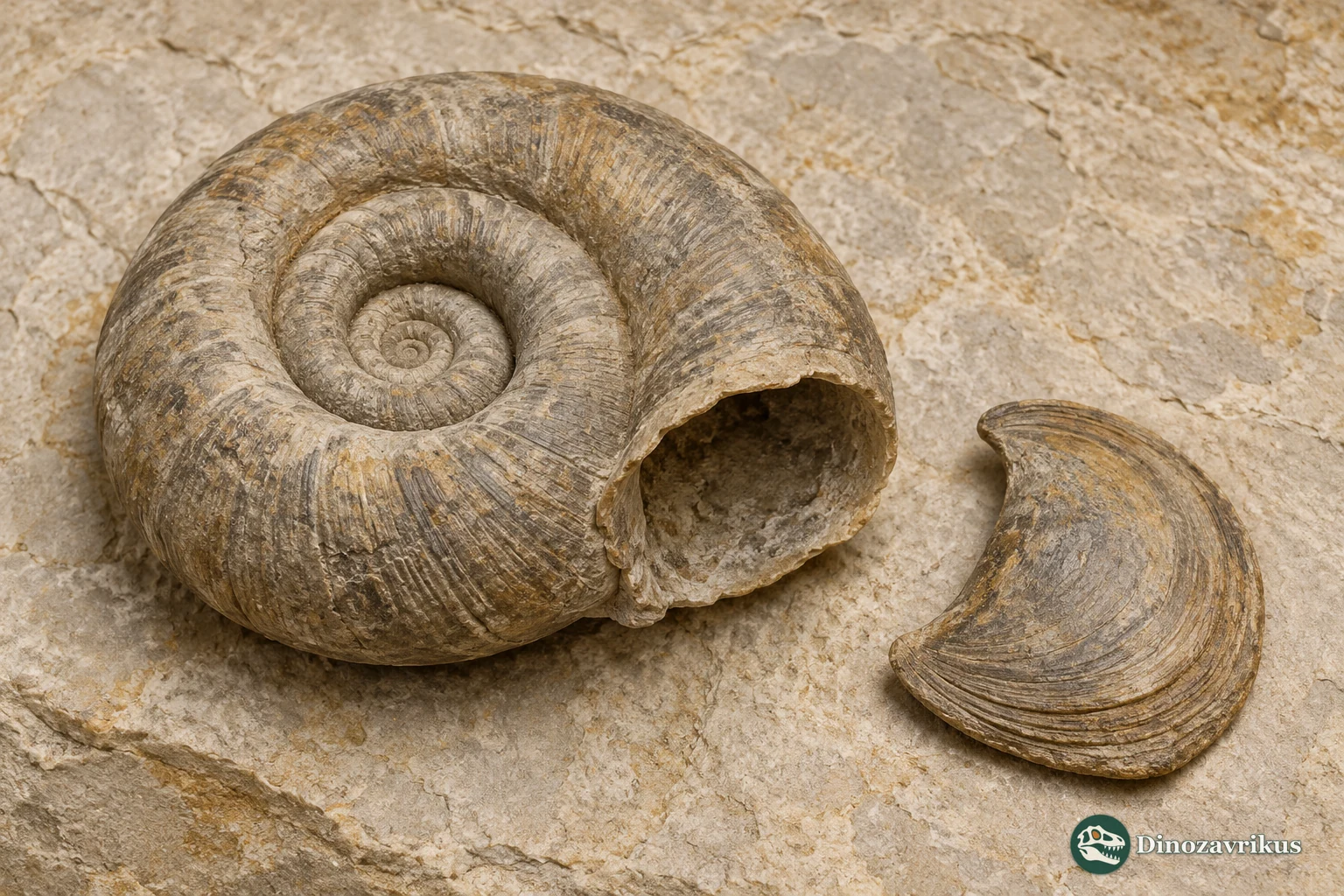
Fossil shells preserve the coiling, whorls, sutures, surface, aperture and sometimes growth lines. Specialists compare these characters with related genera. Deformation can flatten a three-dimensional shell into a misleading outline, so the direction of compression, broken areas and preserved inner whorls all matter.
“Coiled” does not necessarily mean a shell arranged in one flat plane like an ammonite. Illustrations should reflect the chosen gastropod morphotype rather than borrow a familiar but unrelated silhouette. Size estimates belong to measured specimens with published scales; figures for giant Maclurina are not measurements of Maclurites.
The operculum and rare associations
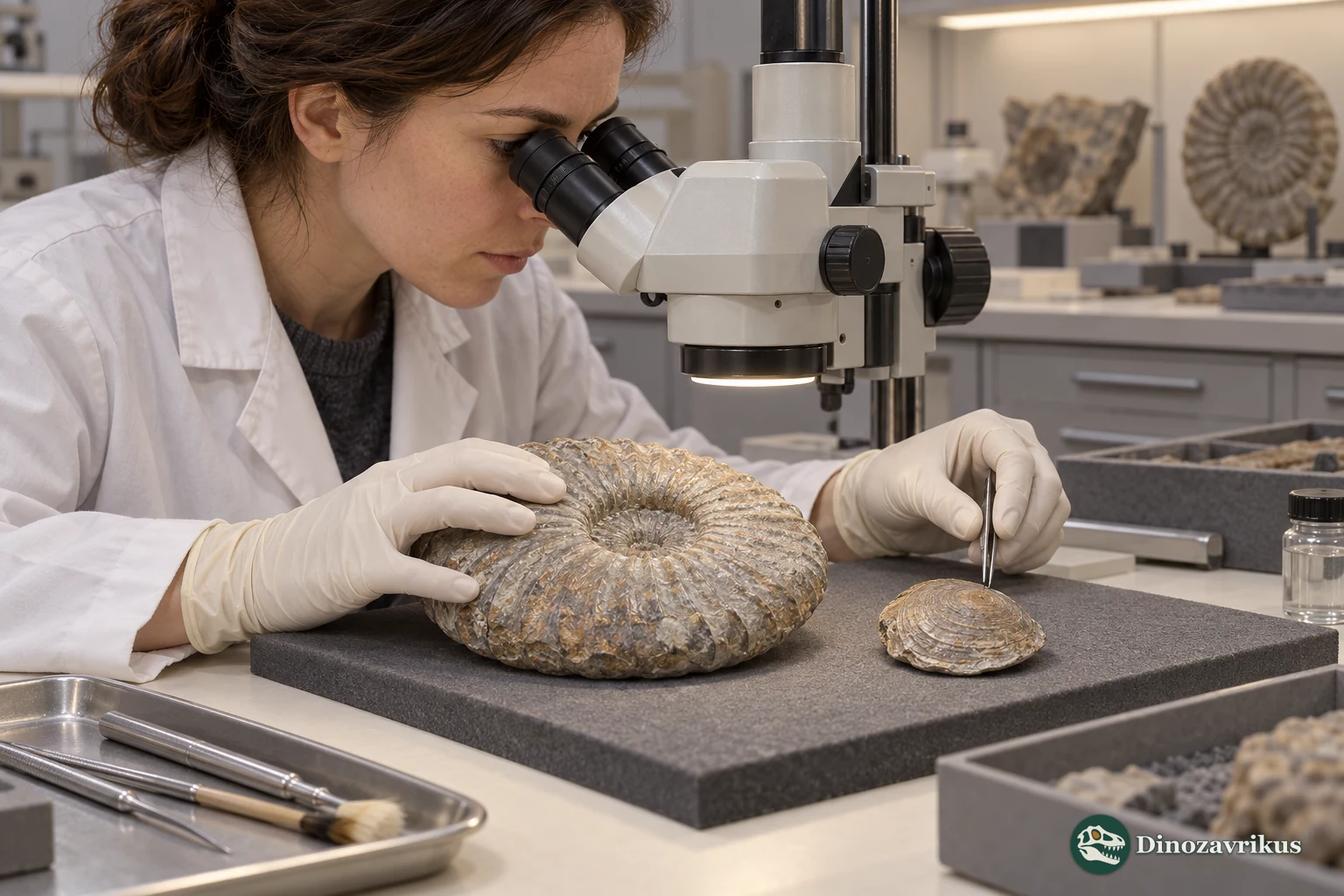
In gastropods, an operculum closes the aperture when the animal withdraws. After death and burial, it may separate from the shell, making isolated plates difficult to assign to a species.
In 1999 David M. Rohr and Ellis L. Yochelson described two shell–operculum associations of Maclurites known to them. A specimen identified as M. cf. magnus came from Middle Ordovician Alaska. Its operculum fitted slightly inside the aperture and, when closed, extended below the shell base. The authors suggested that it may have helped anchor the animal. This is an interpretation of the geometry, not direct observation of a living gastropod.
Age, localities and rocks
Macluritids occur in Ordovician marine strata in several regions. The described shell–operculum associations are Middle Ordovician: one from Alaska and one from Wisconsin. The age and geography of each fossil come from its documented section and collection history.
Large shells occur in fossil-rich marine deposits, including shelf carbonates. A shell by itself does not establish water depth, current speed or salinity. Sedimentary structures and the complete fossil assemblage are needed to interpret the environment.
Feeding, movement and growth
Shell form and operculum position make a benthic life plausible, but the diet of Maclurites is not established by the two associated specimens. Hypotheses about grazing on microbial films or organic matter would need support from wear, aperture anatomy, trace fossils or preserved chemistry.
Growth lines and successive whorl dimensions record shell accretion. Without additional data, they do not give an individual’s lifespan, growth rate or seasonality. Soft tissues, tentacles, colour and motion are not preserved in ordinary specimens.
Evidence and reconstruction
Direct evidence includes mineralised shells, diagnostic surfaces and rare associated opercula. The idea that an extended operculum helped anchor the animal follows from its position relative to the shell. The precise mechanism, food and behaviour remain open questions.
Maclurites is listed in the early Palaeozoic marine fossil catalogue, whose established title is retained for a collection that also contains later Palaeozoic taxa. The profile and card identify this genus as Ordovician rather than Cambrian.
Frequently asked questions
When did Maclurites live?
The genus is known from Ordovician marine strata. Well-documented shell–operculum associations include Middle Ordovician material from Alaska and Wisconsin.
What is an operculum?
It is a separate hard plate that closed the aperture of a gastropod shell when the animal withdrew.
Was Maclurites the largest Palaeozoic gastropod?
The giant species Maclurina manitobensis belongs to a different genus. Its size should not be transferred to Maclurites.
Do we know what it ate?
No precise diet is established. Shells and rare associated opercula do not preserve digestive contents or unambiguous feeding traces.