

Mariliasuchus was a small crocodyliform from Late Cretaceous south-eastern Brazil. Its snout was short and deep, and its teeth changed conspicuously in shape from the front of the jaw to the back. The jaw joint and wear on the rear crowns suggest that the lower jaw could slide fore and aft during feeding.
Quick facts
| Type species | Mariliasuchus amarali |
|---|---|
| Group | Notosuchia |
| Age | Late Cretaceous |
| Locality | Marília area, São Paulo state, Brazil |
| Holotype | UFRJ-DG 50-R, juvenile skull and partial skeleton |
| Rock unit | Adamantina Formation, Bauru Basin |
What can the fossils tell us?
UFRJ-DG 50-R preserves the skull, jaws and bones behind the head. Larger specimens allow some changes in skull form to be traced through growth.
Wear facets and the elongated joint surface together suggest that the lower jaw could slide along the length of the tooth rows.
Skull anatomy and nearby coprolites inspired an omnivory hypothesis. The animal that produced those coprolites could not be identified securely.
Fossils from the Marília area
Ismar de Souza Carvalho and Reinaldo Bertini named the genus in 1999 from a juvenile recovered in Upper Cretaceous rocks of the Bauru Basin. The name refers to Marília, in São Paulo state. The type, UFRJ-DG 50-R, belongs to the Federal University of Rio de Janeiro collection and preserves vertebrae and limb bones as well as the skull.
Larger individuals have thicker skull bones. In 2007 an especially robust skull, UFRJ-DG 56-R, became the type of M. robustus. A later study of skull growth proposed that the distinguishing features could belong to a mature individual of M. amarali. The number of species depends on how those differences are interpreted.
What the tooth rows reveal
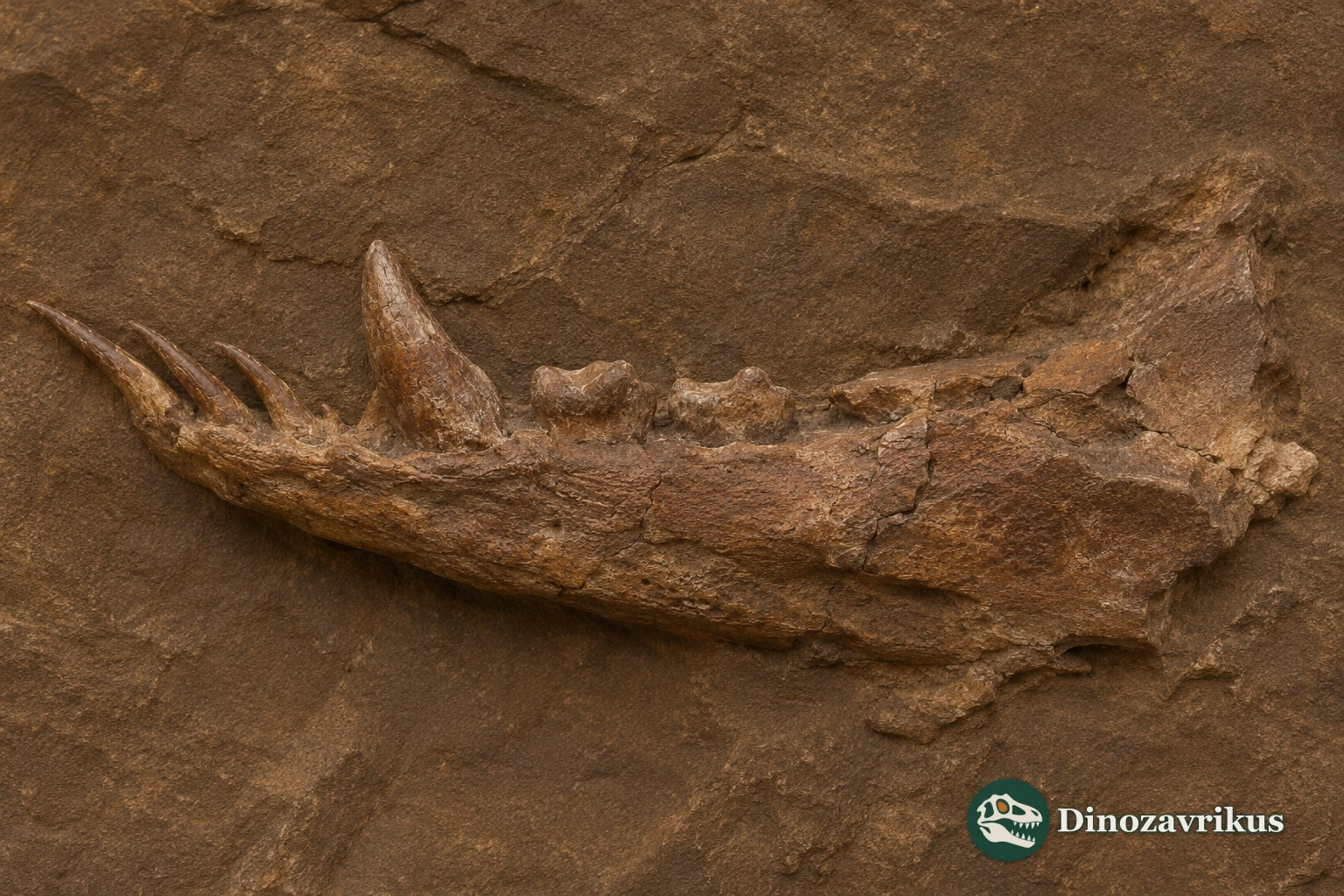
The slender front teeth incline forward. Behind them is a larger fang-like tooth, followed by broader crowns with raised surfaces. Wear facets show where the upper and lower rear crowns came into contact. Another Bauru Basin crocodyliform, Caipirasuchus, also processed food with specialised rear teeth.
The elongated surface of the Mariliasuchus jaw joint allows some fore-and-aft movement. Its shape and the wear facets led researchers to propose that the lower jaw slid while the teeth were in contact. The wear tracks preserve evidence of motion but cannot reveal the contents of a meal.
Testing ideas about feeding
Pedro Nobre and colleagues compared the skull and teeth with the form and chemistry of coprolites from the same beds. They proposed a mixed diet, and suggested that the sloping front teeth could have been used to disturb sediment while foraging.
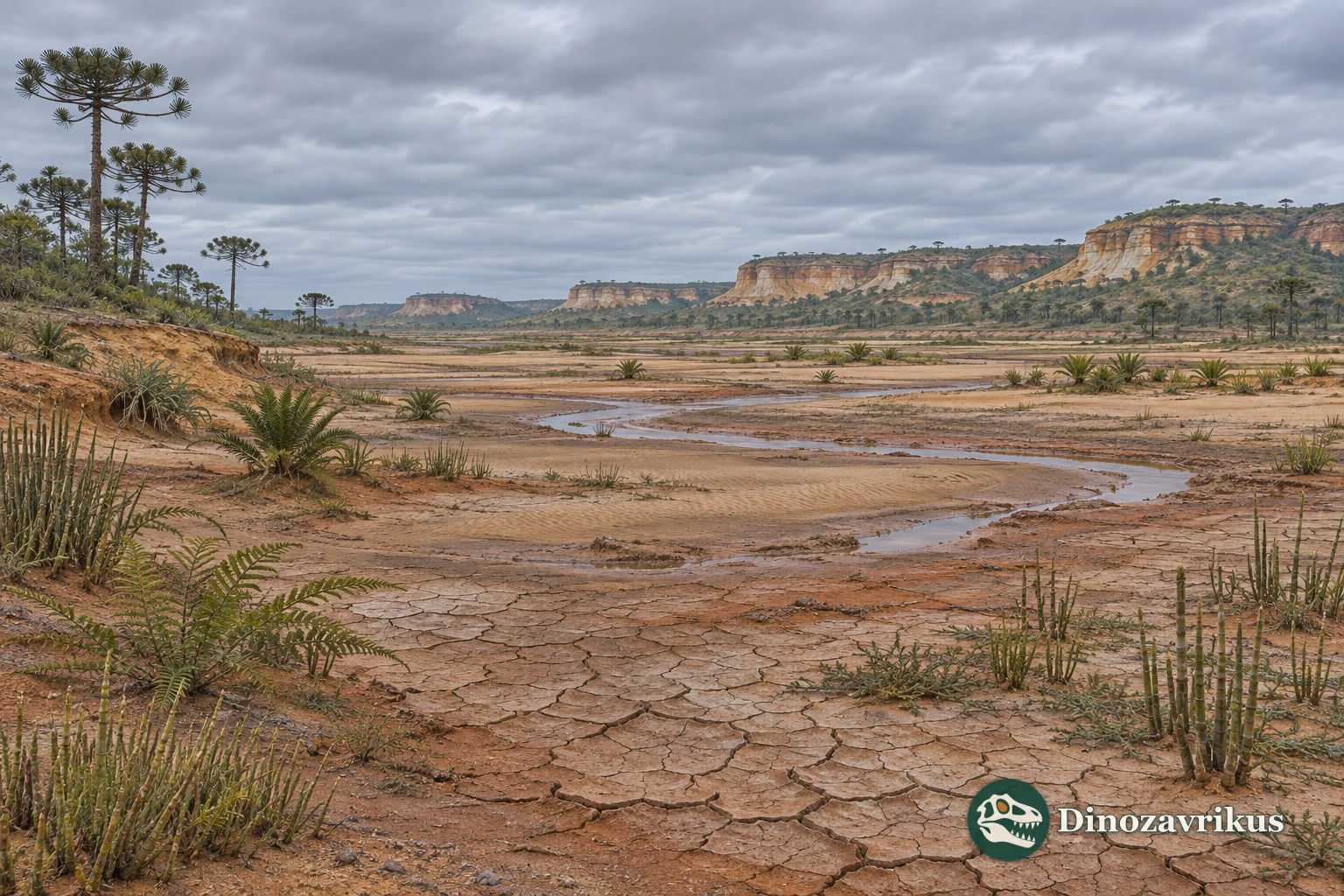
The coprolites were recovered separately from the skeletons, so their chemical signatures cannot confidently be attributed to Mariliasuchus. Sediment probing is an interpretation of tooth shape and wear. Periodic wetting and drying in the Bauru Basin gives the environmental context for these ideas.
Frequently asked questions
Where was Mariliasuchus found?
Its fossils come from Upper Cretaceous rocks of the Bauru Basin near Marília, São Paulo state.
What survives in the type specimen?
The juvenile UFRJ-DG 50-R preserves the skull, jaws and part of the skeleton behind the head.
How can scientists infer sliding jaw motion?
The length of the joint surface allows it, and the wear facets on the rear teeth are consistent with such movement.
Do the coprolites prove it ate a mixed diet?
They helped motivate that hypothesis, but the animal that produced them could not be identified with certainty.